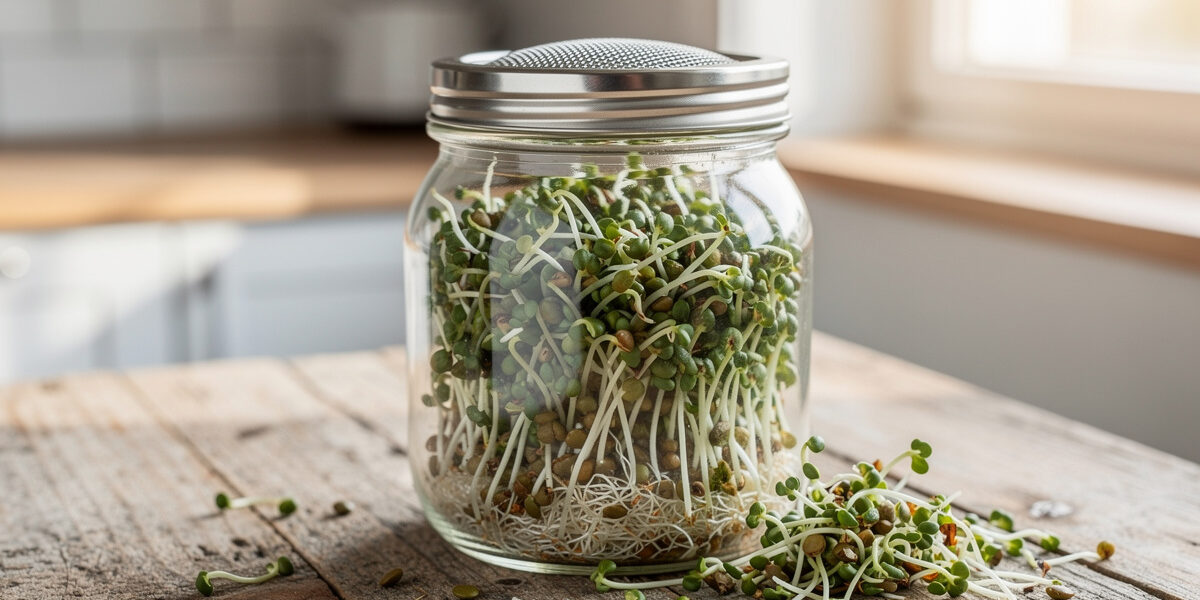
How to sprout lentils: The fastest way to sprout lentils is to soak them in cool water for 8-12 hours, drain them thoroughly, and then rinse and drain them twice a day for 2-3 days. Keep them out of direct sunlight. They are ready to eat when the white tail (the sprout) is about half an inch long.
For a complete overview of all sprouting methods and seeds, see our complete sprouting guide.
Sprouting lentils transforms a humble, shelf-stable legume into a fresh, crunchy counter crop you can run all winter. Whether you are starting your urban garden or simply looking to keep affordable fresh produce on hand through the Nordic dark months, lentils are arguably the best place to begin. They are forgiving, sprout quickly, and don’t require any specialized equipment beyond a simple jar.
Why Lentils Are the Best Starter Sprout
Lentils are the most forgiving sprout I run on my kitchen counter. They germinate at 95%+ rates from any whole lentil, take only 2-3 days instead of the 5-7 days alfalfa or broccoli demand, and cost roughly $3 a pound — about 15 cents per jar of fresh sprouts. The jar I keep in rotation never sits idle because the turnaround is so fast. If I rinse in the morning and again before bed, I have fresh sprouts ready for salad the next afternoon.
- Speed: Lentils are the fastest of the common sprouting seeds I keep in rotation. After an 8-hour overnight soak, tails emerge within 24 hours and the batch is harvest-ready by day 2 or 3 — half the time alfalfa needs and nearly as fast as mung beans.
- Reliability: Any whole green, brown, or French lentil sprouted for me at better than 95% germination. The failures I have seen were always operator error — forgetting a rinse cycle in warm weather — never a bad batch of seed.
- Flavor and Texture: Sprouted lentils taste peppery and fresh, with a crunch closer to raw snap peas than to any cooked legume. They hold that crunch in salads, wraps, and even after a quick sauté — something mung bean sprouts turn to mush through when heated.
- No Special Gear: A quart mason jar and a mesh sprouting lid are all the equipment lentils need. I have run sprouting trays, tiered sprouter rigs, and bag methods, and I still come back to the basic jar for lentils because it is the simplest setup that works every time.
Choosing the Right Lentils
Green, brown, and French (Puy) lentils sprout reliably in my experience — any whole, unprocessed lentil I have run on the counter has germinated well. Avoid split red or yellow lentils—these processed varieties have zero sprouting potential. Choosing the wrong type is one of the most common gardening mistakes beginners make.
Best Varieties for Sprouting
- Green Lentils / Brown Lentils: These are the gold standard. They retain their shape well, sprout reliably, and have a great crunch.
- French (Puy) Lentils: excellent for sprouting. They are smaller and hold their texture even better than standard green lentils, making them perfect for salads.
- Black (Beluga) Lentils: These sprout beautifully and look stunning in a dish, resembling caviar.
Varieties to Avoid
- Split Red/Yellow Lentils: These have been split and the hull removed. They are dead. They will not sprout; they will only turn into a mushy, fermenting paste in your jar.
- Canned Lentils: These are cooked and cannot be sprouted.
Equipment You Need
As an Amazon Associate I earn from qualifying purchases.You need only a quart-sized wide-mouth mason jar, a mesh sprouting lid or cheesecloth, and a bowl for drainage. A stainless steel mesh sprouting lid costs $8-12 and lasts for years. Total starting cost is under $15. The simple mason jar method is perfect for lentils.
- A Quart-sized Mason Jar: Wide mouth is easier to clean. A wide-mouth quart mason jar set costs about $12 for a 4-pack.
- A Sprouting Lid: This can be a stainless steel mesh lid (what I use — the fine mesh drains fast and keeps fruit flies out) or a piece of cheesecloth secured with a rubber band.
- A Bowl: To prop the jar at a 45-degree angle for drainage.
- Fresh Water: Tap water is fine; I run city tap through a filter only in high summer when chlorine smells strong enough to notice.
Step-by-Step: How to Sprout Lentils
The routine I follow has not changed in two years of running lentil sprouts. Soak overnight, drain in the morning, rinse twice a day, harvest when the tails look right — that is the whole rhythm. Here is every detail.
Step 1: The Rinse and Sort
Measure out about ½ cup of dry lentils. This yields roughly 1.5 to 2 cups of sprouts — enough to fill the quart jar by harvest time without crowding. Rinse them thoroughly in a strainer. Pick out any broken lentils, stones, or debris. The broken ones are the ones I learned to sort out the hard way: they will not sprout and they will rot, taking the whole jar with them if you leave them in.
Step 2: The Soak
Place the lentils in your jar and fill it with cool water. Lentils absorb a lot of water, so fill the jar about ⅔ full to give them space. Let them soak for 8 to 12 hours. Overnight is the most convenient time for this.
Step 3: The Drain
In the morning, pour the water out through your mesh lid. Shake the jar gently to get as much water out as possible. This is critical. Standing water causes rot. If your lentils sit in a puddle, they will drown and smell bad.
Step 4: The Rinse & Drain Cycle
For the next 2-3 days, rinse your lentils twice a day — morning and night. On my counter this takes under a minute per jar.
- Fill the jar with cool water.
- Swirl it around to rinse every lentil.
- Drain it completely.
- Prop it up: Place the jar upside down at a 45-degree angle in a bowl. This allows excess moisture to drip out and air to circulate.
Keep the jar on your kitchen counter, out of direct sunlight. A darker corner is fine, but total darkness isn’t strictly necessary for lentils.
Step 5: Harvest (Day 2 or 3)
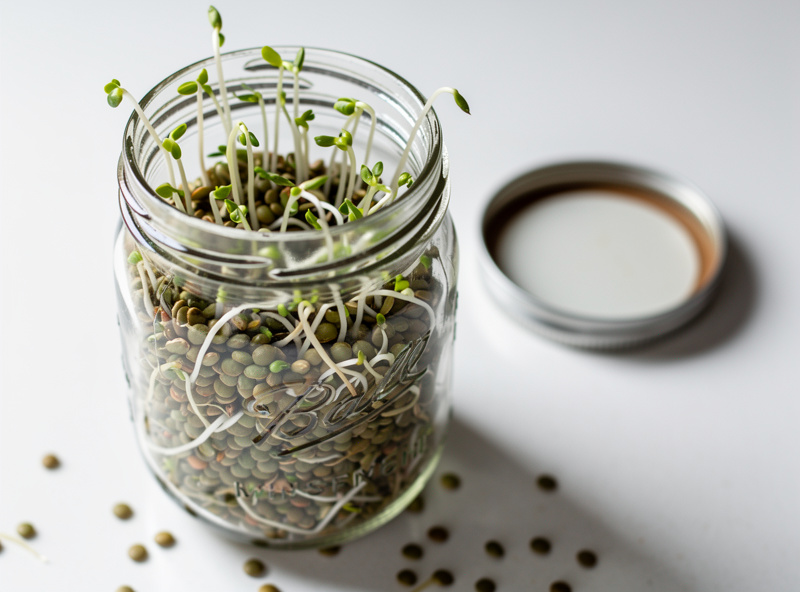
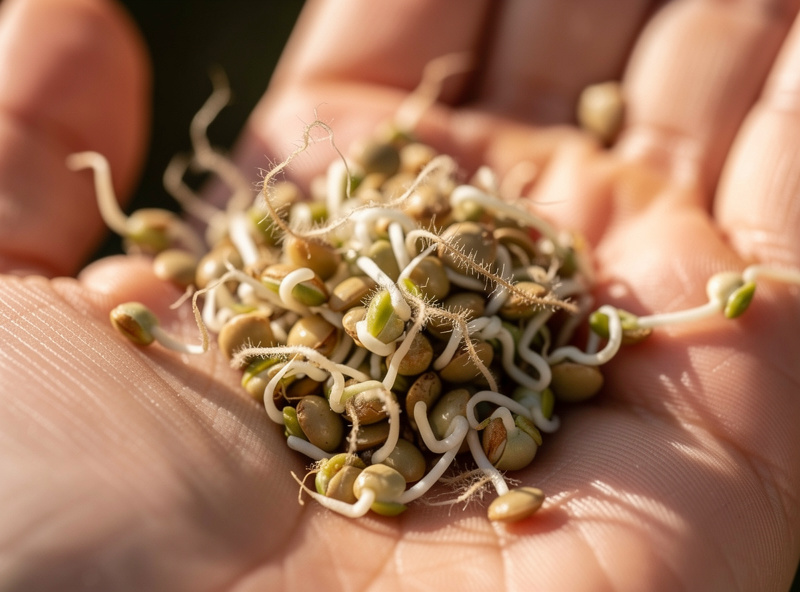
You will see tails appear within 24 hours. By day 2 or 3, the tails should be ½ inch to 1 inch long. This is the sweet spot I target every time. Taste one. If the crunch and peppery bite is right, they are done. If you push them another day the tails lengthen but the seed hulls start to separate and the crunch softens — I pull the jar at the first sign of loose hulls starting to float.
Step 6: The Final Rinse and Dry
Once you are happy with them, give them one final rinse. Then, dump them onto a clean kitchen towel or paper towel. Spread them out and let them air dry for 30-60 minutes. Storing wet sprouts leads to mold. Once they are dry to the touch, place them in a sealed container or a bag with a paper towel inside and store them in the fridge.
Troubleshooting Common Issues
Sour smells indicate bacterial fermentation from standing water or temperatures above 75°F. I have had exactly two batches go sour — both during a July heat wave when my kitchen hit 80°F and I skipped the evening rinse. Discard smelly batches immediately; there is no salvaging them. Even with fastest seeds to sprout like lentils, things go wrong. Here is what I learned fixing the common failures.
- My sprouts smell sour or funky.
- This is almost always poor drainage or a missed rinse in warm weather. I prop my jar at a steeper 45-degree angle when the kitchen is warm — the extra tilt drains faster and buys you more margin. If it smells bad, throw it out. Read our guide on sprouting safety for full prevention.
- Nothing is happening.
- Did you use split lentils? Split red or yellow lentils are processed and dead — they will never sprout. If you used whole lentils and nothing happened after 48 hours, the seeds were likely heat-treated or very old. Buy from a sprouting-specific seed pack; grocery bulk-bin lentils work most of the time but occasionally fail.
- The sprouts are hard seeds with long tails.
- If the seed itself is still rock hard, the soak was too short — lentils need a full 8 hours minimum. I found this happens most when I try to rush with a 4-hour soak. Give them the full overnight soak and the seed softens to a fresh snap-pea texture. If you still find them too firm, a quick 2-minute steam softens them without losing the crunch.
How to Eat Sprouted Lentils
Sprouted lentils add crisp, fresh crunch to raw salads, wraps, and sandwiches. Lightly sauté for 2 minutes in olive oil for warm applications. Now that you have a jar full of fresh sprouts, what do you do with them?
- Raw Salads: They add a fantastic crunch to leafy green salads.
- Soup Toppers: Sprinkle them on top of creamy soups just before serving for texture.
- Sprouted Hummus: Blend them just like cooked chickpeas for a raw, fresh-tasting sprouted hummus.
- Wraps and Sandwiches: Use them instead of lettuce for a protein boost.
- Lightly Sautéed: Toss them in a pan with garlic and olive oil for 2 minutes. This keeps the crunch but warms them up.
Lentil sprouts were the first jar I ever ran on my counter, and they are still the one I come back to when I want something fresh in under 48 hours with zero fuss. Once the lentil rhythm is second nature, the same jar-and-lid setup works for mung beans, alfalfa, and most other sprouting seeds. If the jar method clicks for you, sprouting without soil opens up the rest of the countertop growing world.
A Quick Word on Sprout Safety
The warm, wet conditions inside a sprouting jar are exactly what bacteria like Salmonella and E. coli need to multiply, which is why every public-health agency that comments on sprouts is conservative about them. The home-grower’s version of the same guidance is simple: source lentils sold for sprouting when you can (the seed is handled to a higher standard), rinse in clean cold running water at every step, drain thoroughly, refrigerate the finished sprouts, and throw out anything that smells off. People who are pregnant, elderly, very young, or immunocompromised should skip raw sprouts entirely. The FDA Sprout Safety Alliance publishes the full industry-side guidance if you want to read the source material.
How long does it take to sprout lentils?
Lentils sprout in just 2-3 days at room temperature. After an 8-12 hour soak, you’ll see tiny tails emerge within 24-48 hours. They’re ready to eat when tails are 1/4 to 1/2 inch long.
Can I sprout any type of lentils?
Most whole, unprocessed lentils sprout well, including green, brown, and French (Puy) lentils. Avoid split lentils or red lentils, as they’re typically processed and won’t germinate.
Do I need to cook sprouted lentils?
Sprouted lentils can be eaten raw in salads, sandwiches, and wraps. They keep their crunch raw, or you can give them a quick 5-minute saute for warm dishes — no need for the 20-30 minute cooking time dried lentils demand.
How do I store sprouted lentils?
Store sprouted lentils in an airtight container lined with a paper towel in the refrigerator. They’ll keep for 5-7 days. Rinse every couple of days to keep them fresh.
What equipment do I need to sprout lentils?
You need only a quart-sized wide-mouth mason jar, a mesh sprouting lid or cheesecloth, and a bowl for drainage. A stainless steel mesh lid costs $8-12 and lasts for years. Total starting cost is under $15.
Do lentil sprouts need sunlight?
No, lentil sprouts grow best in darkness or low light during the initial sprouting phase. Keep them on a kitchen counter out of direct sunlight. Light exposure is only needed if you want the leaves to develop green color, which is optional.
Why do my lentil sprouts smell sour?
Sour smells indicate bacterial fermentation from standing water or warm temperatures. Drain the jar more thoroughly after each rinse, prop it at a steeper angle, and keep the jar below 75°F. If the smell is strong, discard the batch and start fresh.