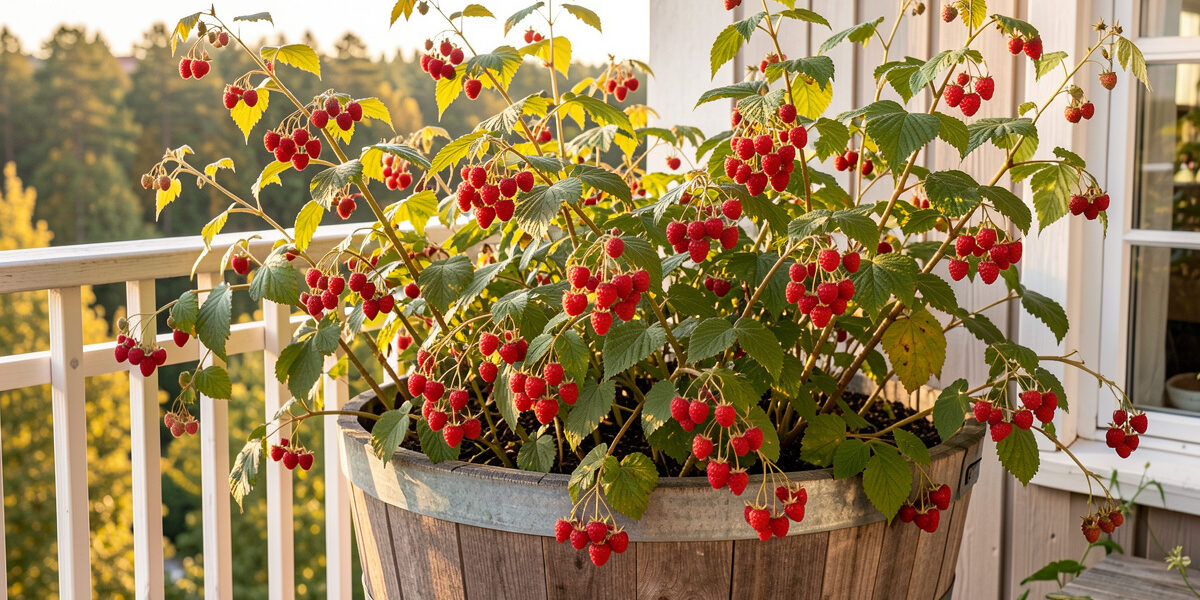
Raspberries surprise people in a small space. They have a reputation as a sprawling row crop that takes over a garden, but in a deep pot or a half-barrel a tidy clump of canes crops happily on a balcony — and if you grow the autumn-fruiting kind, you cut the whole thing to the ground every winter, which means no training, no supports and no overwintering canes to fuss over. For a small, cold-climate space, raspberries are far easier than their hedgerow reputation suggests.
The trick is choosing the right type and giving the roots enough depth. Get those two right and a single large container of raspberries will hand you a steady pick of fruit through late summer and autumn — the season when the strawberries are tiring and there’s not much else coming off the balcony. This is how I grow them in a container, and why the autumn types in particular suit an apartment grower up north.
Autumn-fruiting types are the small-space answer
Raspberries come in two camps, and the difference matters enormously in a pot. Summer-fruiting raspberries fruit on canes grown the previous year, so they carry two generations of cane at once, need support and training, and you have to overwinter the right canes and prune out the right ones — fiddly in a container. Autumn-fruiting (primocane) raspberries fruit on the current season’s canes, in late summer and autumn. That single trait changes everything for a small space: you simply cut every cane to the ground in late winter, and the pot throws up fresh canes that fruit the same year.
No training, no support structure to rig on a balcony, no working out which canes to keep — just one clean cut a year. Autumn types also dodge our late spring frosts because they flower later, and they crop right through the cooler end of the season when little else is fruiting. For all those reasons, autumn-fruiting is what I’d point any small-space or cold-climate grower to first. Good named varieties like ‘Autumn Bliss’, ‘Polka’ and ‘Joan J’ are compact, heavy and reliable in cool summers.
The container: go deep and wide
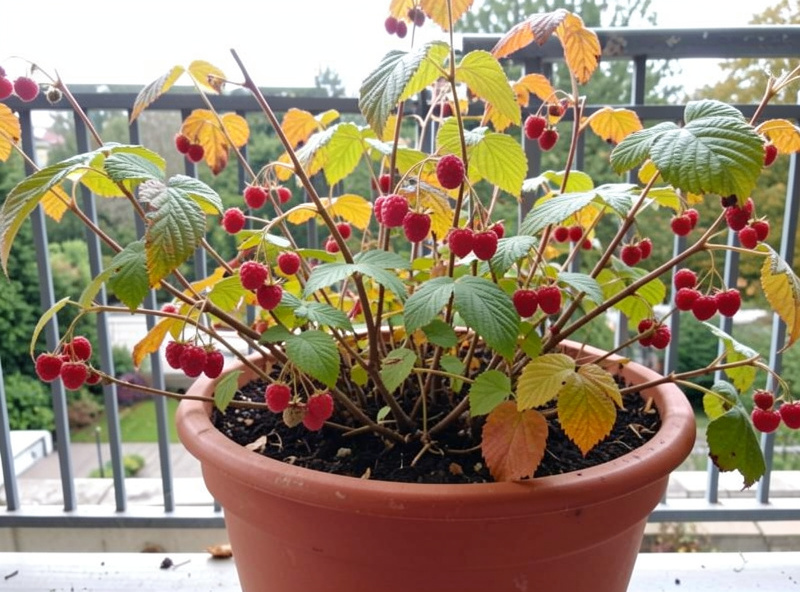
Raspberries are vigorous and their roots run, so give them the biggest container you reasonably can — a half-barrel, a large 40 cm-plus deep pot, or a sturdy fabric planter of 40 litres or more. Depth matters because raspberry roots are deeper and hungrier than a strawberry’s, and width gives a clump room to throw up a decent number of canes. A pot that’s too small produces a few thin, stunted canes and a disappointing handful of berries; size up and the same plant fills out into a productive little thicket.
One quiet advantage of growing them in a pot: the container contains their wandering roots. In open ground raspberries sucker and spread into a patch you didn’t plan, but a pot keeps the clump exactly where you put it — a real plus on a balcony where every square metre counts. Use a free-draining loam-based mix rather than a bagged “potting soil” that compacts; raspberries are a multi-year planting and want a medium that keeps its structure, the same logic as everything in the container fruit guide. A mulch of compost on the surface each spring feeds them and keeps the roots cool and moist.
Watering and feeding for a heavy crop
A potful of vigorous raspberry canes is thirsty, especially as the fruit swells in late summer, and like all container fruit they suffer fast if the pot dries out — water stress at fruiting means small, crumbly, seedy berries instead of plump ones. Keep the moisture even, water deeply rather than little-and-often, and mulch to slow evaporation. This is another crop where a wicking reservoir or a self-watering insert earns its keep, holding the moisture steady through the hot spells when a balcony pot can dry out by afternoon.
Feed through the growing season — raspberries build a lot of cane and a lot of fruit, and a container has no reserves. A balanced feed early, swinging to higher potassium as the fruit sets, suits them, and a spring top-dress of compost or worm castings gives a slow background feed. My worm castings are the amendment I keep reaching for here, the same kitchen-scrap loop that feeds the rest of the balcony. Ease off feeding and watering in autumn as the canes finish and the plant heads toward dormancy.
Where to put the pot: sun, shelter and starting out
Raspberries crop best in full sun but tolerate light shade better than most fruit, which makes them useful for the partly-shaded balcony that won’t ripen a fig or a citrus. Give them the sunniest spot you can for the heaviest, sweetest crop, but don’t write off a planting just because the balcony only gets morning sun — autumn raspberries will still produce a worthwhile pick there, just a little later and lighter. Shelter from strong wind helps, since tall canes laden with fruit can whip and snap in an exposed spot four floors up; a position against a wall or railing steadies them.
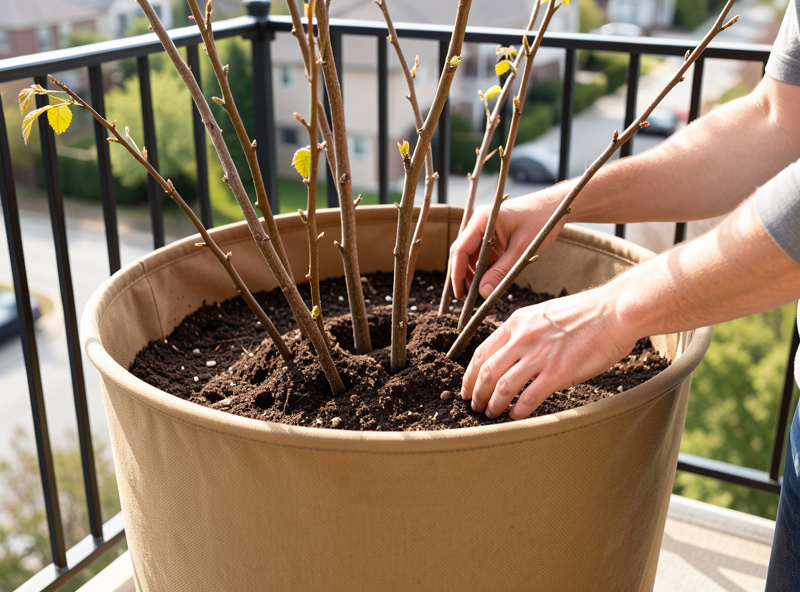
Start a new container in autumn or early spring from bare-root canes, which are cheaper and establish fast, or from a potted plant any time in the growing season. Plant the canes at the depth they grew before — raspberries are shallow-feeding and resent being buried deep — water them in, and don’t expect much the first year while the roots establish. Autumn types often give a light crop in their first season, which is part of their appeal; summer types make you wait until year two. Plant two or three canes in a half-barrel and they’ll quickly fill it into a productive clump.
Pests and problems in a container
Container raspberries are largely trouble-free, and growing them in a pot up off the ground actually sidesteps some of the soil-borne troubles that plague them in a garden row. The most likely nuisance is birds stripping ripe fruit, easily solved with a light net thrown over the canes as the berries colour. Grey mould (botrytis) can rot fruit in a damp, crowded clump, which is why thinning the canes for airflow and picking regularly matters; don’t leave overripe berries sitting on the plant to spread it.
Crumbly, poorly-formed berries usually mean either water stress during fruiting or, occasionally, poor pollination on a high balcony — the same brush-the-flowers trick helps if insects are scarce, though raspberries are self-fertile and usually set well on their own. Yellowing leaves point to hunger or, in hard-water areas with very alkaline soil, a nutrient lock-out; a feed and a compost mulch generally sort it. None of these is serious, and a healthy clump of autumn raspberries in a good-sized pot is about as low-maintenance as fruiting crops get.
The one annual job: cutting down the canes
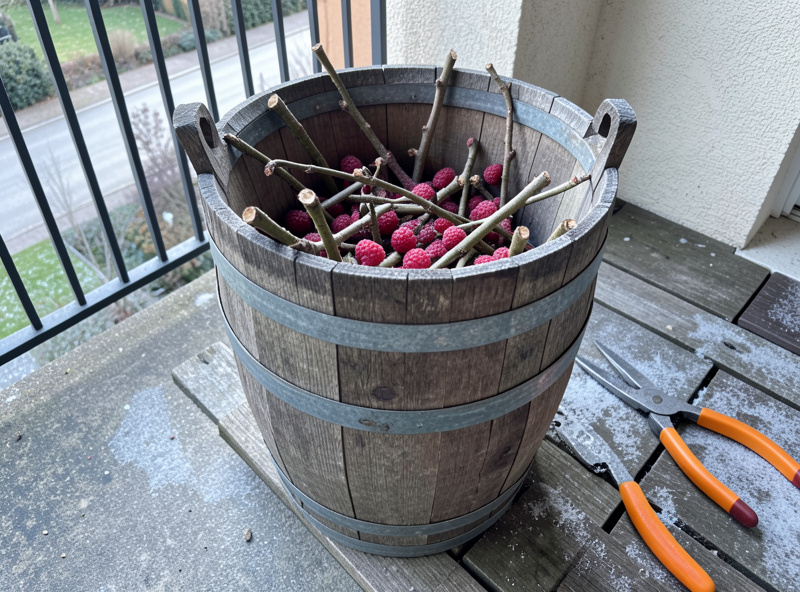
Here’s the whole maintenance routine for autumn raspberries, and why they’re so forgiving: in late winter, while the plant is dormant, cut every cane right down to the base. That’s it. No deciding which to keep, no untangling old from new — the lot comes off, and in spring the pot sends up a fresh crop of canes that flower and fruit that same season. It takes five minutes with a pair of secateurs and it’s almost impossible to get wrong, which is exactly the kind of low-stakes job that suits a busy grower or a nervous beginner.
If you grow summer-fruiting raspberries instead, the pruning is different — you cut out only the canes that fruited and keep this year’s new canes for next year, and you’ll need to tie them to a support — which is precisely the extra complication that makes me steer small-space growers to the autumn types. Whichever you grow, thin out any overcrowded canes in spring so the clump isn’t a congested thicket; air and light through the middle mean better fruit and less mould.
Overwintering and the long view
Raspberries are genuinely hardy — they’re a cool-climate fruit at heart and need no coddling against the cold itself. As with all container fruit, the only real winter risk is the exposed pot freezing harder than open ground, so group the container against a sheltered wall and, in a severe winter, wrap it; the canes themselves (or the cut-down stubs, for autumn types) shrug off the frost. The routine is the same one in my overwintering guide, and far simpler than the fuss citrus demands.
A well-fed clump of container raspberries will crop for years, sending up fresh canes each spring, and you can split a congested rootball in late winter to start a second pot or refresh a tired one. It’s one of the most generous returns in small-space fruit growing: one big container, one annual cut, and a steady pick of raspberries through the back end of the season. If you’re building out a balcony of fruit, pair it with the balcony strawberries that crop earlier, lean on the whole-balcony approach in my balcony gardening guide, and let the container fruit guide tie the whole small-space orchard together.