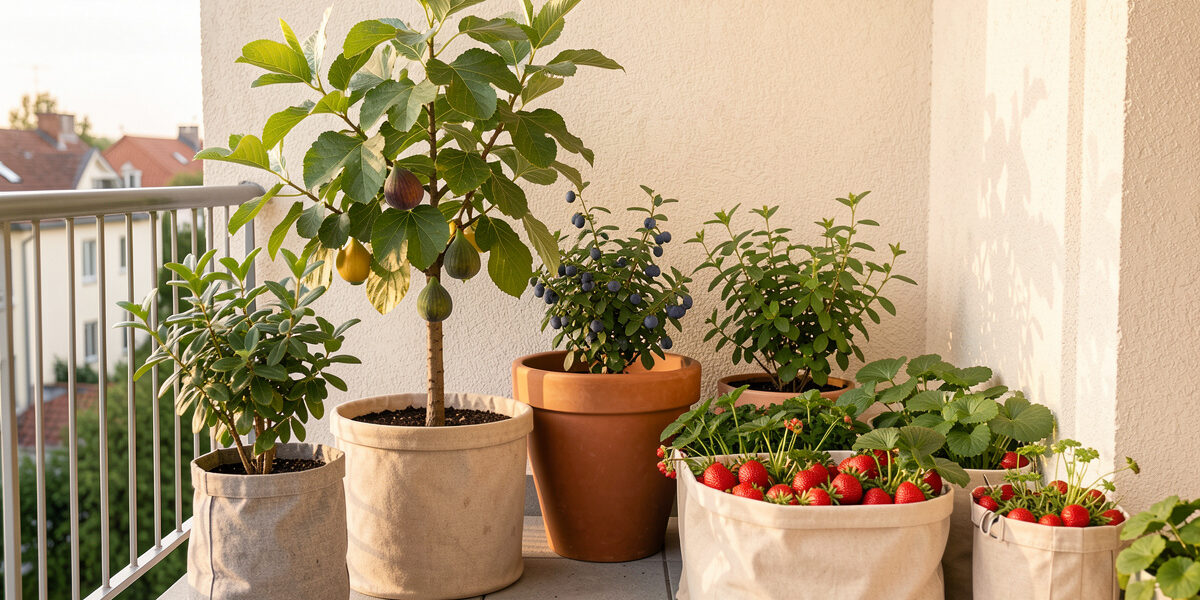
You can grow real fruit in a container on a balcony or a bright windowsill, even up north — strawberries, blueberries, figs, dwarf citrus, raspberries and even small trees all crop in pots when you get three things right: enough root depth, free drainage, and a way to keep the medium evenly moist. Most failures trace back to those three, not to the plant.
I grow food in the space and light a Swedish apartment actually gives you, and fruit in containers is the part of that I get asked about most. It looks intimidating because the homestead channels show it happening in raised orchards under generous sun. On a balcony rail with four usable daylight hours in shoulder season, the rules change. This guide is the cold-climate, small-space version — the one I wish I’d had before I drowned my first blueberry in bagged “potting mix” that turned to mud. Use it as the map; each fruit has its own deep-dive linked below.
Why container fruit actually works in a small, cold space
Containers give you something the open ground never will: total control of the root zone. You pick the medium, the drainage, the pH and the position, and you can wheel the whole thing out of a late frost or into the lee of a wall when the wind turns. For a Nordic grower that mobility is worth more than bed space.
The trade-off is that a pot is a small, exposed world. Roots in a container swing through wider temperature and moisture extremes than roots in the ground, because there’s no surrounding soil mass to buffer them. That single fact drives almost every decision in this guide — why depth matters, why you overwinter, why even watering beats heavy watering. Get the buffering back under control and a 40 cm pot will out-produce a neglected garden bed, because nothing competes with your plant and nothing you didn’t choose is in that soil. My container gardening guide covers the general version; this one is specifically about the fruiting crops, which are hungrier and longer-lived than a tray of lettuce.
Container depth and width: match the root system
The most common small-space fruit mistake is a pot that’s too shallow. Strawberries are happy in 20 cm of depth; a fig or a dwarf apple wants 40–50 cm and will sulk in anything less for years. Depth governs how much root mass — and therefore how much water buffer and how much crop — the plant can build. Width matters too, but depth is the one people skimp on because deep pots are heavier and pricier.
On a balcony, weight is a real constraint US advice never mentions. A 50-litre pot of wet soil can pass 60 kg, and not every balcony slab or railing planter is rated for a row of them. I keep the big, heavy fruit (figs, trees) on fabric grow bags near the load-bearing wall, and the light, shallow-rooted fruit (strawberries, a stacked vertical) out on the rail. Fabric bags also air-prune the roots — they stop circling and ramify instead, which keeps a long-lived fruit plant from going root-bound the way it would in a smooth plastic pot. My write-up on fabric planters goes into the gauges that last more than one season outdoors.
Choosing the container material for the job
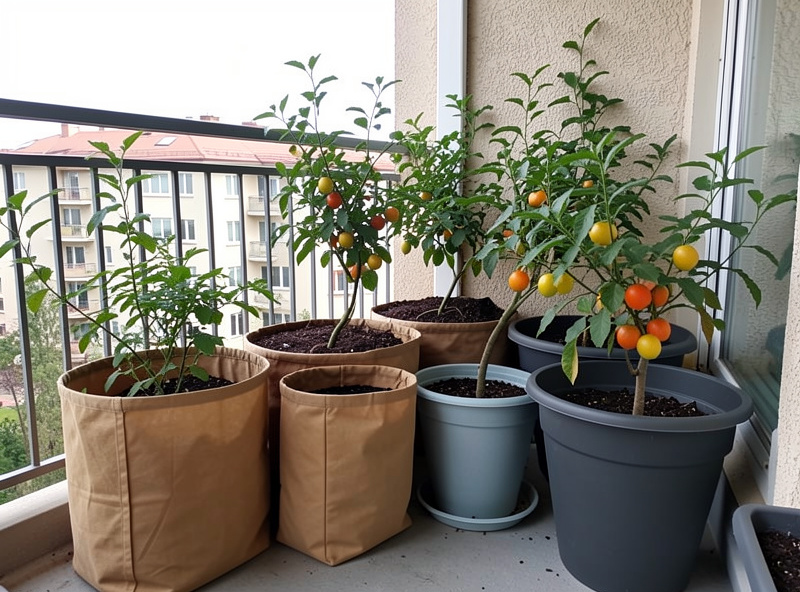
Material changes how a pot behaves more than people expect, and for long-lived fruit it’s worth choosing on purpose. Plastic is cheap, light and holds moisture well, which is a virtue in summer and a liability if your drainage is poor — a plastic pot with a soggy mix stays soggy. Terracotta breathes and looks the part, but it’s heavy, it wicks moisture out through the walls so it dries faster, and it can crack when a wet pot freezes, which rules it out as a permanent outdoor winter home in a cold climate unless you bring it in.
Fabric grow bags are my default for most container fruit. They drain freely, they air-prune the roots so the plant never circles and chokes itself, and they’re light to move for overwintering. The trade-off is they dry quickly in wind, which is exactly the problem a self-watering reservoir solves — so a fabric bag with a wicking insert is the combination I keep coming back to for figs, berries and dwarf trees. Self-watering planters with a built-in reservoir are the easiest route for anyone who travels or forgets to water, at the cost of more weight and a higher price. There’s no single right answer; match the material to where the pot lives, how heavy it can be, and how reliably you’ll water.
The medium: never bagged “potting soil” for fruit
Reach-for-it bagged “potting soil” is the wrong tool for a long-term fruit container. It’s milled fine to look rich on the shelf, and within a season it compacts, sheds water off the top and drowns the roots underneath. Fruit plants live in the same pot for years, so the medium has to keep its structure that whole time.
My container fruit mix is built for air as much as for nutrients: roughly equal parts a good peat-free or coir base, screened compost or worm castings, and a coarse mineral — perlite or, better on a windy balcony, pumice for the weight. That holds open pore space, drains fast, and still wicks moisture upward to the roots. Blueberries are the exception that proves the rule — they need an acidic, ericaceous mix and will slowly starve in standard compost — which is why they get their own container blueberry guide. If you want the full reasoning on why bagged mix fails in pots, I laid it out in potting soil vs garden soil.
Watering: the make-or-break skill in a pot
More container fruit dies from watering than from cold. The exposed root ball dries fast in summer wind and sun, and a fruiting plant under water stress drops flowers and aborts fruit before it shows any leaf symptom. Even moisture — not heavy moisture — is the target. A pot that swings from bone-dry to waterlogged stresses the plant twice over.
This is where small-space growers can actually beat the open garden. Self-watering and wicking setups give the pot a reservoir that the plant draws from at its own pace, which is exactly the even-moisture you want. I run 3D-printed self-watering inserts in several of my fruit pots — the same printer that makes hydroponic parts makes these — and they’ve cut my summer watering to roughly twice a week without the plants ever wilting. A DIY wicking bed does the same thing for a larger balcony planter. Whatever route you take, the principle is the reservoir below and free-draining medium above, never a saucer of standing water around the roots.
Light, frost and overwintering — the Nordic part nobody else writes
This is the section that separates real cold-climate growing from copied US advice. Fruit needs sun to ripen sugar, and a northern balcony gives you a narrow, low-angle window of it. Put your fruit in the brightest, most sheltered spot you have and accept that some crops — citrus especially — will need to come indoors under a grow light for the dark months. I treat my grow lights as a measured system, judged on spectrum and PPFD over the wattage number on the box.
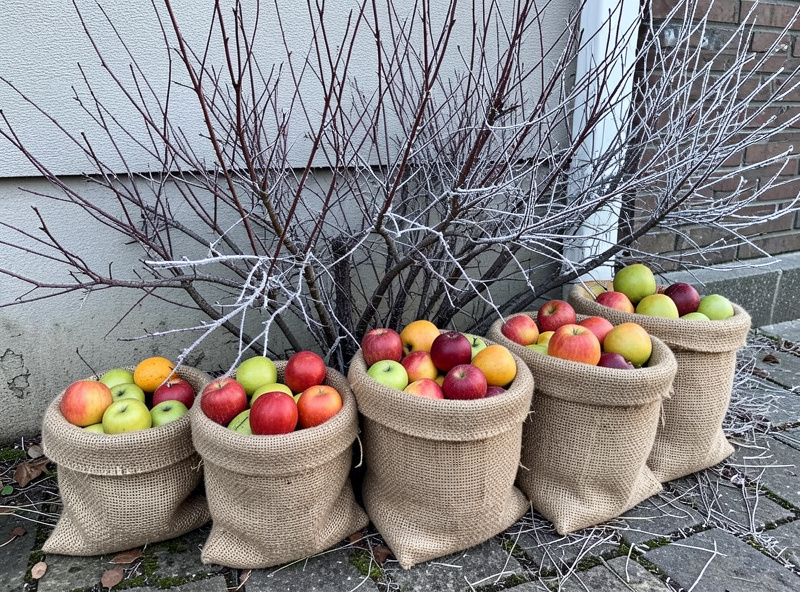
Overwintering is the other half. A pot freezes solid far faster than the ground, and the roots — not the top growth — are what the cold kills. Hardy container fruit (raspberries, hardy figs, many apples) survives if you protect the root ball: group pots together against a wall, wrap them, sink them, or move them to an unheated shed or stairwell that stays just above freezing. My guides on frost protection and overwintering apply directly. Tender fruit comes inside. Know your frost dates and your plant’s true hardiness before you buy — a wrong hardiness call is the expensive mistake here.
Feeding container fruit through the season
A pot has no reserve. Every watering leaches nutrients out the bottom, and a fruiting plant is a heavy feeder building both leaf and crop. In the ground you can get away with neglect; in a container you can’t. I top-dress with worm castings in spring and feed through the cropping window — a balanced liquid feed early, swinging to higher potassium as fruit sets and swells. Blueberries and citrus want their own acidic or specialist feeds; the berries and figs are forgiving.
Don’t overdo nitrogen. Lush green growth at the expense of flowers is the classic over-fed container fruit, and on a short season you can’t afford a plant spending August making leaves. My worm castings piece and the apartment composting guide cover the slow-release side of the feeding loop — the worm bin and the compost are running the same quiet microbial chemistry that feeds everything else in the kitchen. A simple soil-moisture-and-pH meter takes the guesswork out; a basic soil pH and moisture meter is the one cheap tool I’d put in every fruit grower’s hands. As an Amazon Associate I earn from qualifying purchases.
Fruit by fruit: where to start and what each one needs
Each fruit below has its own full guide. Here’s the honest overview of which to reach for first and what each demands of a small, cold space.
Strawberries are the gateway. They’re shallow-rooted, fast, and forgiving, and a stacked vertical or a rail planter crops in the first year. Day-neutral cultivars fruit on and off all season, which suits a balcony better than the one-big-flush June bearers. Start here — my full balcony strawberry guide walks the whole setup.
Blueberries are the most rewarding container fruit precisely because the pot lets you give them the acidic root zone they can’t get in most garden soil. Two cultivars for cross-pollination, an ericaceous mix, rainwater not tap, and they’ll crop for years — see the container blueberry guide.
Figs love a pot. Restricting the roots actually pushes a fig to fruit instead of running to wood, and a hardy cultivar overwinters in a cold climate with root protection. The fig in a pot guide covers cultivar choice and the winter routine.
Dwarf citrus is the ambitious one up north — a summer outdoors, a bright indoor spot under a grow light through winter, and a careful eye on watering and feeding. Done right, a lemon or kumquat in a pot is the showpiece of an apartment grow. The dwarf citrus guide is the honest version, cold climate and all.
Raspberries surprise people in containers — a deep pot or a half-barrel holds a tidy clump, and autumn-fruiting (primocane) types are far easier in a small space because you cut the whole thing to the ground each year. No training, no overwintering canes. See raspberries in small spaces.
Fruit trees — apples, pears, cherries, plums on dwarfing rootstock — genuinely crop in big containers, and the rootstock is the whole game. Get that wrong and you’ve got a tree that never fits the pot or never fruits. The container fruit tree guide covers rootstocks, pollination and the long-term care.
Pollination: getting flowers to actually set fruit
A fruit plant that flowers beautifully and then sets nothing is almost always a pollination problem, and in a small space it’s one you have to think about deliberately. Outdoors on a balcony the bees may simply not find a single pot four floors up, and indoors there are no pollinators at all. The fix depends on the fruit, but the principle is the same: you may have to do the insects’ job.
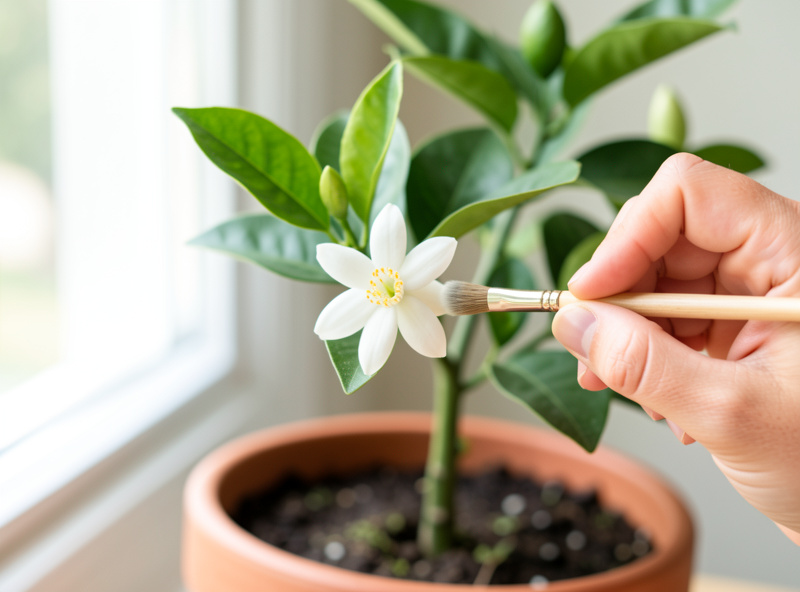
Strawberries, figs and raspberries are largely self-fertile and wind- or self-pollinated, so a single plant crops on its own — figs are the extreme case, setting fruit with no pollination at all in the common types. Blueberries technically self-pollinate but crop far heavier with a second cultivar nearby, so always buy two. Most fruit trees need a pollination partner or a self-fertile variety; this is where the rootstock-and-variety homework in the fruit tree guide pays off. For anything flowering indoors — dwarf citrus especially — I hand-pollinate with a soft brush, moving pollen flower to flower every couple of days while it’s in bloom. It takes thirty seconds and it’s the difference between a lemon and a disappointed shrug.
A cold-climate container year, month by month
The rhythm of small-space fruit growing up north is different from the warm-climate calendars online, so here’s how my container fruit year actually runs. Late winter is planning and indoor work — citrus is under the grow light, and I’m deciding what to add and ordering bare-root stock before it sells out. Early spring I repot or top-dress, refresh the surface medium, and start the feeding once growth wakes. I do not rush anything outside; our last frost is late, and a warm week in April is a trap that’s killed more keen growers’ plants than any cold snap.
Through spring I harden off anything that wintered indoors over a week or two rather than dumping it straight into full sun and wind — the same hardening-off discipline I use for seedlings. Summer is the easy stretch: water evenly, feed through the cropping window, and let the fruit ripen. As the season turns I stop feeding, let hardy plants go dormant, and start the overwintering routine before the first hard frost rather than after it. Tender fruit comes back inside under lights, hardy fruit gets its root protection, and the cycle resets. None of this is hard once you’ve run it once; it’s just on a different clock than the advice written for places where January isn’t dark.
Container fruit at a glance
This table is the quick-reference I’d hand a beginner deciding what to grow first. “Cold-hardy in a pot” means the roots survive a Nordic winter with reasonable protection; tender means it must come inside.
| Fruit | Min container depth | Difficulty | Cold-hardy in a pot | First crop |
|---|---|---|---|---|
| Strawberries | 20 cm | Easy | Yes, with light protection | Year 1 |
| Raspberries (autumn) | 40 cm | Easy | Yes | Year 1 |
| Blueberries | 40 cm | Moderate (needs acid mix) | Yes | Year 2–3 |
| Figs | 40 cm | Moderate | Hardy cultivars, protected | Year 2–3 |
| Dwarf fruit trees | 45–50 cm | Moderate | Most, root-protected | Year 2–4 |
| Dwarf citrus | 35 cm | Advanced (overwinter indoors) | No — tender | Year 2–3 |
The mistakes that kill container fruit
Almost every dead pot I’ve diagnosed comes back to the same short list. A pot too shallow for the root system, so the plant stays stunted. Bagged “potting soil” that compacted and suffocated the roots. Inconsistent watering that dropped the flowers before they ever set fruit. No winter root protection, so a hardy plant died of a frozen root ball it would have shrugged off in the ground. And buying a cultivar that doesn’t suit the climate or the light you actually have — the optimistic citrus on a north balcony, the single blueberry with no pollination partner.
None of those is about a green thumb. They’re all setup decisions you make before the plant arrives, which is the good news: get the container, the medium, the watering and the overwintering right and the plant largely takes care of itself. That’s the whole argument for growing fruit in a small space — you’re not fighting the ground, you’re engineering a small, controlled root world and then mostly leaving it alone.
What to honestly expect from a balcony of fruit
Let me set expectations, because the homestead hype does nobody any favours up here. A balcony of containers will not feed you, and it isn’t meant to. What it will do is hand you a steady trickle of fruit that tastes nothing like the supermarket — strawberries warm off the plant, figs that actually ripened, blueberries you ate standing at the rail — through a season that’s short and dark enough to make every handful feel earned. The value is flavour and the quiet daily pleasure of tending it, not self-sufficiency.
Year one is modest on purpose: strawberries and autumn raspberries crop, but blueberries, figs, citrus and trees are still building the root and wood they’ll fruit from later. That patience is the part beginners quit over, and it’s the part that’s most worth pushing through, because a container fruit plant you keep alive and fed gets better every single year while a bag of supermarket berries never does. Start with one or two of the easy ones, get the watering and overwintering right, and add the slower, showier fruit once the basics are muscle memory. The deep-dives below are there for when you’re ready to commit a pot to each.
Frequently Asked Questions
Can you really grow fruit in containers in a cold climate?
Yes. Hardy fruit like strawberries, raspberries, blueberries, hardy figs and dwarf apples crop in pots in a cold climate if you protect the root ball over winter, because a pot freezes faster than open ground. Tender fruit like citrus simply comes indoors under a grow light for the dark months.
How big a container does fruit need?
Depth matters most. Strawberries are happy in 20 cm, raspberries and blueberries want about 40 cm, and dwarf fruit trees and figs need 40-50 cm. Width helps too, but a shallow pot stunts a long-lived fruit plant no matter how wide it is.
What soil should I use for container fruit?
Not bagged potting soil, which compacts and drowns roots within a season. Use a free-draining mix of a peat-free or coir base, screened compost or worm castings, and a coarse mineral like perlite or pumice. Blueberries are the exception and need an acidic ericaceous mix.
Which fruit is easiest to grow in a pot for a beginner?
Strawberries. They are shallow-rooted, fast, forgiving and crop in the first year, and day-neutral cultivars fruit on and off all season. Autumn-fruiting raspberries are a close second because you cut them to the ground each year with no training.
How often do I water container fruit?
Aim for even moisture, not a schedule. In summer a pot can need daily water in wind and sun. A self-watering insert or wicking reservoir holds the moisture even and cuts watering to roughly twice a week, which also stops the flower drop that water stress causes.
Do container fruit plants need winter protection?
The roots do, not the top growth. Group pots against a wall, wrap or insulate them, or move them to an unheated shed or stairwell just above freezing. The cold kills the exposed root ball, so a plant that is hardy in the ground can still die in an unprotected pot.