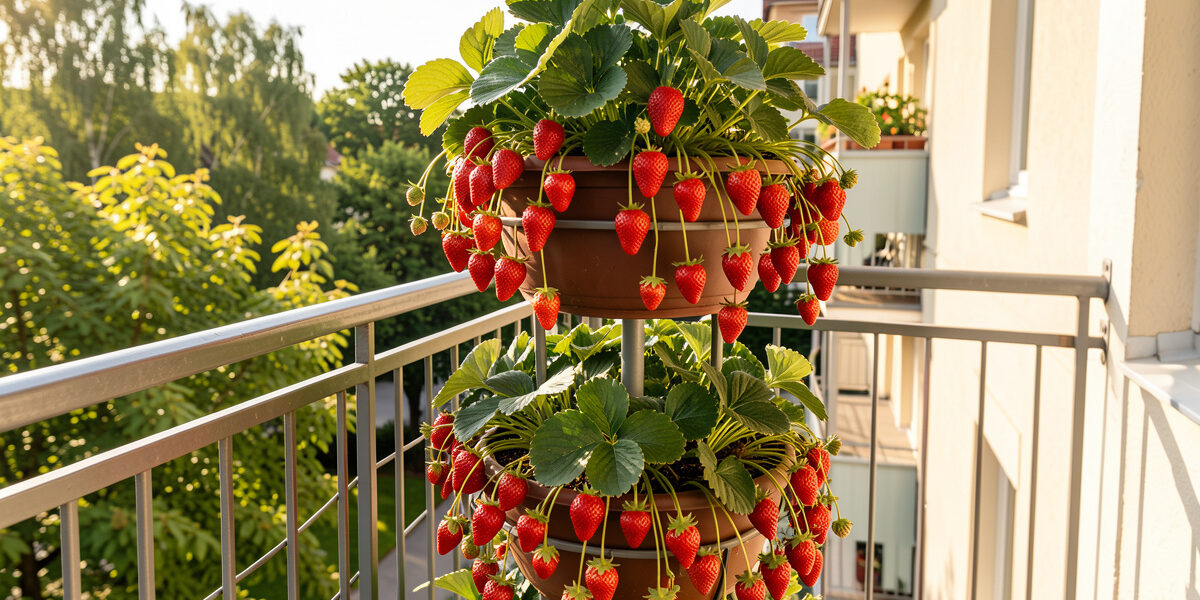
Strawberries are the easiest fruit to crop on a balcony, full stop. A few day-neutral plants in a 20 cm-deep pot or a stacked vertical planter will fruit in their first season, on and off from early summer until the frosts, and they ask for almost nothing beyond sun, even moisture and a feed while they’re cropping. If you grow one fruit in a small space, grow these.
I keep strawberries out on the rail every season because they’re the plant that rewards a beginner fastest — and because a strawberry warm off the plant on a July evening is a different fruit from the cold, hollow things in a supermarket punnet. This is the full setup I use, dialled for a Nordic balcony where the season is short, the wind is real, and the light runs out earlier than any US guide assumes.
Pick day-neutral cultivars, not June-bearers
The single most important choice is the type, and for a balcony it’s day-neutral every time. June-bearing strawberries throw one big flush over a couple of weeks and then they’re done — fine for a gardener making jam from a row, useless for someone who wants a handful of fresh berries through the summer. Day-neutral (and the closely related everbearing) cultivars ignore day length and keep setting flowers and fruit right through the season, which is exactly what a small space wants: a steady trickle, not a glut.
Day-neutrals fruit lightly in their first year and pick up in the second, so don’t judge them on the first few berries. They’re also the type I run indoors under a grow light through the dark months for winter strawberries, which tells you how willing they are to crop whenever conditions allow. Buy named day-neutral plants from a nursery rather than growing from seed — seed-grown strawberries are slow and variable, and runners or potted plants get you fruiting a full year sooner.
The container: depth, drainage and going vertical
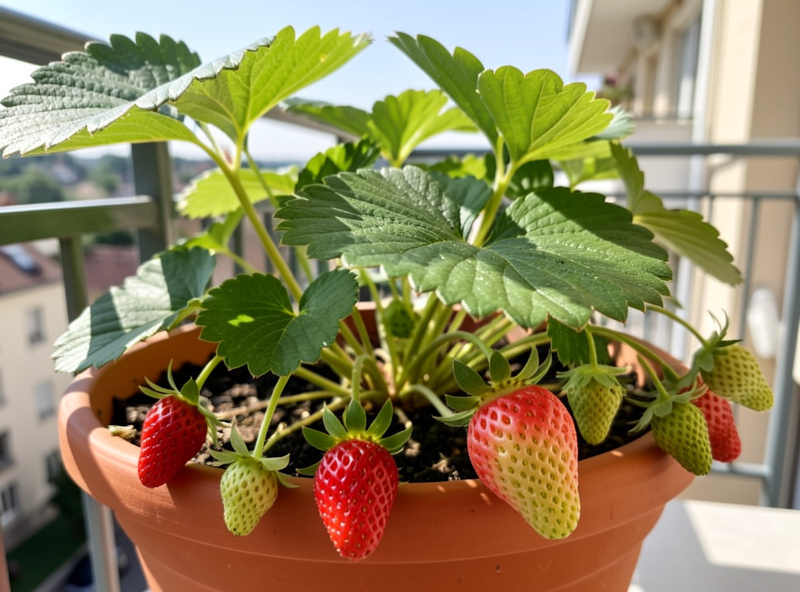
Strawberries are shallow-rooted, so depth isn’t the constraint it is for figs or trees — 20 cm is plenty, and that’s what makes them so suited to rail planters, troughs and stacked towers. What they will not tolerate is standing water, so whatever you use must drain freely from the bottom. A soggy strawberry crown rots, and the first sign is usually a collapsing plant you can’t save.
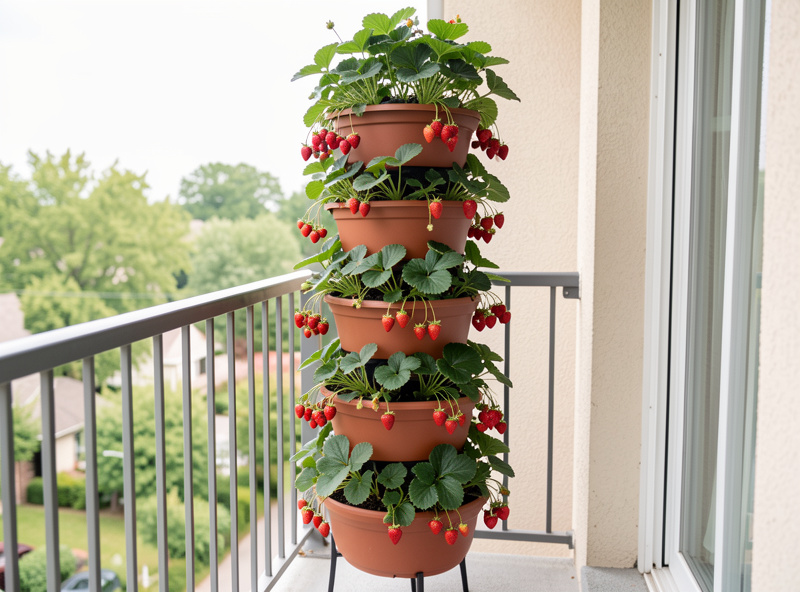
Vertical is where balcony strawberries get clever. A stacked-pot tower or a strawberry planter with side pockets turns a tiny footprint into a dozen or more plants, and it keeps the fruit up off the ground away from slugs. I run a vertical strawberry setup precisely because the floor space on a balcony is the thing you never have enough of — the same logic behind everything in my balcony gardening guide. The catch with towers is that the top dries faster than the bottom, so even watering matters more, not less.
Soil and feeding for a long cropping season
Don’t reach for bagged “potting soil” here either — it compacts and holds too much water around those rot-prone crowns. I use a free-draining container mix: a coir or peat-free base, screened compost or worm castings for fertility, and perlite or grit to keep it open. The reasoning is the same across every fruit in pots, and I cover it in the container fruit guide and in potting soil vs garden soil.
Because strawberries crop over months, they need feeding through that whole window. I top-dress with worm castings when growth starts, then switch to a high-potassium liquid feed (a tomato feed is fine) every week or two once the flowers appear — potassium drives fruit, nitrogen drives leaf, and an over-fed strawberry gives you a jungle of foliage and few berries. Ease off as the season winds down so the plant hardens for winter rather than pushing soft growth into the cold.
Watering: the part that makes or breaks the crop
Strawberries in pots dry out fast, and water stress while they’re flowering or fruiting drops the crop before you ever see it. Even moisture is the whole game. In summer wind a small pot or a tower can need water daily; let it go bone-dry once during fruiting and you’ll get small, misshapen berries or none. This is the problem self-watering setups exist to solve, and strawberries respond to them as well as anything I grow.
I run wicking reservoirs and 3D-printed self-watering inserts in my strawberry containers — the reservoir holds the moisture even and drops my watering to roughly twice a week without the plants ever wilting. Water at the base, not over the crown and fruit, to keep rot and grey mould down. If you only take one habit from this guide, make it consistent watering; it matters more than feeding, light or cultivar.
Sun, pollination and a Nordic winter
Give strawberries the sunniest spot on the balcony — six hours-plus if you have it, though they’ll crop on less, just slower and sweeter-later. They’re self-fertile, so a single plant sets fruit, but pollination on a high balcony can be patchy if few insects find you; a gentle brush over the open flowers every couple of days fills in for the missing bees and noticeably improves how evenly the berries form.
Through a Swedish winter, strawberries in pots need their roots protected like any container fruit — the crowns are hardy, but an exposed, freezing root ball in a small pot is what kills them. Group the pots against a wall and wrap them, move the tower into an unheated stairwell, or follow the routine in my overwintering guide and frost protection guide. They die back and look dead over winter; don’t bin them. Cut off the old leaves, keep them barely moist, and they’ll push fresh growth and crop again come spring. A good day-neutral planting is worth keeping three or four years before the plants tire and you refresh from runners.
Runners: free plants and keeping the planting young
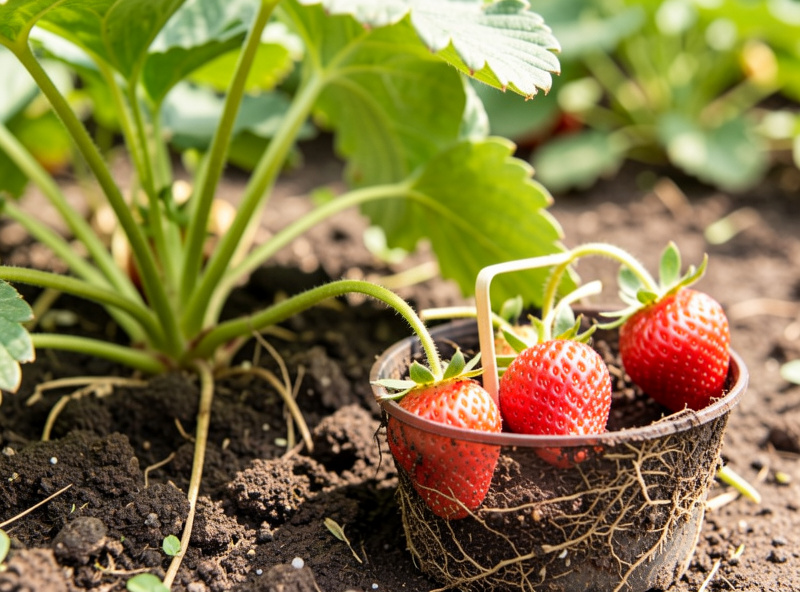
Healthy strawberries throw out runners — long stems that root down into a fresh little plant at the tip. On a balcony these are both a gift and a nuisance. A gift because each rooted runner is a free new plant: peg the tip into a small pot of mix, let it root for a few weeks, then snip it from the parent and you’ve propagated next year’s planting for nothing. A nuisance because a plant pouring energy into runners makes fewer berries, so if you want fruit rather than babies, pinch the runners off as they appear.
I do both, deliberately. Through the main cropping flush I remove runners to keep the plants fruiting, then late in the season I let a few root down to raise replacements. Strawberry plants tire after three or four years — the crowns get woody and the crop drops — so a rolling supply of young runners means you’re never buying plants again and never stuck with a tower of exhausted ones. It’s the same closed-loop habit as keeping a worm bin or a compost pile going: the system feeds itself once you set it up.
Harvesting and keeping the berries clean
Pick strawberries when they’re fully red right to the shoulders and slightly soft — unlike many fruit they don’t ripen further once cut, so a pale berry picked early stays sour. Pick every couple of days through the flush; leaving overripe fruit on the plant invites grey mould and slugs, both of which spread fast in a damp, crowded pot. The vertical tower helps here by keeping fruit off the ground, and watering at the base rather than over the berries keeps mould down.
Slugs are the main balcony pest, climbing surprisingly high to find ripe fruit; a copper tape ring around a pot or tower leg and prompt picking keep them in check without chemicals. Birds can be a problem at ground level but rarely bother a high balcony. Beyond that, strawberries are remarkably trouble-free — far less fuss than the indoor crops I nurse through winter — which is exactly why they’re the fruit I tell every nervous beginner to start with.
Frequently Asked Questions
How many strawberry plants do I need for a balcony?
For a steady picking habit rather than jam, six to twelve day-neutral plants in a tower or a couple of troughs give a household a handful of fresh berries through the season. Day-neutrals crop a little at a time over months, so a small number keeps producing rather than glutting all at once.
How deep does a pot need to be for strawberries?
About 20 cm is plenty, because strawberries are shallow-rooted. That shallow root system is exactly why they suit rail planters, troughs and stacked vertical towers. Free drainage matters far more than depth, since a waterlogged crown rots quickly.
Will strawberries survive winter in a pot in a cold climate?
Yes, if you protect the roots. The crowns are hardy but a small pot freezes through and an exposed root ball is what kills the plant. Group pots against a wall and wrap them, or move them to an unheated shed or stairwell. They die back over winter and regrow in spring.
Why are my balcony strawberries small or misshapen?
Usually inconsistent watering during fruiting, or poor pollination on a high balcony. Water stress shrinks and deforms berries, and missing insects mean flowers are not fully pollinated. Keep moisture even with a wicking reservoir and brush the open flowers every couple of days.
Can I grow strawberries on a balcony with only a few hours of sun?
Yes, though more slowly. Strawberries crop best with six or more hours of direct sun but will still fruit on less, just later and in smaller quantity. Give them the brightest, most sheltered spot you have and accept a lighter, later crop in low light.