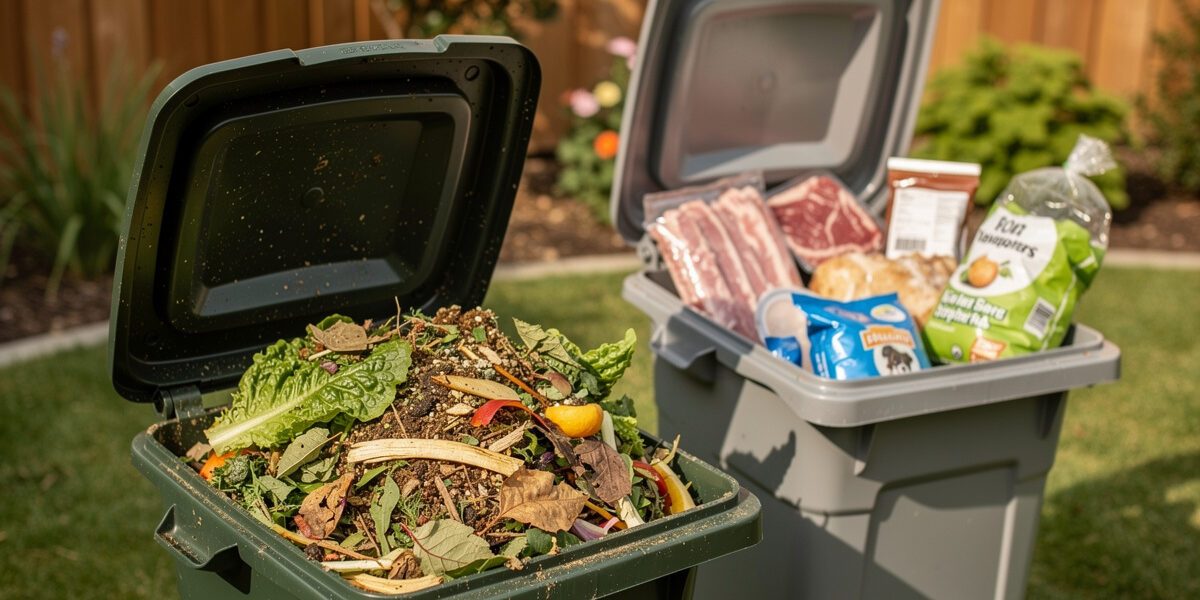
Meat, dairy, oils, pet waste, treated wood, glossy paper, weed seeds, and diseased plants — these are the items that have caused every bin failure I have ever diagnosed. After running worm bins and hot piles side by side for years, the exclusion list is shorter than most guides suggest, but the items on it matter: get any one wrong and you invite pests, pathogens, or slow-accumulating contamination into soil you plan to grow food in. Here are the 23 items to keep out, organized by why they cause problems.
In my own bins, I draw the line at four categories of exclusion: pest attraction (meat, dairy, fish), bin contamination (charcoal, treated wood, plastics), plant-pathogen risk (diseased material, walnut leaves), and chemical residues (pesticides, synthetic fibers). Some of these can be safely composted in specialized systems — bokashi handles meat and dairy, hot piles can deactivate weed seeds — but in a standard backyard pile or worm bin, all 23 belong elsewhere.
As an Amazon Associate I earn from qualifying purchases.
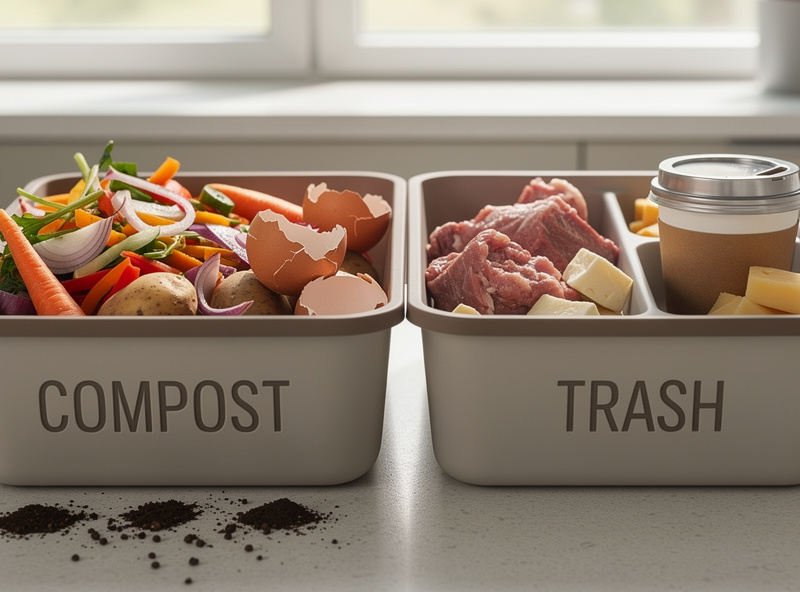
The 7 Items That Attract Pests
Pest attraction is the most immediate consequence of putting the wrong material in a pile. Within 48 hours, scent-trail-driven pests find the pile and begin returning nightly.
- Meat scraps and bones. Attracts rats, raccoons, opossums, and crows within a few days. Hot piles can technically decompose meat, but the bin becomes a known food source long before the meat breaks down.
- Fish and seafood. Same problem as meat plus a much stronger scent trail. Fish bones especially can persist for months.
- Dairy products. Cheese, milk, yogurt, butter — high fat and protein content attracts insects and rodents while also producing strong sulfur odors during decomposition.
- Cooking oils, fats, and grease. Coats other materials and prevents oxygen flow, causing anaerobic conditions. Also attracts rodents and creates a sticky persistent residue in the bin.
- Cooked food with sauces. Even vegetable-based cooked food becomes pest attractant once it has been cooked with oil, salt, or animal fats.
- Whole eggs (the contents, not shells). Egg whites and yolks attract pests aggressively and produce hydrogen sulfide as they decompose. Eggshells alone are fine.
- Pet waste from carnivores (dogs, cats, ferrets). Carries pathogens including Toxoplasma, roundworm eggs, and E. coli that survive backyard composting temperatures. Use a dedicated pet-waste compost system or send to a municipal facility.
For households that need to compost these items, bokashi fermentation handles meat, dairy, and cooked food in a sealed bucket — see the bokashi composting indoor guide for the workflow. Bokashi is the only home-scale method that processes pest-attracting materials safely.
5 Items That Contaminate the Bin
These materials do not break down properly and leave behind residues, pathogens, or chemicals that contaminate the finished compost — sometimes for years.
- Charcoal ash and briquette ash. Contains coal-tar lighter fluid residues, sulfur compounds, and heavy metals depending on the briquette source. Hardwood-only ash from a clean wood fire is acceptable in small amounts as a calcium source; charcoal ash is not.
- Treated lumber and treated sawdust. Pressure-treated wood contains arsenic, chromium, and copper preservatives that leach into compost and into food crops grown in it. Even older railroad-tie creosote contamination persists for decades.
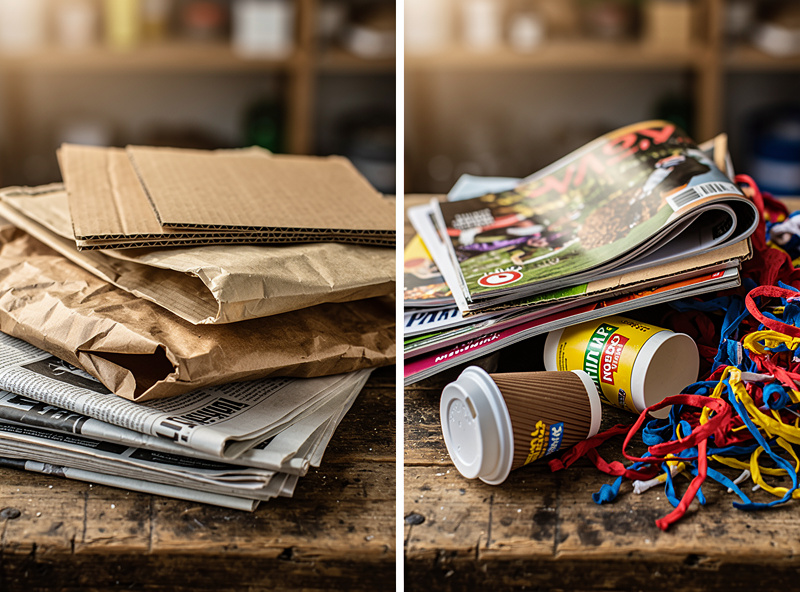
- Glossy printed paper, magazines, junk mail. The glossy coating contains clay and synthetic resins that do not break down. Color inks may contain heavy metals. Stick to plain newspaper or unprinted cardboard.
- Plastic-coated paper. Coffee cups, paper plates with plastic linings, "wax-coated" produce boxes — all contain polyethylene that does not decompose in home composting temperatures and breaks into microplastics.
- "Compostable" plastics labeled for industrial composting. PLA-based bioplastics require sustained 140°F+ for weeks to decompose. Home piles rarely achieve this. The plastic ends up intact in your finished compost. Save these for municipal compost programs.
The general rule for paper products: if it is plain paper or uncoated cardboard, it can compost. If it is shiny, coated, or printed in full color, it cannot.
5 Items That Carry Plant Pathogens or Toxins
Some plants and plant byproducts carry chemical or biological agents that survive composting and damage future garden plants.
- Diseased plant material. Tomato plants with late blight, squash with powdery mildew, beans with rust, fruit with brown rot — all carry spores that survive cold composting and reinfect next season’s plants. Hot composting at sustained 140°F+ kills most pathogens; cold piles do not.
- Black walnut leaves, hulls, and roots. Contain juglone, a natural herbicide that persists in compost and stunts or kills tomatoes, peppers, eggplant, blueberries, and many other crops. Even after 6 months of composting, juglone residue can remain.
- Weeds with mature seeds. Crabgrass, pigweed, lamb’s quarter — all produce seeds that survive cold composting and germinate when finished compost is applied. Hot composting at sustained 131°F+ for 3+ days kills weed seeds; cold composting does not.
- Invasive perennial weeds with rhizomes. Bindweed, Bermuda grass, Japanese knotweed, mint runners, ground ivy — even small root fragments regrow into full plants when compost is applied. Solarize first (sealed in a black plastic bag in the sun for 2 weeks) before composting.
- Plants treated with persistent herbicides (Grazon, picloram, clopyralid). These herbicides survive composting intact and kill broadleaf plants for 1 to 3 years after application. Common contamination route: hay or manure from animals fed treated forage. Test compost on a tomato seedling before using on garden beds.
Persistent-herbicide contamination is a growing problem. If you bring in manure or hay from outside sources, run a bioassay first, exactly as the National Pesticide Information Center at Oregon State University recommends: fill a small pot with the finished compost, plant a few sensitive seedlings like tomato or bean, and watch for 3 to 4 weeks. Cupped, curled, or distorted leaves indicate herbicide residue — do not use the compost on edibles.
6 Items Acceptable in Small Amounts Only
Some materials are fine in moderation but cause problems when they dominate the pile.
- Citrus peels (oranges, lemons, limes, grapefruit). The d-limonene oils in citrus peels suppress microbial activity at high concentrations. Worms avoid citrus entirely. Limit to under 10% of pile volume; chop fine for faster breakdown.
- Onions and garlic in quantity. Allium oils are similarly antimicrobial. Worms refuse onions and garlic. Small amounts in a hot pile are fine; large amounts (a full bag of past-prime onions) need to be chopped and spread thin.
- Pine needles. Slightly acidic and slow to decompose. Up to 10% of pile volume is fine. Higher concentrations require additional lime or wood ash to balance pH.
- Sawdust from untreated wood. C:N is 500:1 — extremely carbon-heavy. Lock up nitrogen if used as a primary brown. Use as a thin top layer for odor control or in tiny amounts. The C:N ratio guide covers this in detail.
- Cooked rice, pasta, and bread. Acceptable in small amounts but attracts mold and pests faster than raw vegetable scraps. Bury under 4 inches of browns to discourage flies.
- Cardboard with tape. Removing the tape is fine but small amounts of tape will work themselves out as the cardboard breaks down. Hand-pick tape residue from finished compost before applying.
Never Compost These Regardless of Quantity
A short list of items that should never enter a home compost system at any quantity:
- Coal and coal ash: Heavy metals and sulfur compounds toxic to plants.
- Diapers (compostable or not): Even compostable diapers carry pathogens and are not designed for home composting.
- Synthetic fabric and dryer lint from polyester/nylon: Microplastic contamination of the bin and finished compost.
- Cigarette butts: Cellulose acetate filters do not biodegrade and carry concentrated nicotine and tar.
- Vacuum cleaner contents: Mostly synthetic fibers, fine plastic dust, and chemical residues.
- Drugstore receipts (BPA-coated): Bisphenol-A residue persists and disrupts plant growth at low concentrations.
- Black mold-covered food (active visible black mold): Some species produce mycotoxins that persist in compost.
For most of these, a municipal trash or recycling bin is the right destination. None belong in a home compost system regardless of bin type, technique, or duration.
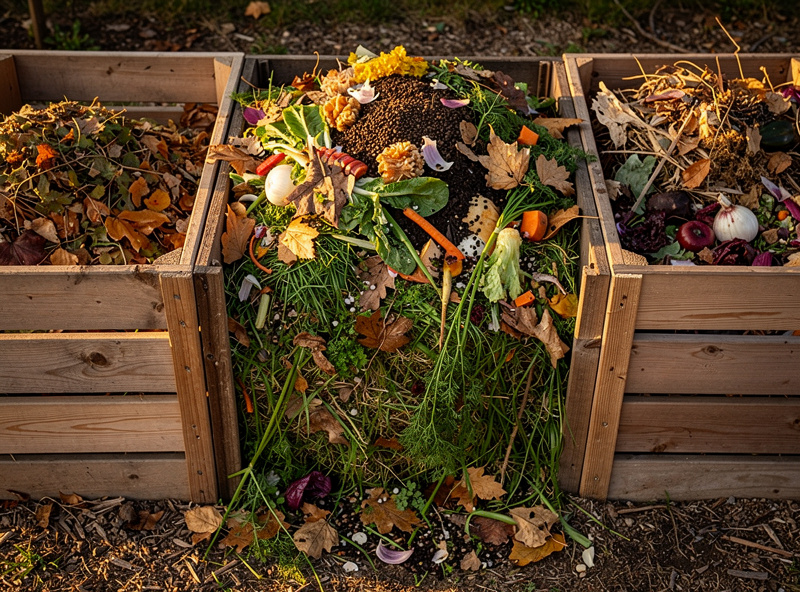
The Safe-to-Compost Quick Reference
To balance the long "do not compost" list, here is the always-safe-in-quantity list for backyard piles and tumblers:
- All raw vegetable and fruit scraps (cut to 1-inch pieces for speed)
- Coffee grounds and unbleached coffee filters
- Tea leaves and unbleached tea bags (remove staples)
- Eggshells (crush before adding)
- Plain stale bread, grains, oats (small amounts, buried under browns)
- Fresh grass clippings (mix with browns immediately)
- Dry autumn leaves (the most accessible brown for most yards)
- Plain shredded newspaper (no glossy or color)
- Uncoated cardboard, shredded
- Plain paper towels and napkins (no chemical cleaners)
- Aged manure from herbivores (chickens, rabbits, horses, cows — never carnivore pets)
- Garden trimmings (non-diseased, non-seeded)
- Spent flowers, deadheaded blooms
- Hair and nail clippings (decompose surprisingly fast)
- Cotton balls, cotton swabs with paper sticks
- Plain wooden toothpicks and chopsticks (chop into 1-inch pieces)
The single worst thing I have put in a worm bin was a handful of onion skins and garlic cloves from a dinner prep — the worms fled to the far side of the bin within hours, and the smell lingered for three days even after I removed them. The exclusion list exists because each item has burned someone’s bin before you. Follow it for the first six months, then experiment in small batches — a well-established bin can handle more than a new one.
Related Reading
- Home Composting: The Complete Beginner Guide — pillar guide covering all five methods
- Bokashi Composting Indoor — the only home method that handles meat and dairy
- Vermicomposting for Beginners — what worms can and cannot eat
- Compost Carbon to Nitrogen Ratio — why some items unbalance the pile
- Hot vs Cold Composting — when method matters for weed seeds and pathogens
What Changes on a Balcony
The “do not compost” list gets shorter on a balcony than in a garden, because the pile is smaller and every mistake concentrates faster. Meat, dairy, and oil are the obvious exclusions, but the one that catches small-space composters out is citrus. A winter’s worth of clementine peels in a compact bin drives the pH acidic enough that the worms retreat to the far corner, and the peels take months longer to break down than anything else in there. In a big backyard pile a few peels vanish into the volume; in a 10-gallon bin they dominate. When in doubt, up north, I freeze questionable scraps and add them a little at a time rather than dumping a whole bag of past-prime produce into a bin that cannot absorb it.
Frequently Asked Questions
Can you compost meat at home?
Not in open piles, tumblers, or worm bins — meat attracts rats and raccoons within days. The only home method that safely processes meat, fish, and dairy is bokashi fermentation in a sealed bucket. Bokashi handles all animal-source food waste, then finishes by burial or in a soil factory.
Why can’t you compost dog or cat poop?
Carnivore pet waste carries pathogens including Toxoplasma, roundworm eggs, Salmonella, and E. coli that survive backyard composting temperatures. Use a dedicated pet-waste digester (an in-ground anaerobic system) or municipal pet waste programs. Never compost pet waste with food gardens.
Can you compost diseased plants?
Only in hot piles that sustain 140 degrees Fahrenheit or higher for at least 3 consecutive days. Cold composting does not kill plant pathogens — diseased material composted cold reinfects next year’s garden. The safer option is to bag and trash diseased plant material rather than risk contamination.
Are citrus peels bad for compost?
Not in moderation. Up to 10% of pile volume is fine. Above that, the d-limonene oils in citrus peels suppress microbial activity and slow decomposition. Worms specifically avoid citrus, so keep it out of vermicomposting bins entirely.
Why are walnut leaves a problem?
Black walnut trees produce juglone, a natural herbicide concentrated in leaves, hulls, and roots. Juglone persists through composting and stunts or kills tomatoes, peppers, blueberries, and many other crops when contaminated compost is applied. Walnut leaves should not enter a compost pile destined for vegetable gardens.
Can you compost pizza boxes?
Yes, if uncoated and grease is minimal. Tear into pieces and treat as brown material. Heavily greased pizza boxes attract pests; the grease layer also slows decomposition. Plastic-coated boxes (rare but exist) cannot compost. Plain corrugated cardboard pizza boxes are usually fine.
What about compostable bags and containers?
"Compostable" usually means industrially compostable, requiring sustained 140 degrees Fahrenheit for weeks. Home piles rarely achieve this. The bags end up intact in finished compost. Save certified compostables for municipal programs that accept them; they do not work in home systems.