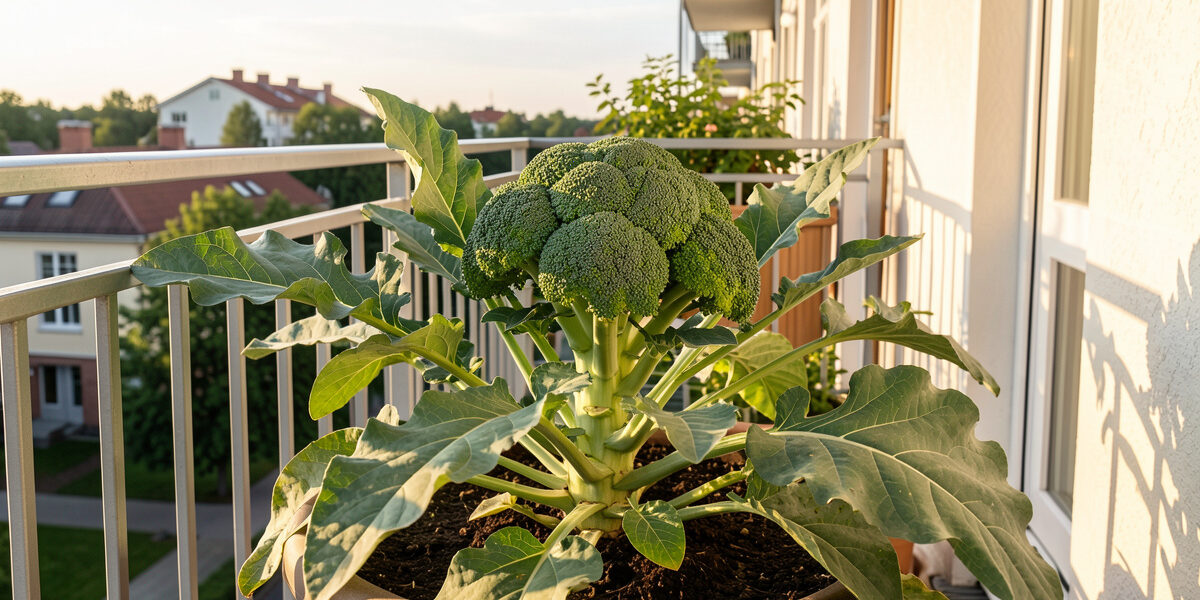
Broccoli grows well in a pot on a balcony if you give each plant a 10–15 litre container at least 30 cm deep, choose a side-shooting variety, and keep the moisture steady. One calabrese plant gives you a single main head plus weeks of smaller side shoots, which is far better value from a single balcony pot than a one-cut crop.
Broccoli is the brassica I’d point a balcony grower at after kohlrabi, because the side-shooting habit means a single pot keeps producing instead of giving you one head and quitting. The catch is that it’s a heavy feeder with a real taproot, so the shallow trough most people reach for on a balcony will never give you a decent head. Get the pot depth and the variety choice right and the rest is steady watering and keeping the cabbage whites off.
The Right Pot for Balcony Broccoli
Give each broccoli plant a single 10–15 litre pot at least 30 cm deep — one plant per pot, not two crammed together. Broccoli throws a substantial root system and competes hard with itself, so two plants in a shared trough produce two poor heads instead of one good one. Depth matters more than width because of the taproot.
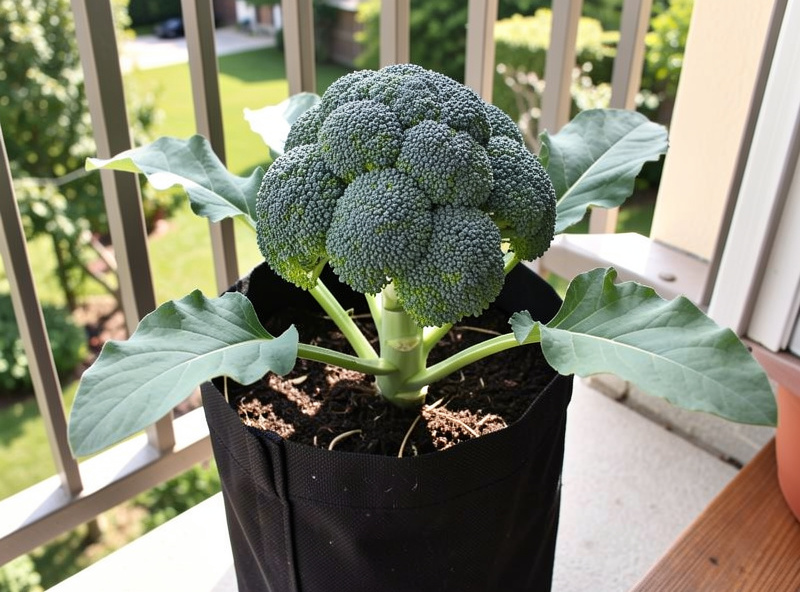
On my balcony I run broccoli in 12-litre fabric grow bags out toward the rail. The fabric warms the root zone in our slow Nordic spring, which buys growing days, and it air-prunes the roots so a plant that sits in the bag for ninety days never circles and strangles itself. The other balcony-specific issue is wind: a broccoli plant getting tall and top-heavy in an exposed spot will rock at the stem and loosen its own roots, so I plant slightly deep — up to the first true leaves — and tuck the heavier pots against the wall rather than the rail. A glazed ceramic pot works too, but remember a 15-litre pot of damp mix is close to 16 kg, and a balcony has a load limit the back-garden writers never think about.
Calabrese vs Sprouting Broccoli: Pick the Right Type
For a balcony pot, choose by how you want to harvest. Calabrese forms one large central head then throws side shoots for weeks — the best all-round container choice. Sprouting broccoli (purple or white) skips the big head and gives a long run of small spears, and is hardier, but it needs a longer season and a bigger pot to be worth the space up north.
I lean on calabrese types for the balcony because they crop inside a single short season: cut the dense central head while the buds are still tight, and the plant responds by pushing a flush of side shoots from the leaf axils that keep coming for three or four weeks if you keep cutting. That turns one plant into a steady trickle of small harvests rather than a single glut. Sprouting broccoli is the better cold-hardy crop — it’ll shrug off frost that flattens calabrese — but the traditional overwintering kinds want most of a year in the pot, which is a big ask for limited balcony space. If you want the sprouting habit in one season, look for the fast modern varieties bred to crop the same year from a spring sowing. Whichever you grow, the timing and feeding logic is the same heavy-feeder pattern covered in the container brassicas guide.
Timing: Starting and Transplanting Up North
Start broccoli indoors under a light 4–6 weeks before your last hard frost, harden off over a week, and transplant out when nights hold above about 5 °C. In a Swedish-balcony climate that means sowing in early-to-mid April and planting out in mid-to-late May, which leaves a fast calabrese enough season to head in high summer and side-shoot into autumn.
Direct-sowing broccoli outdoors up here wastes weeks you don’t have, so it starts on my seedling shelf under the LED bar like everything else — windowsill light in a Nordic spring is too weak and the seedlings go leggy reaching for the glass. Grow them to three or four true leaves, harden off properly, and plant out sturdy. A second consideration is heat: broccoli bolts — shoots straight to yellow flower — if it gets a hot dry spell while heading, so I time the main crop to size up before the warmest part of summer, or accept that a midsummer planting is really an autumn crop. Cool weather is broccoli’s friend; a hot interrupted spell is what loosens the head into a spray of flower buds. The RHS broccoli guide sets out the calabrese and sprouting sowing windows that are worth pulling earlier for a shorter season. Row covers at transplant also keep the early flush of pests off while the plant is most vulnerable.
Watering and Feeding for a Tight Head
Broccoli wants consistent moisture and steady feeding to form a tight head — uneven watering is the main cause of a loose, prematurely-flowering head. Keep the mix evenly damp, feed a nitrogen-leaning liquid feed every couple of weeks while it builds leaf, then keep feeding through heading. A self-watering setup makes this far easier than hand-watering a fast-drying balcony pot.
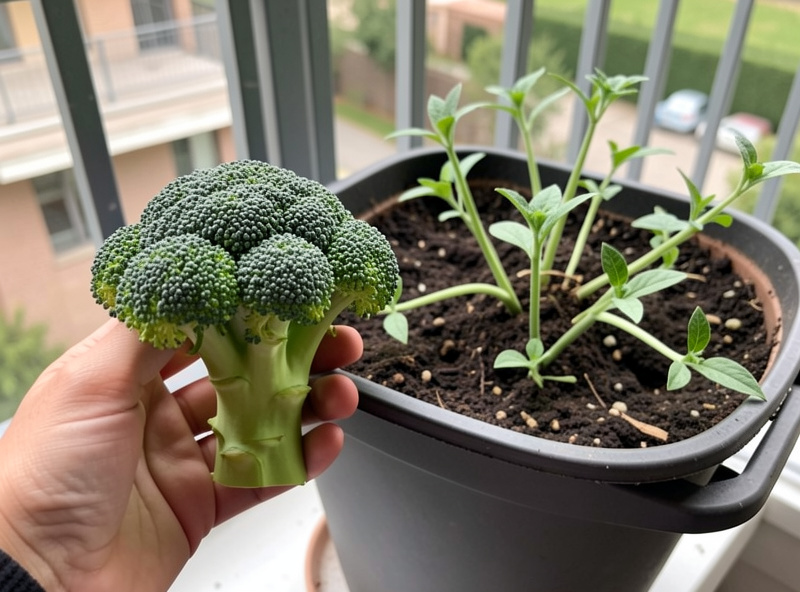
This is where a balcony pot fights you: a fabric bag in July sun can dry out by afternoon, and a broccoli that swings between bone-dry and flooded responds by bolting. I run mine on a 3D-printed self-watering insert that keeps the mix damp from below, and it has cut my watering to roughly twice a week while holding the steady moisture a heading broccoli needs. On feeding, broccoli is a hungry plant: I top-dress with worm castings at transplant and follow with a liquid feed through the season. The full heavy-feeder schedule — what to feed when, and when to ease off the nitrogen — is in the fertilizing brassicas guide. A plant that runs out of nitrogen mid-season pales and makes a small, mean head, so don’t let the feeding lapse after the central head sets.
Harvesting for Weeks of Side Shoots
Cut the central head while the buds are still tight and dark green, before any yellow flower shows — usually when it’s 10–15 cm across. Cutting early, with a slanted cut so water runs off the stump, triggers the side shoots that follow. Keep harvesting those smaller spears every few days and a single calabrese plant feeds you for a month.
The mistake that costs people the second crop is waiting too long for the main head to get bigger. Broccoli doesn’t keep swelling indefinitely; past its point the tight buds loosen and yellow into flower, and the whole head turns coarse. Cut it a touch early rather than a touch late. Once the main head is off, the plant redirects its energy into the side shoots, and as long as you keep cutting those before they flower, it keeps producing. Feed lightly through this side-shoot phase to sustain it. Up north a healthy plant will run this side-shoot harvest right into the first light frosts, which actually sweetens the spears.
Keeping the Pests Off
The big three on balcony broccoli are cabbage white caterpillars, aphids that hide in the head, and flea beetle peppering the leaves with holes. The single most effective move is fine insect netting over the pot from the day you transplant, which stops the cabbage white butterfly laying eggs in the first place. A balcony is not as pest-free as it looks.
I’ve watched cabbage whites quarter a third-floor balcony hunting for exactly this plant, so don’t assume height protects you. Netting from day one is the non-negotiable defence; once caterpillars hatch in a broccoli head they’re a nightmare to pick out. Aphids are the other balcony regular — they drift in on the wind and colonise the growing tip and the head, so check under leaves and blast or squash colonies early. The full container-specific routine, including why companion planting doesn’t do much for an isolated pot, is in the brassica pest control guide.
Broccoli Types for a Container at a Glance
The fastest way to pick a broccoli for a balcony pot is to match the harvest style to your space. Single-head calabrese is the container default; side-shooting calabrese stretches the harvest; same-season sprouting types give a long run of spears; and traditional overwintering sprouting broccoli is really for ground beds, not a pot you need back.
| Type | Harvest style | Season needed | Container fit |
|---|---|---|---|
| Calabrese (single-head) | One big central head | Short | Excellent |
| Calabrese (side-shooting) | Head plus weeks of shoots | Short–medium | Excellent |
| Same-season sprouting | Long run of small spears | Medium | Good |
| Overwintering sprouting | Spring spears after winter | Very long (most of a year) | Poor for small balconies |
One more thing about the mix the plant sits in: broccoli wants rich, free-draining ground, not the fine bagged “potting soil” that compacts into an airless brick after a month of watering. I build my container mix around compost or coir with a generous handful of perlite for drainage, because a heavy feeder in a waterlogged pot stalls and purples instead of heading up.
Frequently Asked Questions
How big a pot does broccoli need on a balcony?
One broccoli plant needs a 10-15 litre pot at least 30 cm deep, with a single plant per pot. Broccoli has a substantial taproot and competes with itself, so two plants in one trough give two poor heads instead of one good one.
Can you grow broccoli in containers and get more than one harvest?
Yes. Calabrese-type broccoli forms one main central head, and once you cut it the plant pushes side shoots from the leaf axils for three to four weeks. Keep cutting those smaller spears before they flower and one plant feeds you for a month.
Why is my container broccoli flowering instead of forming a head?
That is bolting, usually triggered by heat or uneven watering. Broccoli is a cool-season crop that shoots to yellow flower if it dries out or gets a hot spell while heading. Keep the moisture steady and time the crop to head before peak summer heat.
When should I start broccoli seeds for a balcony in a cold climate?
Start indoors under a light 4-6 weeks before your last hard frost, then transplant out when nights stay above about 5 degrees C. In a Nordic climate that means sowing in early-to-mid April and planting out in mid-to-late May.
How do I keep cabbage white caterpillars off balcony broccoli?
Cover the pot with fine insect netting from the day you transplant. This physically blocks the cabbage white butterfly from laying eggs on the plant. Cabbage whites readily find rooftop and balcony pots, so netting from day one is the most effective defence.