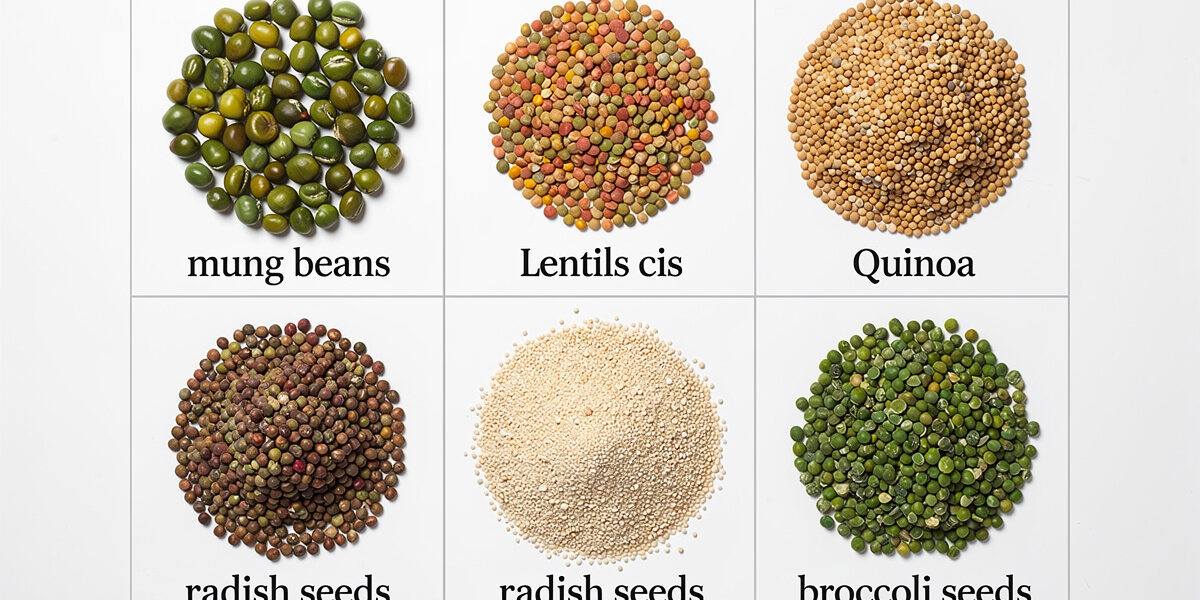
Fastest seeds to sprout: Quinoa (1-2 days), Lentils (2-3 days), and Mung Beans (2-3 days) are the speed champions. Radish, Alfalfa, and Broccoli follow closely at 4-5 days. If you want instant gratification, these are the seeds to choose.
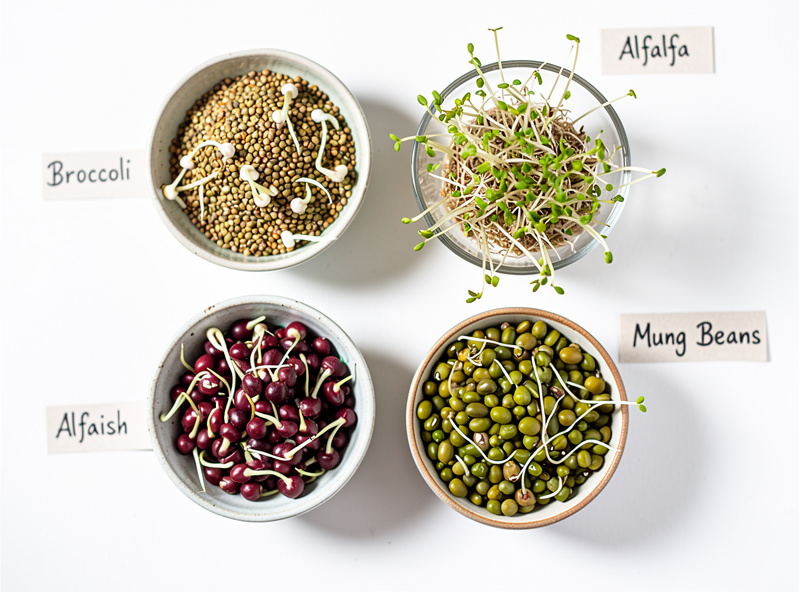
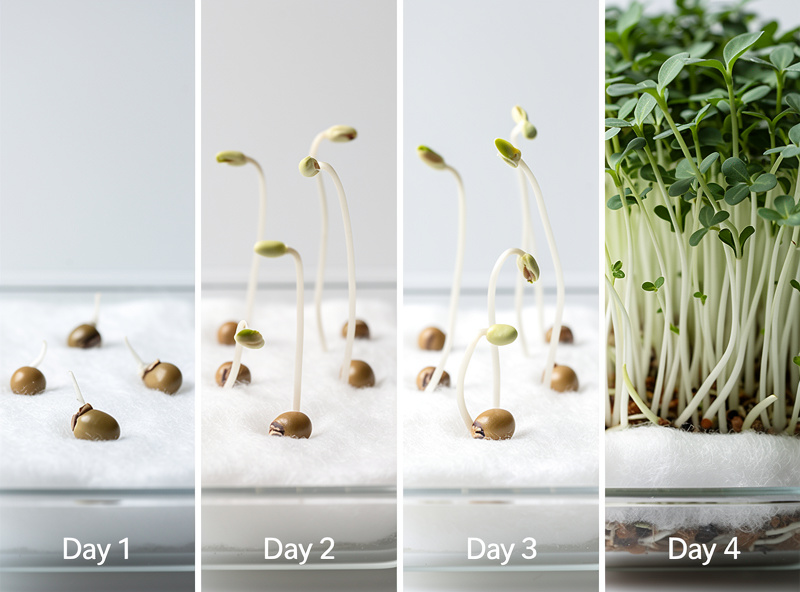
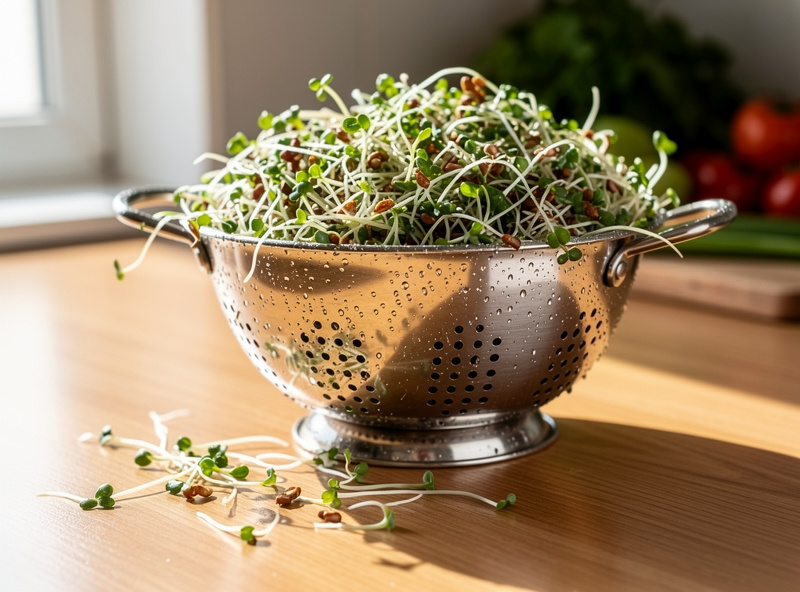
For a complete overview of all sprouting methods and seeds, see our complete sprouting guide.
One of the hardest parts of gardening is the wait. Tomatoes take 80 days. Carrots take 70. Even lettuce takes 30. But sprouting is the drag-racing of the plant world. It satisfies the itch to grow something now.
Whether you are trying to teach impatient children about biology or you just forgot to buy vegetables for tomorrow’s dinner, these seeds will go from dry and dormant to living food in less than a week. In this guide, we rank them by speed and include flavor, texture, and culinary use for each.
Why Some Seeds Sprint and Others Crawl
The speed difference between a lentil (ready in 2 days) and an alfalfa seed (ready in 5) comes down to seed size and stored energy. Larger seeds like chickpeas and lentils carry more onboard fuel and can push out a sprout faster. Tiny seeds like alfalfa and clover start with less and take longer to reach harvest size.
Temperature is the other variable I control. In my kitchen during winter the lentils take closer to 3 days; in summer with the kitchen at 72°F they are ready in under 48 hours. Warmth speeds germination but also speeds spoilage, so the faster-growing seeds below let you stay ahead of the curve.
One subtlety worth knowing: speed and shelf life pull against each other. The fastest sprouts (quinoa, lentils, mung) are also the most perishable once harvested — they hold for maybe 5 days in the fridge before going off. The slowest sprouts (alfalfa, clover) keep for a week to ten days refrigerated because their dense, leafy structure holds moisture without collapsing. If you want a jar that sits in the fridge quietly for a week, grow alfalfa. If you want something on tomorrow’s sandwich, grow lentils.
Tier 1: The “Overnight” Miracles (1-2 Days)
1. Quinoa (24 Hours)
Technically a seed, not a grain. It is the Usain Bolt of sprouts.
Process: Soak 1 hour. Rinse. Wait 12 hours. Rinse. Done.
Taste: Nutty, crunchy.
Use: Salads, tabbouleh, smoothies.
2. Buckwheat Groats (36-48 Hours)
Ensure you buy raw, green groats (not toasted Kasha). They produce a gelatinous coating, so rinse them well.
Taste: Mild, starch-like.
Use: Dehydrated for raw granola or sprinkled on yogurt.
3. Sunflower Kernels (48 Hours)
These must be harvested short. If you let them go to day 3, they get bitter.
Taste: Rich, oily, nutty.
Use: Snacks, pate.
Tier 2: The “Weekend” Warriors (2-3 Days)
4. Lentils (Green/Brown)
Reliable and sturdy. They are ready as soon as the tail appears (Day 2), but tasty up to Day 4.
Taste: Peppery, fresh pea flavor.
Use: Soups, wraps, snacking. Learn more in our complete lentil sprouting guide.
5. Mung Beans
The fastest bean. They grow visibly every few hours.
Taste: Watery, crisp.
Use: Stir-fries, Korean sides. See our mung bean sprouting guide for details.
6. Adzuki Beans
Small red beans. They take slightly longer than mung but are still very fast.
Taste: Sweet, nutty.
Use: Asian desserts or salads.
Tier 3: The “Work Week” Growers (4-5 Days)
7. Radish
Fastest of the leafy sprouts. They show roots in 24 hours but need 3 days to develop spicy leaves.
Taste: Spicy, hot.
Use: Garnish, sushi. Check out our radish sprouting guide for tips on managing the heat.
8. Broccoli
The slowest of the fast sprouts but the most intensely flavored. Let them green up properly before harvest — the peppery heat develops with the leaf color.
Taste: Peppery, mustardy.
Use: Sandwiches, avocado toast. See our broccoli sprouting guide.
9. Alfalfa and Clover
The twins. They grow at identical speeds. They need the extra days to shed their hulls and unfold their leaves.
Taste: Fresh grass, mild.
Use: Sandwiches. Learn the technique in our alfalfa guide.
10. Fenugreek
Fast to sprout, but needs time to lose its initial bitterness. By day 3 the maple-syrup aroma fills the kitchen and the sweetness arrives.
Taste: Maple, curry.
Use: Indian dishes, garnishes on dal. The maple scent is unlike anything else in the sprouting line-up.
Speed vs Flavor: A Quick Trade-off
The fastest sprouts are not always the most flavorful. Quinoa is the speed champion but it is a background ingredient — crunchy, nutty, and easy to lose in a salad. Lentils are nearly as fast and bring a peppery snap that holds its own. Radish and broccoli take twice as long but pack a flavor punch nothing in Tier 1 can match. If you are optimizing for the most flavor per day of patience, lentils and mung beans are the sweet spot; if you are optimizing for raw speed, quinoa wins uncontested.
Yield and Volume: What Each Seed Produces
| Seed | Dry Amount | Yield (Sprouted) | Jar Size |
|---|---|---|---|
| Lentils | 1/2 cup | 1.5-2 cups | Quart |
| Quinoa | 2 tbsp | 1/2 cup | Quart |
| Mung Beans | 1/2 cup | 2.5-3 cups | Quart+ |
| Radish | 2 tbsp | 2 cups | Quart |
| Broccoli | 2 tbsp | 2 cups | Quart |
| Sunflower | 1 cup | 3 cups | Half-gallon |
| Alfalfa | 2 tbsp | 3-4 cups | Quart |
| Fenugreek | 3 tbsp | 2 cups | Quart |
| Clover | 2 tbsp | 3-4 cups | Quart |
| Chickpeas | 1 cup | 2-3 cups | Half-gallon |
Storage and Shelf Life Tips
Different sprouts have varying shelf lives, so understanding proper storage is essential for maximizing freshness. Fast-growing sprouts from Tier 1 and 2 tend to have shorter refrigerator life than leafy sprouts from Tier 3.
After harvesting, rinse your sprouts thoroughly in cold water and allow them to dry completely. Excess moisture dramatically shortens shelf life. Use a salad spinner or spread sprouts on clean kitchen towels to remove water.
Store dry sprouts in an airtight container lined with paper towels. The paper absorbs residual moisture and prevents the development of slimy textures. Keep containers in the refrigerator at 35-40 degrees Fahrenheit.
Expected shelf life by sprout type:
- Quinoa and Buckwheat: 3-4 days (consume quickly as they can develop off-flavors)
- Lentils and Mung Beans: 5-7 days
- Radish and Broccoli: 5-7 days
- Alfalfa and Clover: 7-10 days (longest lasting)
Check stored sprouts daily and remove any that appear slimy or discolored. For maximum freshness and crunch, consume sprouts within the first few days after harvest. If you cannot use them quickly, consider starting smaller batches more frequently.
Project Idea: The “Sprout Race” for Kids
If you have children, this is the perfect rainy day activity.
- Get 3 small jars.
- Put Quinoa in Jar A, Lentils in Jar B, and Radish in Jar C.
- Have the kids draw “predictions” on a chart.
- Rinse them together morning and night.
- Measure the tail length with a ruler every 12 hours.
This visually demonstrates the different growth rates and keeps them engaged with their food.
As an Amazon Associate I earn from qualifying purchases.
Shopping Guide: Where to Find Fast Seeds
You can find many of these in your local grocery store, which makes them accessible for budget-friendly gardening.
- Bulk Bin Aisle: Green Lentils, Mung Beans, Quinoa, Sunflower Seeds (Raw).
- Health Food Store: Alfalfa, Radish, Broccoli (often sold in packets).
- Asian Markets: The best place for Mung Beans and Adzuki Beans (usually $1-2 per lb).
Troubleshooting Common Problems
Fast-sprouting seeds present five recurring failure patterns that require targeted interventions: mold development from inadequate drainage (slimy texture, musty odor), bacterial fermentation from infrequent rinsing (sour smell, rot), low germination rates from old or heat-treated seeds (older than 2 years), temperature stress from environments outside 65-75°F optimal range, and premature spoilage from improper storage (moisture accumulation). The accelerated 1-5 day sprouting timeline leaves minimal margin for error—problems manifest quickly but resolve equally fast when identified early. Most issues trace to water management (drainage angle, rinse frequency, moisture control) rather than seed quality, making systematic process adjustments the primary solution path.
- Seeds are not germinating within expected timeframe.
- Check seed freshness—old seeds have lower germination rates. Ensure proper soaking time (too short prevents hydration, too long can drown seeds). Verify water temperature is 65-75 degrees Fahrenheit. Some seeds from the bulk bin may have been heat-treated and will not sprout.
- Fast sprouts are getting slimy before I can harvest.
- Increase rinse frequency to 3 times daily during warm weather. Ensure complete drainage after each rinse. Consider using the colander method for beans, which provides better airflow than jars.
- Quinoa or buckwheat tastes soapy.
- These seeds have natural saponins on their coating. Rinse them thoroughly before and after soaking. Some people rinse quinoa 5-6 times before sprouting to remove all traces of the bitter coating.
- Sunflower sprouts turned bitter.
- You let them grow too long. Sunflower sprouts should be harvested within 48 hours of sprouting, when the tail is just visible. Beyond that, they develop bitter compounds.
- Mixed sprouts are finishing at different times.
- Only mix seeds from the same Tier. Mixing Tier 1 quinoa with Tier 3 alfalfa means the quinoa will rot before the alfalfa is ready. Commercial seed mixes are formulated with similar-speed seeds.
- Sprouts smell fermented or alcoholic.
- This indicates bacterial overgrowth from inadequate drainage or contamination. Discard the batch immediately and sanitize all equipment with boiling water before starting again.
Recipe: The 48-Hour Sprout Salad
Can you make a meal from scratch in 2 days? Yes.
- Day 0 (Night): Soak 1/2 cup Lentils and 1/4 cup Quinoa in separate jars — I run mine in a wide-mouth sprouting jar kit with mesh screen lids, one jar per seed.
- Day 1: Rinse both morning and night.
- Day 2 (Night): Harvest. Mix them together.
- Dress: Olive oil, lemon juice, salt, diced cucumber, and parsley.
- Serve: A fresh, crunchy counter-grown salad ready in 48 hours.
Where to Source Fast-Sprouting Seed
The fastest sprouting seeds split into two sourcing buckets. Lentils, mung beans, chickpeas, and quinoa you can often buy at the grocery bulk bin and get good germination — they are food-grade seeds that have not been heat-treated. Alfalfa, broccoli, radish, fenugreek, and clover are best bought from a sprouting-seed supplier, because the pathogen-testing standard matters when you eat them raw. I keep a rotating stock of organic sprouting-seed variety packs on the shelf and refill the bulk-bin seeds (lentils, mung, quinoa) from the co-op when I am there.
A Quick Word on Sprout Safety
The same hygiene rules apply across every seed in this list: source seed sold for sprouting when you can (especially for the leafy brassica and alfalfa types), rinse in clean cold running water at every step, drain thoroughly, refrigerate the finished sprouts, and discard any batch that smells off. The faster-sprouting seeds (lentils, quinoa, mung) are slightly more forgiving than the slower leafy sprouts because they spend less time in the warm-wet danger window, but the rules are the same. People who are pregnant, elderly, very young, or immunocompromised should cook sprouts rather than eat them raw. The FDA Sprout Safety Alliance publishes the full industry-side guidance.
What seeds sprout the fastest at home?
The fastest sprouting seeds include alfalfa (3-5 days), mung beans (2-4 days), lentils (2-3 days), radish (3-4 days), and broccoli (3-5 days). Quinoa is exceptionally fast, often sprouting in just 12-24 hours.
Can I sprout seeds from the grocery store?
Some grocery store seeds work, like dried lentils, mung beans, and chickpeas if they’re raw and unprocessed. However, many commercial seeds are treated, irradiated, or too old to germinate. For best results, buy seeds specifically labeled for sprouting.
How long do most seeds take to sprout?
Most sprouting seeds are ready in 3-7 days. Quick sprouts (lentils, quinoa) take 2-3 days. Medium sprouts (alfalfa, broccoli) take 4-5 days. Slower sprouts (sunflower, pea shoots) can take 7-10 days.
Do sprouts need sunlight to grow?
Sprouts don’t need direct sunlight during germination—in fact, they prefer darkness initially. Once they’ve developed, a few hours of indirect light helps them green up and develop chlorophyll, but it’s optional for most varieties.
Why are my seeds not sprouting fast?
Slow sprouting usually indicates old seeds (germination drops after 2 years), insufficient rinsing, poor drainage, or temperature issues. Seeds sprout best between 65-75°F (18-24°C). Below 60°F, germination slows significantly.
Which seeds need soaking before sprouting?
Large seeds like mung beans, chickpeas, lentils, and peas need 8-12 hours soaking before sprouting. Small seeds like alfalfa, broccoli, and radish need only 2-4 hours. Quinoa barely needs soaking—30 minutes is enough.
How do I know when fast-sprouting seeds are ready?
Seeds are ready when tails are 1/4 to 1/2 inch long—about 2-3x the seed length. For mung beans, harvest when beans turn bright green and plump. Quinoa is ready when tiny white tails appear.