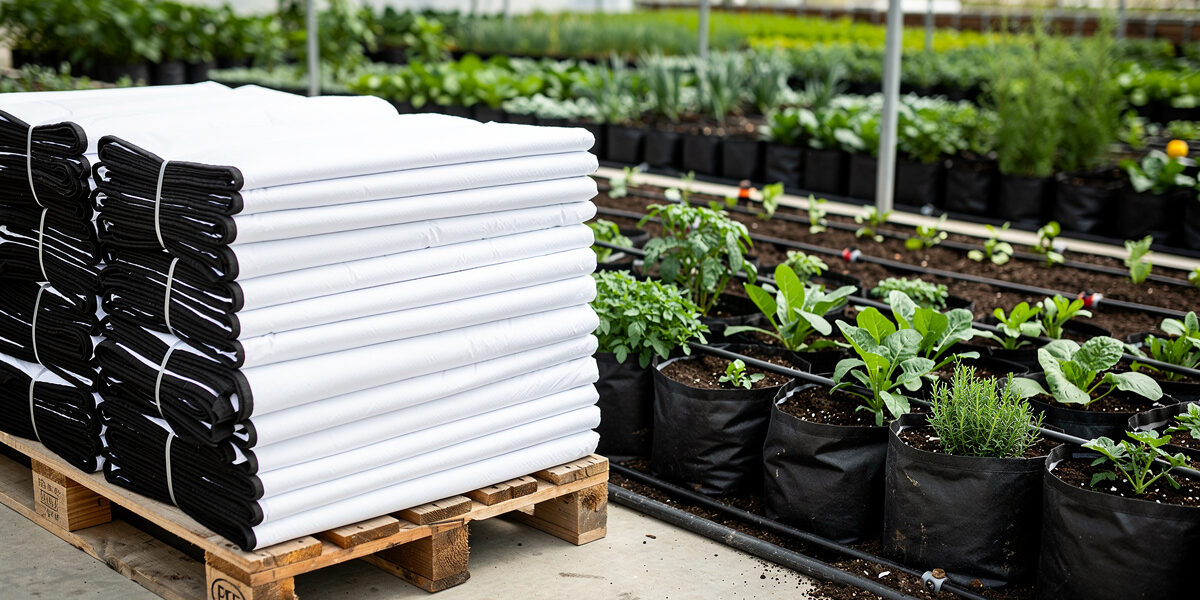
Purchasing grow bags wholesale makes sense once you are running more than a handful of containers — and most of my balcony garden is fabric pots, so I buy them in bulk. Ordering 50 to 500 units at a time drops the per-container cost substantially compared to retail, which lets you standardize your whole setup on high-quality, breathable fabric containers. The reason those containers are worth standardizing on is air-pruning: when roots hit the breathable fabric wall they stop and branch instead of circling, which Rutgers Cooperative Extension describes as the core benefit of grow-bag gardening (Benefits of Grow Bag Gardening, Rutgers NJAES). Here is how I think about sourcing, quality, and value when buying in volume.
Understanding Grow Bags Wholesale for Serious Container Gardeners
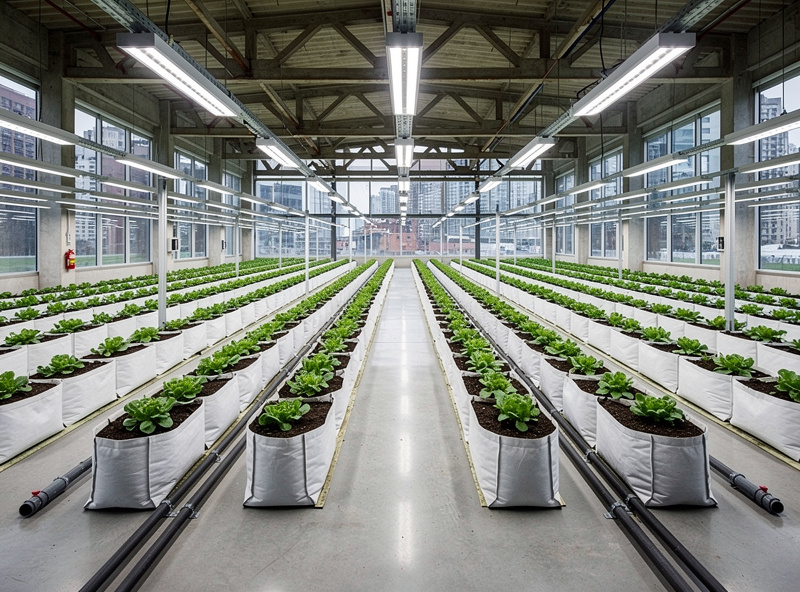
Buying grow bags wholesale has become an increasingly popular strategy for serious container gardeners, market farmers, community garden organizers, and anyone managing multiple plantings. Purchasing in bulk offers significant cost savings, ensures consistent container quality across your garden, and provides the quantities needed for large-scale growing operations. Whether you are outfitting a commercial farm, establishing a community garden, or simply want to convert your entire home garden to the benefits of fabric container growing, understanding wholesale purchasing helps you maximize value while obtaining quality products.
The shift toward fabric container gardening has driven explosive growth in the grow bag market, with manufacturers now offering wholesale options that make bulk purchasing accessible to operations of all sizes. From small 50-unit minimum orders suitable for ambitious home gardeners to pallet-quantity purchases for commercial operations, wholesale grow bags provide the economies of scale that make fabric container gardening practical for extensive plantings.
Benefits of Buying Grow Bags Wholesale
For the best vegetables to grow in bags, see best vegetables for urban gardens.
Significant Cost Savings
The primary advantage of wholesale purchasing is reduced per-unit cost. Individual grow bags purchased at retail might cost $10-15 each depending on size and quality. Wholesale pricing typically cuts that substantially, with per-unit costs dropping to roughly $4-8 for equivalent products. For gardens requiring dozens or hundreds of containers, these savings quickly accumulate into substantial budget benefits.
Beyond unit pricing, wholesale purchasing eliminates retail markups that typically double or triple manufacturer costs. Buying direct from manufacturers or authorized distributors ensures you pay true market value rather than inflated retail prices. Volume discounts increase with order size, making larger purchases progressively more economical.
Consistent Quality and Specifications
Wholesale purchases ensure all containers in your operation match specifications exactly. When buying retail from multiple sources, slight variations in fabric weight, dimensions, stitching quality, and features can create inconsistent growing conditions across your garden. Wholesale orders from single production runs guarantee uniformity that supports consistent plant performance.
This consistency is particularly valuable for commercial operations where variable container performance could affect crop uniformity, harvest timing, and marketability. Even home gardeners benefit from knowing every container will perform identically, eliminating the guesswork of mixing different brands or production batches.
Availability in Required Quantities
Retail sources often stock limited quantities, particularly of less common sizes. Wholesale purchasing ensures you obtain exactly the number of containers needed in the sizes required for your specific crops. No more compromising on container selection because your local garden center only stocks three of the ten-gallon bags you need for tomato plantings.
Seasonal demand can deplete retail inventory just when you need containers most. Wholesale arrangements with manufacturers or major distributors provide reliable supply chains that ensure containers arrive when needed for spring planting or crop rotation schedules.
Customization Opportunities
Significant wholesale orders sometimes enable customization options unavailable for retail purchases. Custom sizes for specific crops, branded containers with farm or garden names, specific colors for crop coding, or specialized features for unique growing situations may be possible with volume orders. While minimum quantities for customization vary by manufacturer, serious operations can obtain containers perfectly tailored to their needs.
Types of Grow Bags Available Wholesale
For container selection tips, check urban gardening beginner guide.
Standard Fabric Grow Bags
The bread and butter of wholesale grow bag purchasing, standard fabric containers come in cylindrical or square configurations across a range of sizes. Common wholesale sizes include: 1-3 gallon for herbs and leafy greens; 5-7 gallon for peppers, eggplants, and compact tomatoes; 10-15 gallon for standard tomatoes, cucumbers, and squash; 20-30 gallon for melons, large tomato varieties, and small fruit trees.
Standard bags typically feature 260-300 gram weight fabric, reinforced stitching, and sturdy handles on larger sizes. These general-purpose containers suit most vegetable crops and represent the best value for mixed plantings. Bulk pricing for standard bags typically starts at 50-100 unit minimums depending on supplier.
Heavy-Duty Commercial Bags
For operations requiring maximum durability, heavy-duty commercial grow bags offer enhanced construction with thicker fabrics (400+ grams), reinforced stress points, and commercial-grade stitching designed for years of continuous use. These premium containers withstand the rigors of commercial farming, including frequent relocation, automated handling systems, and exposure to agricultural chemicals.
While 2-3 times the cost of standard bags, commercial-grade containers last 5-10 years versus 2-3 years for consumer versions, providing superior long-term value for permanent installations. Wholesale pricing on heavy-duty bags typically requires 100+ unit minimums but delivers exceptional value for serious operations.
Specialty Crop Containers
Beyond standard vegetable bags, wholesale purchasing encompasses specialty containers designed for specific crops. Potato grow bags with harvest flaps, strawberry towers with planting pockets, tomato-specific bags with reinforced sides for cage attachment, and tree containers in large sizes all benefit from bulk purchasing when outfitting extensive operations.
For specialized vegetable growing, see our comprehensive guide on fabric vegetable planters which details the specific container requirements for different crops.
Breathable Root Pruning Containers
Advanced fabric container technology includes specialized root-pruning fabrics that enhance the natural air-pruning effect of standard bags. These high-tech containers feature precisely engineered porosity that optimizes root development, particularly valuable for tree and shrub production where root quality determines marketability. Wholesale purchasing makes these premium containers accessible for large-scale nursery operations.
Sourcing Grow Bags Wholesale
Avoid common gardening mistakes with grow bags.
Direct from Manufacturers
The most economical wholesale sourcing comes directly from manufacturers, eliminating distributor markups. Major fabric container manufacturers operate worldwide, with significant production concentrated in China, India, and increasingly in North America and Europe for regional markets. Direct manufacturer relationships offer best pricing but typically require substantial minimum orders (500+ units) and longer lead times for production and shipping.
When sourcing direct, vet manufacturers carefully for quality standards, production capacity, and export capabilities. Request samples before committing to large orders, and establish clear specifications for fabric weight, dimensions, stitching patterns, and quality standards. International sourcing requires understanding of import procedures, customs regulations, and shipping logistics.
Distributors and Wholesalers
Agricultural supply distributors and horticultural wholesalers bridge the gap between manufacturers and end users, offering wholesale pricing with more accessible minimum orders (typically 50-200 units). These distributors stock popular sizes and styles, providing faster delivery than direct manufacturer orders while still offering substantial savings over retail.
Established relationships with agricultural distributors provide reliable supply chains, quality guarantees, and responsive customer service. Distributors often carry multiple brands, allowing comparison shopping and product selection without dealing with multiple manufacturers directly.
Online Wholesale Marketplaces
Platforms like Alibaba, Global Sources, and ThomasNet connect buyers directly with manufacturers worldwide, facilitating wholesale purchasing with lower minimum orders than traditional direct relationships. These marketplaces enable price comparison across multiple suppliers, review of manufacturer credentials, and secure payment processing with buyer protection.
When using online marketplaces, prioritize suppliers with verified business credentials, transaction histories, and positive buyer reviews. Request samples before large orders, and use escrow payment services that release funds only upon satisfactory delivery. Communication challenges and quality variability require more diligence than domestic sourcing.
Cooperative Purchasing
For operations too small to meet wholesale minimums individually, cooperative purchasing with other gardeners, community gardens, or farming operations aggregates demand to achieve wholesale pricing. Garden clubs, farming associations, and online gardening communities often organize group buys that make bulk pricing accessible to individuals.
Cooperative purchasing requires coordination of orders, distribution logistics, and payment collection, but the savings often justify the effort. Establish clear agreements regarding specifications, quality standards, and dispute resolution before participating in group purchases.
Evaluating Grow Bag Quality
Learn about vertical gardening to maximize your grow bag production.
Fabric Weight and Composition
Fabric weight, measured in grams per square meter (gsm), indicates container durability and longevity. Consumer-grade bags typically use 200-260 gsm fabric, while commercial grades range 300-400+ gsm. Heavier fabrics resist tearing, withstand UV exposure longer, and maintain structural integrity under the weight of wet soil and mature plants. Oregon State Extension’s container-planting guidance makes the related point that larger, sturdier containers are the right call for shrubs and small trees — and the same logic applies to picking a heavier fabric weight for a bigger grow bag (Container Planting, OSU Extension [PDF]).
Fabric composition matters as well. Polypropylene offers excellent durability and drainage, while felted recycled materials provide environmental benefits with slightly shorter lifespans. Some premium containers incorporate UV stabilizers, antimicrobial treatments, or reinforced polymers that extend service life in harsh agricultural environments.
Construction Quality
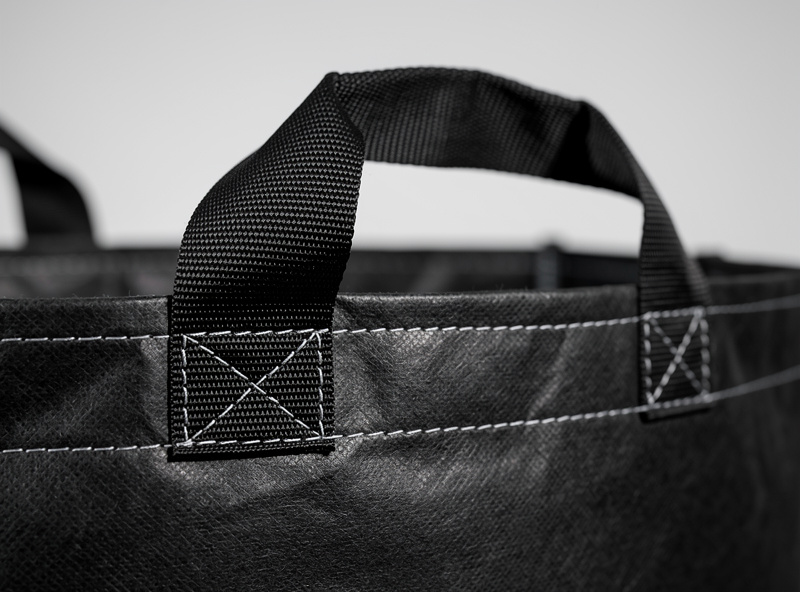
Examine stitching patterns, seam construction, and handle attachment when evaluating grow bags. Quality containers feature double or triple stitching at stress points, reinforced handle attachment points that will not tear under load, and flat seams that distribute soil weight evenly. Inferior construction shows single stitching, weak handle attachment, and lumpy seams that create weak points prone to failure.
Request samples from potential suppliers and subject them to stress testing. Fill with wet soil to capacity weight, lift and move repeatedly, and examine for seam separation, handle tearing, or fabric failure. Quality containers should show no degradation under realistic use conditions.
Drainage and Aeration Performance
The porosity of fabric containers determines their drainage and aeration effectiveness. Too-dense fabric retains excess moisture, while excessively porous fabric dries too quickly and allows soil loss. Quality containers balance water retention with drainage, releasing excess moisture while maintaining adequate hydration for plant roots.
Test samples by filling with moist potting mix and observing drainage patterns. Properly constructed containers should show even moisture distribution without waterlogging at the bottom or excessive drying at the top. The fabric should feel substantial but not rigid, indicating appropriate porosity for root health.
Cost Analysis and ROI
Calculating Total Investment
When evaluating wholesale purchases, calculate total investment including product cost, shipping fees, import duties (for international orders), and any ancillary expenses. A $3 per bag wholesale price becomes less attractive if shipping adds $2 per unit, while a $4 price with free shipping may offer better value. Consider all costs in comparative analysis.
Factor in the expected lifespan of containers when calculating value. A $10 commercial-grade bag lasting 7 years provides better annual cost than a $5 consumer bag requiring replacement every 2 years. Quality investments often pay dividends through reduced replacement frequency and better plant performance.
Yield and Performance Benefits
Beyond simple cost comparison, consider the productivity benefits of quality fabric containers. Superior root development in well-constructed containers translates to higher yields, faster growth, and improved crop quality that increases revenue for market operations or satisfaction for home gardeners. These performance benefits often outweigh minor price differences between container options.
Commercial operations should calculate potential yield improvements when evaluating container investments. A modest yield increase from superior containers might generate revenue that justifies higher initial costs many times over within the first growing season.
If you want to buy grow bags in bulk, multi-packs of 5, 7, and 10-gallon sizes offer the best value per bag for a full container garden setup — browse grow bags in bulk on Amazon. As an Amazon Associate I earn from qualifying purchases.
Storage and Inventory Management
Warehousing Considerations
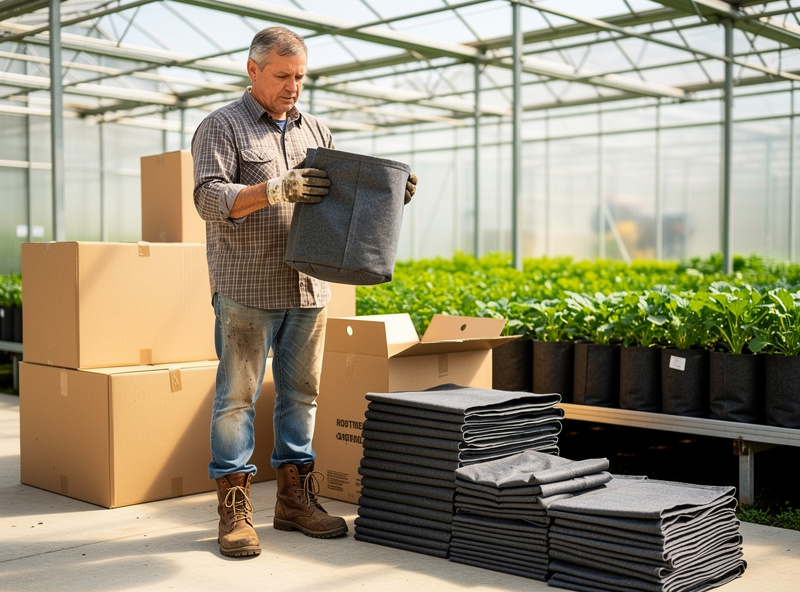
Wholesale quantities require appropriate storage space that protects inventory from damage while maintaining accessibility. Fabric containers store compactly when empty, folding flat or stacking efficiently. However, large quantities still require significant storage area, particularly for mixed size orders where different dimensions complicate stacking.
Store containers in dry locations protected from direct sunlight, which degrades fabric even before use. Climate-controlled storage prevents mold and extends inventory shelf life, though fabric containers are less sensitive to storage conditions than plastic alternatives that become brittle in temperature extremes.
Inventory Tracking Systems
For operations managing extensive container inventories, tracking systems prevent shortages and overages that disrupt planting schedules. Simple spreadsheet tracking of quantities by size and style suffices for smaller operations, while larger farms may benefit from inventory management software that integrates with purchasing and production planning systems.
Establish reorder points that trigger new purchases before critical shortages occur. Lead times for wholesale orders, particularly direct from overseas manufacturers, can extend to several months. Plan purchasing cycles to ensure containers arrive before needed for spring planting or crop rotations.
Environmental and Sustainability Considerations
Recycled and Eco-Friendly Options
Environmental consciousness drives development of grow bags manufactured from recycled materials, including post-consumer plastic waste and industrial textile byproducts. These eco-options reduce landfill burden while providing functional growing containers. Some manufacturers offer biodegradable options for short-term crops, though durability concerns limit their applicability for long-term use.
When sustainability is a priority, investigate supplier environmental certifications, manufacturing processes, and end-of-life options. Some manufacturers operate buy-back or recycling programs for worn containers, creating closed-loop systems that minimize environmental impact.
Longevity vs. Disposability
The environmental calculus of fabric containers considers their reusable nature against single-use plastic alternatives. Quality grow bags used for multiple seasons represent environmental improvement over plastic pots discarded annually. However, worn containers eventually require disposal, and their fabric composition complicates recycling compared to pure plastic alternatives.
Maximize environmental benefits by selecting durable containers, maintaining them properly for extended service life, and exploring recycling options when replacement becomes necessary. Some agricultural operations repurpose worn containers for non-planting uses before final disposal.
Frequently Asked Questions
What is the minimum order for wholesale grow bags?
Minimum wholesale orders vary by supplier, ranging from 50-100 units through distributors to 500+ units for direct manufacturer purchases. Some suppliers offer tiered pricing with lower per-unit costs at higher volume breakpoints. Cooperative purchasing groups can achieve wholesale pricing with smaller individual commitments by aggregating demand.
How much can I save buying wholesale vs. retail?
Wholesale savings typically run around half of retail pricing, with exact discounts depending on order size, product quality, and supplier. Direct manufacturer purchases offer maximum savings but require larger minimums. Even distributor wholesale pricing significantly undercuts retail garden center costs, particularly for standard sizes in demand by commercial operations.
Are wholesale grow bags lower quality than retail?
Wholesale containers from reputable suppliers match or exceed retail quality, often originating from identical production runs. Wholesale pricing reflects volume efficiencies and reduced marketing costs rather than quality compromises. However, vet suppliers carefully, as some discount wholesalers do offer inferior products. Request samples and references before committing to large orders.
Can I mix sizes in a wholesale order?
Most wholesale suppliers allow mixed-size orders within minimum total quantity requirements, enabling you to order different sizes for various crops. Some suppliers offer pre-mixed assortments of popular sizes for diversified gardens. Clarify mixing policies before ordering, as some manufacturers impose case-pack minimums per size that complicate mixed orders.
How do I store hundreds of grow bags bought wholesale?
One of the greatest advantages of fabric grow bags is their storability. Because they fold flat, a wholesale order of 500 5-gallon grow bags can easily fit inside a single standard 2×2 foot cardboard box. Store them in a cool, dry place away from direct sunlight to prevent UV degradation before use.
Are handles included on wholesale grow bags?
Most high-quality grow bags 3-gallons and larger come standard with reinforced nylon handles, even when purchased wholesale. However, extremely cheap wholesale options might omit handles to cut manufacturing costs. Always verify with the supplier that cross-stitched handles are included to ensure easy mobility when the bags are full of heavy, wet soil.