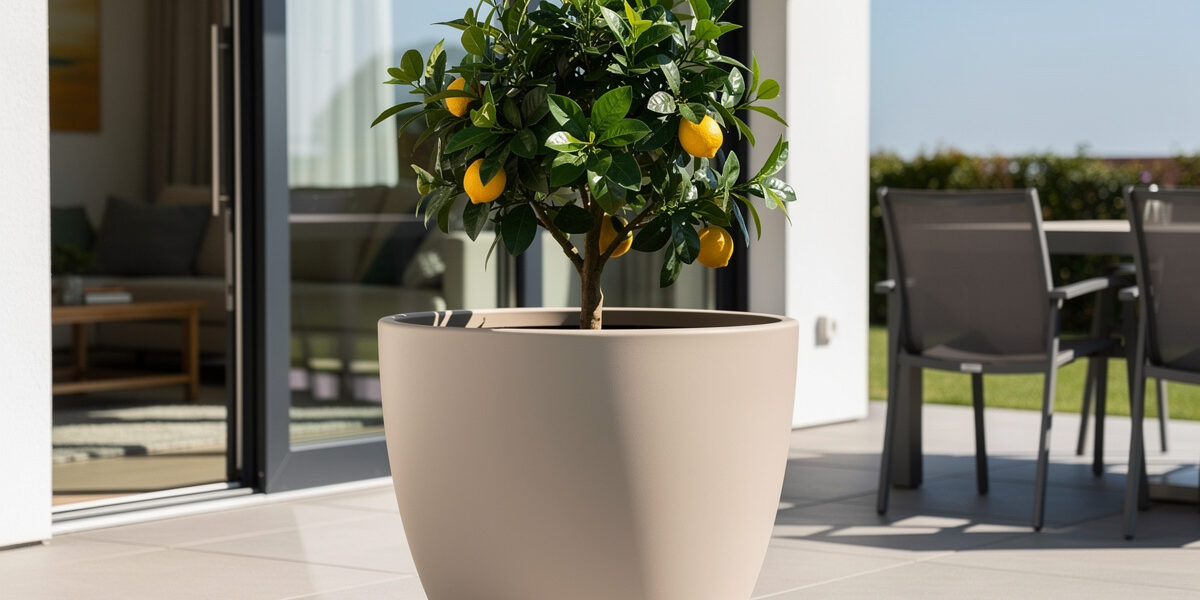
Selecting giant plastic plant pots for trees is crucial for ensuring the long-term health of large container-grown specimens. A high-density polyethylene container holding 25-30 gallons of soil provides the necessary root space while weighing a fraction of what an equivalent terracotta or concrete pot would — which is the detail that makes a balcony or rooftop tree feasible at all. This reduces structural strain on balconies and decks while offering superior moisture retention during peak summer heat, allowing dwarf fruit trees and ornamental maples to thrive for decades. University of Arizona Extension’s container-tree planting guidelines cover the root-ball and depth rules that decide whether a potted tree succeeds or slowly fails, and they line up with how I run trees in pots on my own balcony (Planting Guidelines for Container Trees and Shrubs, UA Extension).
Why Giant Plastic Pots Are Essential for Container-Grown Trees
For tree recommendations for small spaces, see acer trees for small gardens.
Growing trees in containers requires containers that can accommodate extensive root systems while providing adequate soil volume, drainage, and stability. Giant plastic plant pots for trees have become the go-to solution for container tree cultivation, offering advantages that traditional terracotta, wood, or metal containers cannot match. These large-scale containers make it possible to grow specimen trees on patios, rooftop gardens, balconies, and compact urban spaces where in-ground planting is impossible.
The benefits of plastic containers for trees extend beyond mere convenience. Modern plastics are remarkably durable, resisting cracking in freeze-thaw cycles that destroy terracotta and resisting rot that claims wooden containers. They are significantly lighter than ceramic or concrete alternatives, making them feasible for rooftop gardens and balconies where weight restrictions apply. Quality plastic pots also offer superior value, providing years of service at a fraction of the cost of traditional materials while maintaining attractive appearances that complement contemporary garden designs.
Understanding Container Sizes for Trees
For container selection tips, check urban gardening beginner guide.
Minimum Size Requirements
The size of container required depends on the tree species and its growth habit. As a general rule, the container should be at least 2-3 times the diameter of the tree root ball at planting, with depth equal to or slightly greater than the root ball depth. Small trees like Japanese maples or dwarf conifers need containers minimum 18-24 inches in diameter and depth, while larger specimens may require containers 30 inches or greater.
For long-term tree health, bigger is almost always better. Rootbound trees become stressed, requiring constant watering and feeding while becoming increasingly prone to blow-over in wind. A generously sized container allows for natural root development, creating trees that are healthier, more drought-tolerant, and better anchored against weather extremes.
Volume Calculations
Container volume directly correlates with watering frequency and tree stability. A container holding 25 gallons of soil retains moisture longer and supports larger root systems than a 15-gallon equivalent. For reference, a 24-inch diameter pot typically holds 25-30 gallons of potting mix, while a 30-inch container holds 40-50 gallons. Oregon State Extension’s container-planting guidance makes the same point plainly: smaller containers dry out very quickly, and larger pots are the right call for shrubs and small trees precisely because of that root room and moisture buffer (Container Planting, OSU Extension [PDF]).
Calculate your tree water needs when selecting container size. Trees in full sun during hot summers may require daily watering in small containers but only twice weekly in larger volumes. The investment in a larger container pays dividends in reduced maintenance and healthier, faster-growing specimens.
Scaling with Growth
Young trees can start in appropriately sized containers and be repotted into progressively larger pots as they grow. This graduated approach allows you to match container investment to tree development while preventing the overwhelming appearance of tiny trees in oversized pots. Plan for repotting every 2-3 years until the tree reaches its final container size.
Types of Plastic Containers for Trees
Standard Nursery Pots
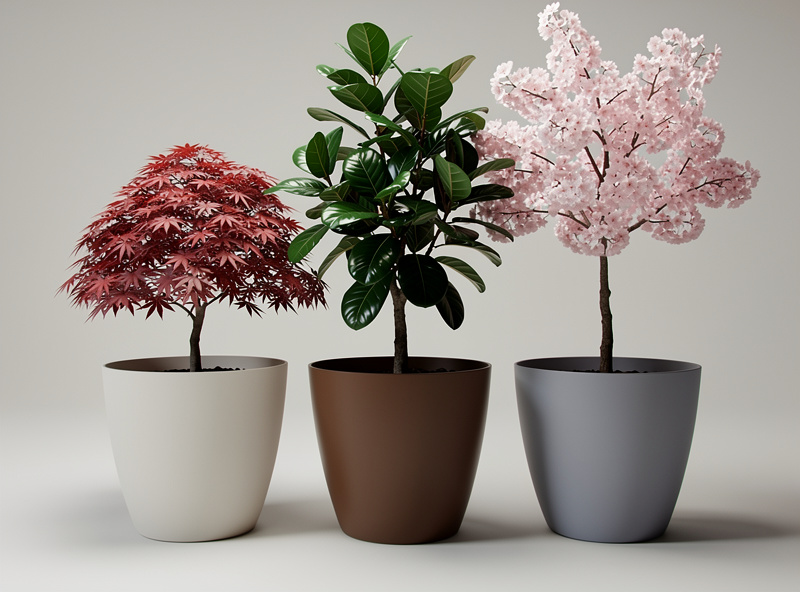
Black nursery pots represent the most economical option for growing container trees. Available in sizes from 1 gallon to 25 gallons and beyond, these utilitarian containers are functional if not particularly attractive. They excel for growing trees to transplanting size but are typically hidden within decorative outer containers or used in utilitarian growing areas rather than displayed prominently.
Standard nursery pots feature excellent drainage through multiple bottom holes and adequate root insulation due to their thickness. However, they heat up significantly in direct sun and can become brittle after several seasons of UV exposure. Consider them temporary housing rather than permanent containers.
Decorative Plastic Planters
Modern decorative plastic planters successfully mimic the appearance of terracotta, stone, lead, or wood while offering plastic practical benefits. Self-watering designs incorporate water reservoirs that extend time between watering, particularly valuable for trees in sunny locations. Double-wall construction provides root insulation, protecting against both summer heat and winter freeze damage.
Look for UV-stabilized plastics rated for outdoor use to prevent fading and brittleness. Quality decorative planters from reputable manufacturers often include 5-10 year warranties against cracking and color fading. While more expensive than basic nursery pots, their aesthetic appeal and durability justify the investment for prominently displayed specimens.
Fabric Grow Bags and Smart Pots
Soft-sided fabric containers represent a revolutionary approach to tree containerization. These breathable pots air-prune roots when they reach the container edge, preventing the circling root patterns that plague rigid containers. The result is naturally fibrous, well-branched root systems that support healthier, faster-growing trees.
Fabric containers offer excellent drainage that prevents waterlogging, superior aeration that promotes root health, and natural temperature moderation through evaporative cooling. They are lightweight, fold flat for storage, and available in sizes up to hundreds of gallons for substantial trees. For more on specialized growing containers, see our guide on fabric vegetable planters which share similar benefits.
Recycled Plastic Eco-Containers
Environmentally conscious gardeners can choose containers made from recycled plastics, often including post-consumer waste. These eco-options reduce landfill burden while providing durable, functional containers. Some manufacturers offer buy-back or recycling programs for containers at end-of-life, creating closed-loop sustainability.
Recycled plastic containers perform comparably to virgin plastic in terms of durability and longevity. They may show slight color variation compared to uniform virgin plastic, but this characteristic often adds visual interest that mimics natural material variation in stone or terracotta.
Essential Features to Consider
Avoid common gardening mistakes with container trees.
Drainage Systems
Proper drainage is absolutely critical for container tree health. Without adequate drainage, soil becomes waterlogged, roots suffocate, and trees decline rapidly. Quality tree containers feature multiple large drainage holes in the bottom, not just one small opening. Some designs incorporate raised internal floors that keep the root ball above any standing water while allowing excess moisture to escape.
Avoid containers with attached saucers that prevent proper drainage. If using decorative containers with solid bottoms, drill additional drainage holes before planting. Elevating containers slightly on pot feet or bricks improves drainage and prevents staining of decks or patios.
Root Insulation Properties
Container soil heats and cools more dramatically than ground soil, subjecting roots to temperature stress. Double-wall plastic containers create insulating air spaces that moderate soil temperature, keeping roots cooler in summer and warmer in winter. This insulation is particularly valuable for marginally hardy trees that benefit from root protection during cold snaps.
Light-colored containers reflect sunlight, reducing soil temperature significantly compared to dark-colored alternatives. In hot climates, choose white, cream, or light gray containers to prevent root zone overheating that can stress or kill trees.
Structural Reinforcement
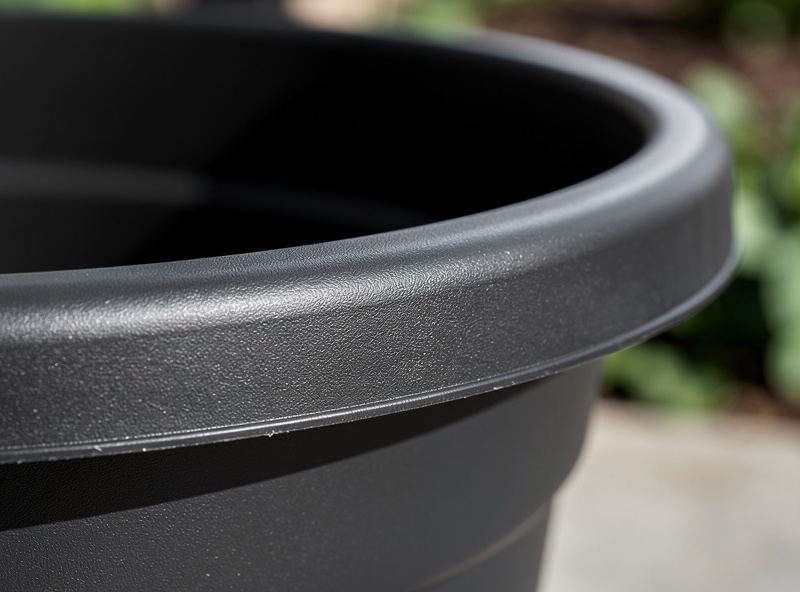
Large containers full of moist soil and mature trees become incredibly heavy, sometimes exceeding 200 pounds. Quality plastic containers incorporate structural ribs, reinforced rims, and thick wall sections that prevent bulging, cracking, or collapse under weight. Look for containers specifically rated for tree and large shrub use rather than general-purpose planters.
Handles or grip points facilitate moving containers when necessary, though large tree containers should be considered essentially permanent once planted. Some designs incorporate rolling bases or casters for mobility, though these are rarely practical for large specimens.
Weight and Portability
While large containers should be considered permanent, there are times when repositioning becomes necessary. Plastic containers weigh significantly less than ceramic, concrete, or metal equivalents of the same size, making them feasible for rooftop gardens, balconies, and decks with weight restrictions. A 24-inch plastic container might weigh 10 pounds empty compared to 50+ pounds for ceramic.
For more information on container gardening with trees and shrubs, see our companion guide on shrubs for pots full sun which includes recommendations for woody plants that thrive in large containers.
Best Trees for Giant Container Growing
Learn about vertical gardening to maximize your tree growing space.
Japanese Maples (Acer palmatum)
Japanese maples are perhaps the most popular trees for container culture, thriving for decades in appropriately sized pots. Their relatively modest size, fibrous root systems, and slow growth rate make them ideal candidates. Choose containers 24-30 inches in diameter for standard varieties, or 18-24 inches for dwarf selections.
Their preference for slightly acidic, well-draining soil makes container culture advantageous, allowing precise soil control impossible in ground planting. Protect containers from afternoon sun to prevent soil overheating, and ensure excellent drainage to prevent root rot that maples are prone to in wet conditions.
Dwarf Conifers
Dwarf and semi-dwarf conifers excel in container culture, providing year-round structure and color in compact packages. Blue spruce, hinoki cypress, dwarf Alberta spruce, and compact juniper varieties all thrive in large containers for years with minimal maintenance. Their evergreen nature provides winter interest when deciduous trees are bare.
Most dwarf conifers prefer full sun and well-draining soil, making them perfect partners for sunny patio containers. They are extremely drought-tolerant once established, forgiving occasional lapses in watering that might damage less adapted trees. Expect healthy specimens to thrive in containers for 10-20 years or more.
Citrus and Mediterranean Trees
Citrus trees (lemons, limes, oranges, kumquats) are classic container subjects, allowing gardeners in marginal climates to grow tropical fruit. They require large containers (24-30 inches minimum) to support their vigorous growth and substantial root systems. Container culture enables moving citrus to protected locations during cold weather in climates where they would not survive winter outdoors.
Fig trees, olive trees, and bay laurel similarly thrive in large containers, bringing Mediterranean flair to temperate gardens. These sun-loving trees prefer the well-draining conditions that containers provide and benefit from the root restriction that encourages heavy fruit production in figs specifically.
Ornamental Standards and Topiary
Standard-trained trees and topiary specimens are perfectly suited to container display. Bay laurel standards, rose standards, and flowering shrub standards (hydrangeas, hibiscus) create formal elegance in large decorative containers. These trained specimens require containers substantial enough to prevent tipping in wind while providing adequate root space for continued health.
The formal nature of these specimens pairs beautifully with decorative containers in classical or contemporary styles. Consider container and tree as a unified design element, ensuring proportions and styles complement each other for maximum visual impact.
Multi-Stem and Clump-Form Trees
Trees with multi-stem or clump-form growth habits, such as river birch, clump-form Japanese maples, and certain willow varieties, create interesting architectural specimens in large containers. Their broader base requires wider, shallower containers compared to single-trunk trees, but they provide impressive presence and naturalistic beauty that single-stem trees cannot match.
Planting Trees in Large Containers
Soil Selection
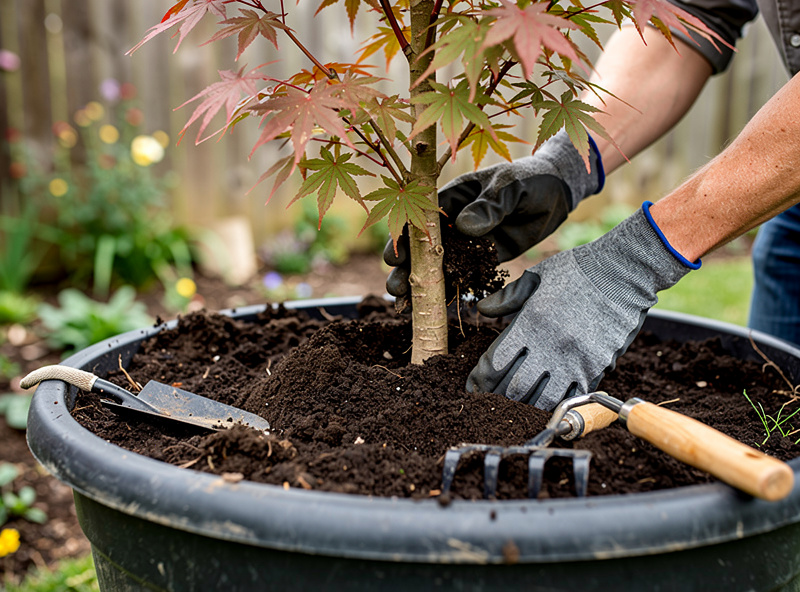
Never use garden soil in containers, as it compacts and drains poorly in confined spaces. Invest in high-quality potting mix specifically formulated for containers. For trees, look for mixes containing coarse materials like bark fines or perlite that ensure excellent drainage while retaining adequate moisture. Some gardeners add up to 20% compost for nutrient content, but ensure the mix remains well-draining.
For acid-loving trees like Japanese maples, use ericaceous (acid) potting mix. For citrus and Mediterranean trees, choose cactus/succulent mixes that provide the sharp drainage these trees prefer. The right soil mix prevents the root rot and oxygen deprivation that kill many container trees.
Planting Technique
Position trees in containers so the root flare (where trunk widens at soil level) sits slightly above the final soil surface. Planting too deeply is the most common cause of tree decline in containers. Fill around roots with potting mix, firming gently to eliminate air pockets but not compacting heavily. Water thoroughly to settle soil, adding more mix if settlement creates depressions.
Stake trees only if absolutely necessary, as staking can weaken trunk development. If staking is required due to wind exposure, use flexible ties and remove stakes after one growing season once roots have anchored the tree.
Initial Care
Newly planted container trees require consistent moisture during their first growing season as roots establish in the new container. Check soil moisture daily during hot weather, watering when the top 2-3 inches become dry. Mulch the soil surface with 2-3 inches of organic mulch (keeping it away from the trunk) to retain moisture and moderate soil temperature.
Delay fertilizing for 4-6 weeks after planting to prevent root burn while trees establish. Then feed with balanced, slow-release fertilizer according to package directions. Avoid high-nitrogen fertilizers that encourage weak, leggy growth susceptible to pests and disease.
Long-Term Container Tree Care
Watering Large Containers
Establish a consistent watering routine appropriate to your climate, tree species, and container size. Large containers dry out more slowly than small ones but still require monitoring. Water deeply until liquid drains from the bottom, ensuring the entire root zone is moistened rather than just the surface. In hot, windy weather, large containers may still require daily watering.
Consider installing drip irrigation or soaker hoses for consistent moisture delivery, particularly valuable if you travel frequently. Self-watering containers with reservoirs can extend time between watering but still require monitoring to ensure reservoirs remain filled.
Feeding Schedule
Container trees rely entirely on you for nutrition, as they cannot access the soil ecosystem that feeds in-ground trees. Apply slow-release fertilizer in early spring according to package rates, then supplement with liquid feed every 4-6 weeks during the growing season. Reduce or eliminate feeding in late summer to allow trees to harden off for winter dormancy.
Monitor trees for nutrient deficiency signs: yellowing leaves indicate nitrogen deficiency, while purple-tinged foliage may signal phosphorus shortage. Adjust feeding accordingly, but avoid over-fertilizing which can damage roots and reduce drought tolerance.
Root Maintenance and Repotting
Even in large containers, trees eventually become rootbound after several years. Signs include reduced growth, quick drying of soil, and roots visible at drainage holes. Every 3-5 years, either repot into a larger container or root prune to refresh the tree.
Root pruning involves removing the tree from its container, shaving off 2-3 inches of roots and soil from all sides and the bottom, then repotting in fresh mix in the same container. This rejuvenates the tree, stimulating new root growth and extending container life indefinitely for trees that have reached appropriate mature size.
If you are sourcing large containers, browse giant plastic plant pots and large containers on Amazon — the 20-30 gallon sizes handle trees up to roughly 8 feet tall with room for root growth. As an Amazon Associate I earn from qualifying purchases.
Frequently Asked Questions
How big should a container be for a tree?
Tree containers should be at least 2-3 times the diameter of the root ball at planting time, with depth equal to or slightly greater than root ball depth. Small trees need minimum 18-24 inch containers, while larger specimens require 30 inches or more. Bigger is generally better for long-term tree health and reduced maintenance.
Are plastic pots safe for growing trees?
Quality plastic containers are perfectly safe and often superior for growing trees. Choose UV-stabilized, food-safe plastics rated for outdoor use. Avoid cheap plastics that may leach chemicals or degrade quickly. High-quality plastic containers provide excellent drainage, root insulation, and durability that benefit tree health.
How long do trees live in containers?
With proper care and appropriately sized containers, many trees thrive for decades. Japanese maples, dwarf conifers, citrus, and figs commonly live 20+ years in containers. Success depends on container size, soil quality, consistent care, and periodic root pruning or repotting to prevent rootbinding.
Do giant plastic plant pots need drainage holes?
Absolutely. Without drainage holes, a giant plastic pot will quickly become waterlogged, leading to root rot and tree death within weeks. Ensure there are at least 4-6 drainage holes measuring 1 inch in diameter at the base of the container to allow excess water to escape freely.
Will giant plastic pots crack in the winter?
High-quality, UV-stabilized resin or high-density polyethylene pots are designed to withstand freezing temperatures without cracking. However, to prevent damage from expanding ice, ensure the drainage holes are clear before winter and elevate the pot slightly on feet to prevent it from freezing directly to the patio surface.
How heavy is a giant plastic pot filled with soil?
A 30-gallon giant plastic plant pot filled with wet potting soil and a mature tree can easily weigh between 150-200 pounds. While the plastic container itself only weighs 5-10 pounds, the saturated soil accounts for the majority of the mass. Always place the pot on a heavy-duty rolling caddy before filling it.