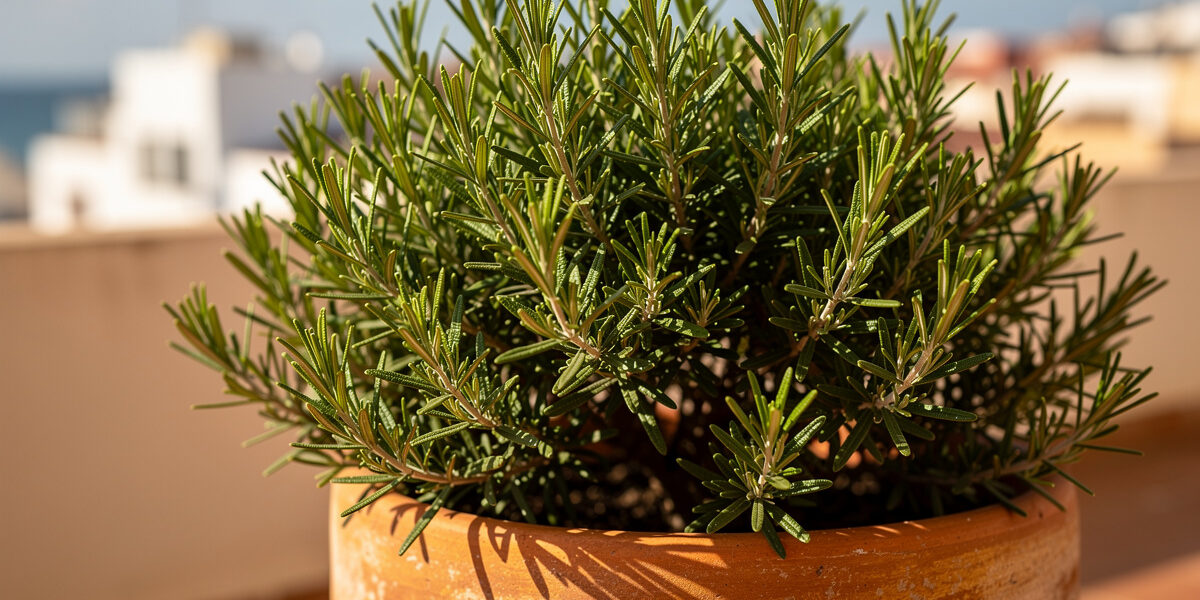
Rosemary is the herb people kill with kindness. It is a tough Mediterranean shrub that wants gritty soil, full sun, and a pot that dries out between drinks, yet most indoor rosemary dies wet and dark in a soggy bag of peat. Get the drainage and light right and it is one of the longest-lived herbs you can keep on a balcony.
Unlike basil, rosemary is a woody perennial, so you are not growing a quick crop, you are keeping a small evergreen alive year after year. That changes everything about how you pot it, water it, and overwinter it in a cold climate. Here is how I keep mine going through Swedish winters that would otherwise finish it off.
Sun and Soil: The Two Things That Matter Most
Rosemary needs the brightest spot you have and fast-draining soil that never stays wet. Aim for at least six hours of direct sun outdoors, or a strong grow light indoors, in a gritty mix that drains in seconds. Wet roots and low light are what kill it, not cold alone.
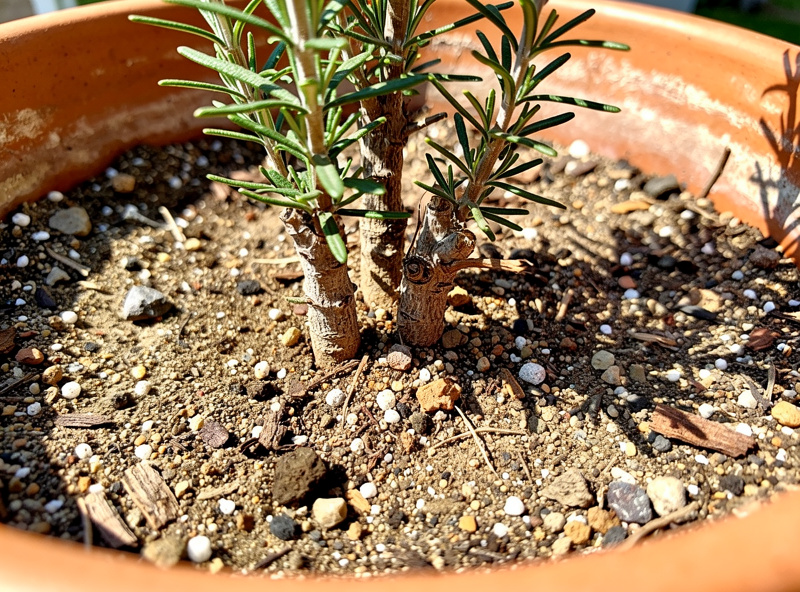
I grow rosemary in a mix that is roughly two parts container soil to one part perlite or coarse grit, in a terracotta pot that breathes and wicks moisture away. Plain bagged potting soil holds far too much water for this plant; it suffocates the roots and invites rot. On the balcony it takes the sunniest corner all summer, and indoors over winter it sits right under the grow light, because a dim windowsill in December simply will not keep it healthy. If you only fix one thing, fix the drainage.
Should You Start From Seed or a Cutting?
Skip the seed. Rosemary germinates slowly and erratically, often taking weeks with poor success, and seedlings crawl along for months. The fast, reliable route is a cutting from an existing plant, which roots readily and gives you a true copy of a variety you already like.
To take a cutting, I snip a 10 cm length of non-flowering semi-woody stem, strip the lower leaves, and push it into a gritty cutting mix or even a glass of water until roots form. Kept warm and bright, it roots in a few weeks. If you are starting out and do not have a donor plant, buy one healthy nursery plant, get it established, and then propagate from it for free forever. That is how one good rosemary becomes a windowsill full of them.
Watering: Where Most People Go Wrong
Water rosemary only when the top few centimetres of soil are properly dry, then water thoroughly and let it drain completely. This plant tolerates drought far better than constant moisture, and overwatering is the number one cause of indoor rosemary death by root rot.
In my setup I lift the pot to judge weight rather than watering on a calendar, because a rosemary in gritty soil under a window dries unpredictably. A drooping, greying rosemary is almost always drowning, not thirsty, which catches people out because the symptom looks like wilt. If you have ever lost one to a soggy pot, the broader signs of overwatering apply directly here. Indoors over winter, when the plant is barely growing, I water even less; cold wet roots are a death sentence.
Overwintering Rosemary in a Cold Climate
Rosemary is only reliably hardy to around -7°C, so in a Nordic climate it will not survive an unprotected balcony winter in a pot. The two workable options are bringing it indoors under a grow light, or heavy mulching and shelter for plants in milder zones. Indoors is the safer bet up north.
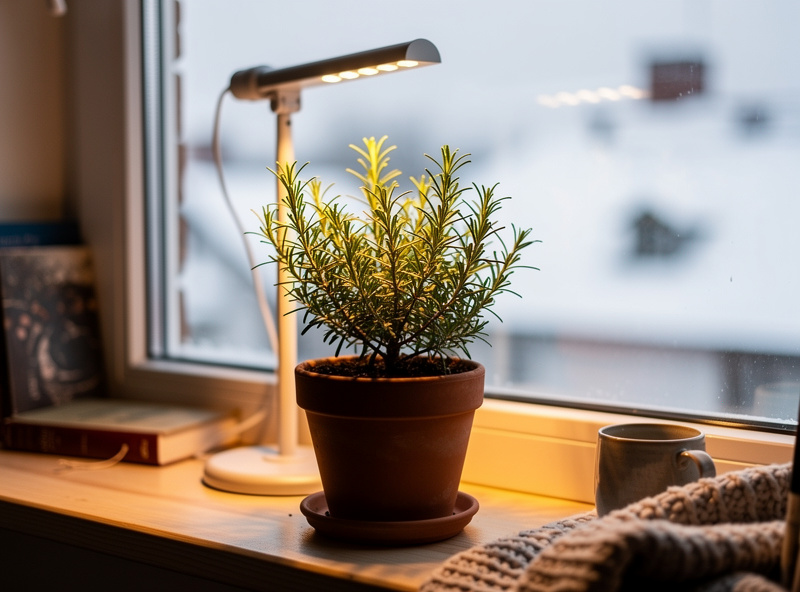
When I bring rosemary inside for winter, the two enemies are dry indoor heat and low light. I keep it in the coolest bright room I can, right under the LED bar, with good airflow to fight the powdery mildew that loves a still, warm room. I let it run drier than in summer but never bone dry, and I resist the urge to feed it, since it is resting, not growing. A plant that scrapes through winter a little lean is far healthier than one pushed with warmth and water it cannot use in the dark months. This cold-season care is the part most US growing guides skip entirely.
Pruning and Harvesting
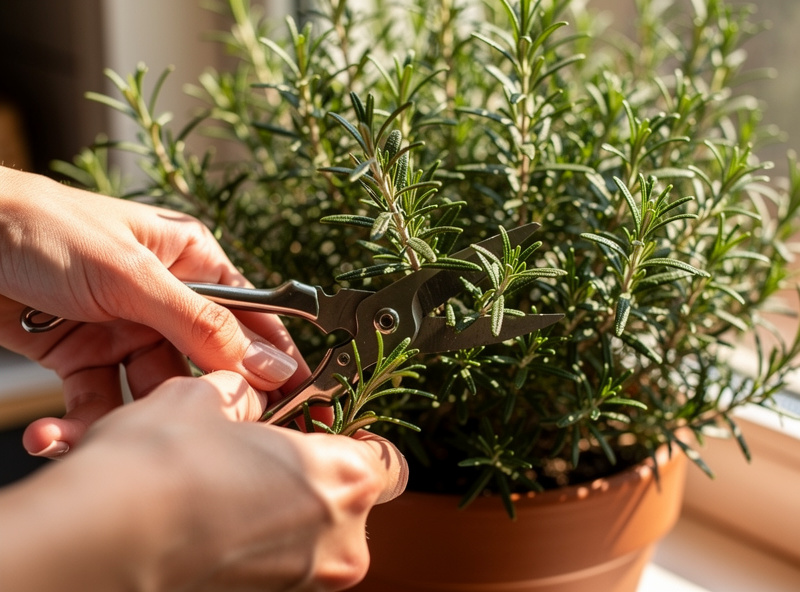
Harvest rosemary by snipping the soft green tips, never cutting back into the old bare wood, which rarely resprouts. Regular light trimming keeps the plant bushy and productive, and you can take sprigs year-round once the plant is established. Just avoid taking more than about a third at once.
I shape mine lightly through the growing season so it stays dense rather than going tall and gangly. The cuttings you remove are exactly what you want for the kitchen, so productive pruning and harvesting are the same job. Spring is the time for any harder shaping, always cutting just above a set of green leaves. Treat the woody base as permanent structure and only ever harvest from the green growth above it.
Common Problems and Varieties
Most rosemary trouble traces back to water and air: root rot from wet soil, and powdery mildew from poor airflow indoors. Choosing the right variety for your space also matters, since upright types and trailing types behave very differently in a pot.
| Type / Variety | Habit | Best For | Notes |
|---|---|---|---|
| Upright (e.g. Tuscan Blue) | Tall, vigorous | Cooking, large pots | Most productive culinary type |
| Trailing / prostrate | Spreading, cascading | Hanging pots, edges | Decorative, slightly less hardy |
| Arp / hardy strains | Upright, cold-tough | Cold climates | Best winter survival odds |
| Compact dwarf types | Small, dense | Windowsills | Easy to keep indoors |
For a cold-climate grower the hardy upright strains are worth seeking out, because every degree of extra cold tolerance widens your overwintering options. Whatever you grow, airflow and drainage do more to keep it healthy than any feeding routine.
Gear That Earns Its Place
Rosemary needs very little, but the right pot and light make the difference between thriving and limping along. As an Amazon Associate I earn from qualifying purchases; these are the items I genuinely use, at no extra cost to you.
- A breathable terracotta pot wicks moisture away and is the single best defence against root rot.
- A bag of horticultural perlite turns ordinary container soil into the fast-draining mix rosemary needs.
- A full-spectrum grow light is what carries the plant through a dark Nordic winter indoors.
Frequently Asked Questions
Why does my rosemary keep dying indoors?
Indoor rosemary almost always dies from overwatering and low light. It needs fast-draining gritty soil, a pot that dries between waterings, and the brightest spot or a grow light. Wet roots in a dim room cause the root rot that kills most plants.
Can rosemary survive winter outside in a cold climate?
Rosemary is only hardy to about -7C, so an unprotected potted plant will not survive a Nordic winter. Bring it indoors under a grow light in a cool bright room, or in milder zones mulch heavily and shelter it from wind.
Is it better to grow rosemary from seed or cuttings?
Cuttings are far better. Rosemary seed is slow and erratic with poor germination, while a semi-woody cutting roots in a few weeks and copies a variety you already like. Start with one nursery plant, then propagate from it.
How often should I water potted rosemary?
Water only when the top few centimetres of soil are dry, then soak thoroughly and let it drain. Rosemary tolerates drought well but hates constant moisture. In winter, when growth slows, water far less to avoid cold, wet roots.
Can I cut rosemary back into the woody stems?
Avoid cutting into old bare wood, which rarely resprouts. Harvest and prune only the green growth above the woody base, taking no more than about a third at once. Treat the woody structure as permanent and crop from the soft tips.
Why does my indoor rosemary get white powder on the leaves?
That white coating is powdery mildew, encouraged by still, warm indoor air. Improve airflow with a fan or an open window, avoid wetting the foliage, and keep the plant in a cooler, brighter spot. Good circulation prevents it returning.