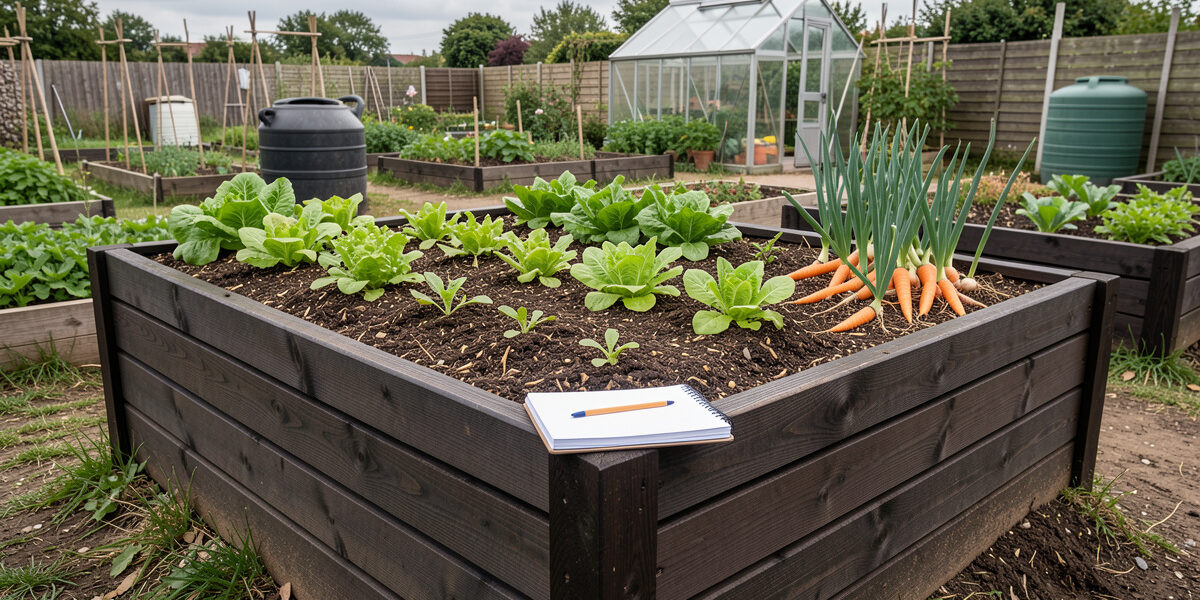
Suttons — the British seed company founded in 1806 — has expanded from packets and plugs into raised bed kits, bringing their horticultural brand into the hard-goods market. As someone who has grown from Suttons seeds for years and has tested every other category of raised bed on my Nordic balcony, I was curious whether their heritage in living plants translates into genuinely better raised bed hardware. This review is an honest assessment of what their raised bed line offers, where it sits in the market, and who it genuinely suits — measured against the beds I have run side by side through real Swedish winters. For the wider picture, see my complete raised beds and planters guide.
As an Amazon Associate I earn from qualifying purchases.
The Suttons Heritage Question
Suttons Seeds began as a packet seed business in Reading, England, and grew over two centuries into an internationally recognised gardening brand. That history provides a level of trust and horticultural credibility that newer raised-bed brands simply do not have. But the company’s core expertise lies in seeds and plants, not in hard-goods manufacturing. Their raised bed line represents a market expansion rather than a core competency — the same dynamic you see when a respected food brand launches a line of cookware. The question is whether the product benefits from genuine Suttons expertise or simply trades on established brand recognition.
Suttons currently distributes their raised beds primarily through UK and European markets, with limited North American availability. For a Nordic gardener like me, that regional focus means their products are accessible — but for readers gardening in North America, availability and shipping costs may be a practical barrier.
Product Line Overview
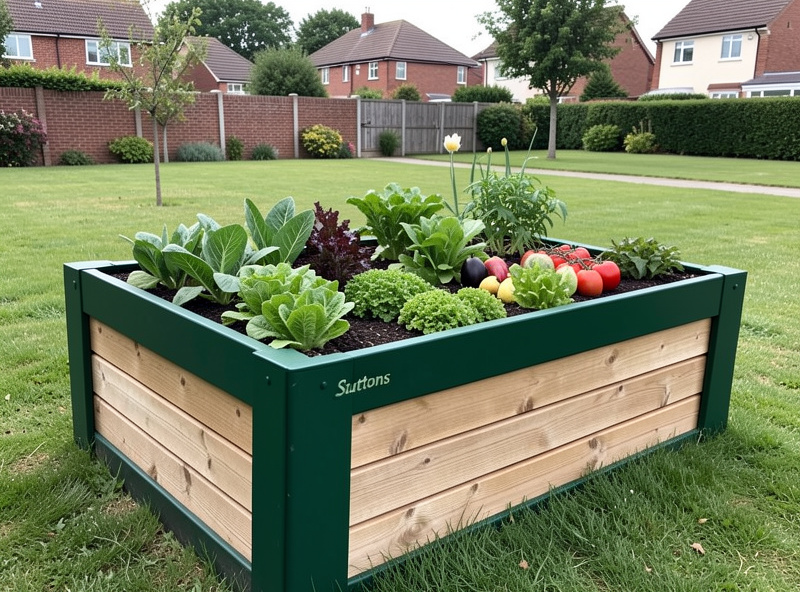
Suttons offers raised beds in three material categories. Their wooden beds use pressure-treated FSC-certified timber in standard rectangular configurations from 4×4 to 4×8 feet at 15-30 cm heights, with pre-cut boards and corner posts assembled via screws. Their premium hardwood options — oak or cedar, when available — target gardeners wanting natural materials and extended lifespan, though availability is limited and pricing positions these as luxury offerings. Their metal beds use galvanised or powder-coated steel in modular panel configurations, competing directly with Birdies and Vego Garden in the premium modular market.
Construction Quality Assessment
To be clear about methodology: I am assessing Suttons’ raised beds based on their published material specifications, their price positioning in the market, and comparison against the beds I have personally tested (cedar flat-packs, galvanised steel modular beds, recycled plastic). I have not run a Suttons bed through a full Nordic winter alongside my other beds — so this is a specification-based assessment, not a hands-on long-term test.
Wooden Beds
The wooden beds use pressure-treated FSC-certified timber — a reasonable mid-range choice. FSC certification ensures sustainable sourcing, and the pressure treatment extends lifespan versus untreated timber. However, modern copper-based pressure treatment raises food-safety questions for organic vegetable cultivation, which Oregon State Extension’s safety assessment covers in detail. The short version: leaching is minimal but detectable, and lining the bed with landscape fabric sidesteps the concern entirely. Suttons does not include a liner with their wooden beds, so budget for one separately.
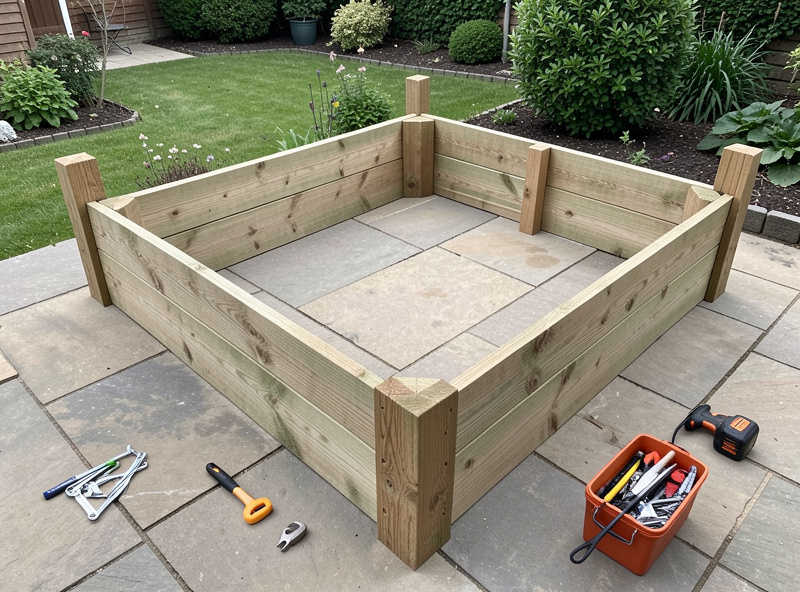
The board thickness — around 2 cm — is thinner than the 1-inch (2.5 cm) boards I run on my Greenes Fence cedar beds. Thinner boards mean less structural rigidity and faster heat transfer through the wall, which matters less in a mild UK climate but more in a Nordic one where freeze-thaw cycling stresses every joint. The corner post construction with screw-together assembly is functional but less robust than the dovetail or half-lap joints on premium kits.
Metal Beds
The metal bed line competes in the same modular panel category as Birdies and Vego Garden. The galvanised coating provides corrosion resistance, and the modular design allows expansion and reconfiguration. The aesthetic is contemporary and suits modern gardens. However, Suttons does not publish the steel gauge or the specific coating specification — unlike Birdies, which specifies 29-gauge Aluzinc-coated steel with a documented 20+ year corrosion rating. Without those specs, it is difficult to assess whether Suttons’ metal beds will match the longevity of the Aluzinc alternatives I have tested. The price positioning (below Birdies, above budget imports) suggests a mid-range specification rather than a premium one.
Expected Lifespan
Based on the material specifications and comparison with similar products I have tested:
| Suttons product | Expected lifespan | Premium comparison |
|---|---|---|
| Wooden bed (treated pine) | 8-12 years with maintenance | Cedar: 15-25 years |
| Metal bed (galvanised steel) | 15-18 years (estimated) | Aluzinc steel: 20+ years |
| Premium hardwood (when available) | 15-20 years | Matches cedar alternatives |
These lifespans are shorter than premium alternatives but align with the mid-range pricing. The cost-per-year math favours premium materials for permanent installations — a point I make consistently across all my raised bed reviews because it holds true regardless of brand.
Value and Pricing
Suttons wooden beds price at roughly £45-110 depending on size — comparable to mid-range treated pine options from other suppliers. The metal beds run £80-180, positioning between budget imports and premium competitors like Birdies (£180+ for a comparable size).
For cost-per-year: a Suttons wooden bed at £55 lasting 10 years costs £5.50/year. A Suttons metal bed at £90 lasting 18 years costs £5.00/year. A Birdies Aluzinc bed at £180 lasting 20+ years costs £9.00/year. The Suttons beds actually offer better cost-per-year on paper — but the lifespan estimates are less certain than Birdies’ documented Aluzinc track record. The honest framing: Suttons delivers reasonable value at a moderate price point, with the trade-off being shorter (but still respectable) lifespan and less material specification transparency.
Assembly Experience
The wooden beds assemble in 30-45 minutes with a cordless drill and level — standard for pre-cut timber kits. The metal beds assemble in 20-35 minutes with basic hand tools. Both are within industry norms for difficulty: achievable for anyone with basic DIY confidence, neither standout-simple (like the Greenes Fence dovetail system) nor problematic. The instructions are reported as adequate with clear diagrams.
Who Should Choose Suttons
Suttons raised beds suit gardeners who value the brand’s horticultural heritage, want mid-range pricing without going to absolute budget imports, and garden in the UK or Europe where availability and support are strongest. The wooden beds are a reasonable choice for a first raised bed garden where 8-12 years of service is acceptable and the FSC certification matters to you. The metal beds are worth considering if Birdies or Vego are not readily available in your market.
They are less suitable for gardeners seeking maximum longevity (20+ years), those needing documented material specifications for food-safety assurance, or anyone outside the UK/Europe dealing with shipping costs and limited support. For permanent installations where cost-per-year matters more than upfront price, the premium alternatives I have tested — Birdies for metal, recycled plastic for no-rot — remain the better long-term value.
Food Safety and Organic Growing
The food-safety question with Suttons’ pressure-treated wooden beds is the same question that applies to any treated-timber raised bed, and it deserves an honest answer. Modern pressure treatment uses copper-based compounds (ACQ or copper azole) rather than the arsenic-based CCA that was banned for residential use in 2004. Research from University of Maine Extension and other extension services confirms that copper leaching from modern treated wood into soil is minimal and that vegetables grown in contact with it do not accumulate harmful levels. The consensus is that modern treated timber is acceptable for food gardens — but many organic growers still prefer the peace of mind of naturally rot-resistant cedar or the complete inertness of metal.
If you choose the Suttons wooden bed for food growing, lining the interior walls with landscape fabric is the single step that eliminates the concern. The fabric creates a physical barrier between the treated timber and your soil, and it extends the bed’s lifespan by keeping damp soil off the wood. It costs a few pounds and takes ten minutes to install — there is no reason not to do it.
What I Would Grow in a Suttons Bed
If I were running a Suttons wooden bed on my balcony, I would plant it with the same crop selection that works in any timber raised bed at similar depth. At 15 cm height, stick to shallow-rooted crops: leaf lettuce, herbs, radishes, and strawberries. At 30 cm, the full range of Nordic balcony vegetables opens up: kale, chard, bush peas, pak choi, and determinate cherry tomatoes. The soil depth guidelines in Wisconsin Extension’s container vegetable guidance apply directly to these beds.
The one crop I would avoid in a Suttons metal bed in a hot climate: leafy greens in direct summer sun. Metal walls heat the root zone faster than wood, and while that early-season warming is an advantage in a Nordic climate, it can bolt lettuce and spinach in a single afternoon in warmer zones. Choose a light colour if your climate runs hot; choose a dark colour if your season is short and cool.
The Nordic Context
For my specific climate, the Suttons wooden bed would need the same freeze-thaw mitigation I apply to all timber beds: landscape fabric lining, sealed cut ends, annual joint inspection and re-tightening. At 2 cm board thickness, I would expect faster weathering than my 2.5 cm cedar beds through Nordic winters. The metal bed would perform similarly to other galvanised steel options — the early spring soil warming that benefits a short Nordic season is a real advantage of metal walls, as I cover in my Birdies review.
The bottom line for a Nordic gardener: Suttons beds are a reasonable mid-range option if you are in the UK/European market. They are not the best bed I have tested for cold-climate longevity — that remains Aluzinc-coated steel — but they are a credible choice at their price point. Just line the wooden beds, seal the cut ends, and plan for a 10-year service life rather than the 20+ years that premium materials deliver.
Comparative Positioning
Against premium competitors (Birdies, Vego Garden), Suttons offers 40-50% lower upfront cost and established brand support, but shorter lifespan, less material specification transparency, and less refined engineering. Against budget imports, Suttons offers better material quality, FSC certification, and customer support at a modest premium. Against DIY construction, Suttons offers convenience and pre-cut precision at a 30-40% price premium over buying raw timber. For the full DIY alternative, see my sleeper planter box DIY guide.
For premium alternatives, my Birdies review and recycled plastic assessment cover longer-lived options. Compare all materials in my comprehensive materials guide.
Related Articles
- Raised Beds and Planters: Complete Guide
- Best Flat Pack Raised Garden Beds
- Birdies Raised Beds Review
- Recycled Plastic Raised Beds — Worth It?
- Buzzy Raised Garden Bed Review
Are Suttons raised beds good quality?
Suttons raised beds use pressure-treated FSC-certified softwood timber with mid-range build quality — solid enough for most gardens but not premium like cedar or composite. The pre-cut kits simplify assembly for beginners. The brand’s horticultural heritage adds confidence but their core expertise is seeds, not hard goods.
How long do Suttons raised beds last?
Expect 8-12 years from a Suttons pressure-treated wooden bed with proper maintenance (lining, sealing cut ends, annual joint checks). The metal beds should last 15-18 years based on their galvanised coating specification. In persistently wet Nordic climates, lining the interior extends wooden bed life by several years.
What sizes do Suttons raised beds come in?
Suttons offers rectangular kits from approximately 60×60 cm to 120×240 cm with heights of 15, 30, or 45 cm. The most popular size is around 120x90x30 cm — large enough for mixed vegetables while fitting a standard patio or small garden corner.
Are Suttons raised beds easy to assemble?
Yes. Kits arrive as pre-cut timber with pre-drilled holes and included screws. Assembly takes 30-45 minutes for one person. No sawing or measuring is needed. The metal beds assemble even faster at 20-35 minutes with basic hand tools.
How do Suttons raised beds compare to premium alternatives?
Suttons costs 40-50% less than premium brands like Birdies but has a shorter expected lifespan (8-18 years vs 20+). The cost-per-year is competitive on paper, but premium alternatives offer better-documented material specifications and longer track records. Suttons is the better choice for budget-conscious or UK-based gardeners; premium beds win for permanent installations.