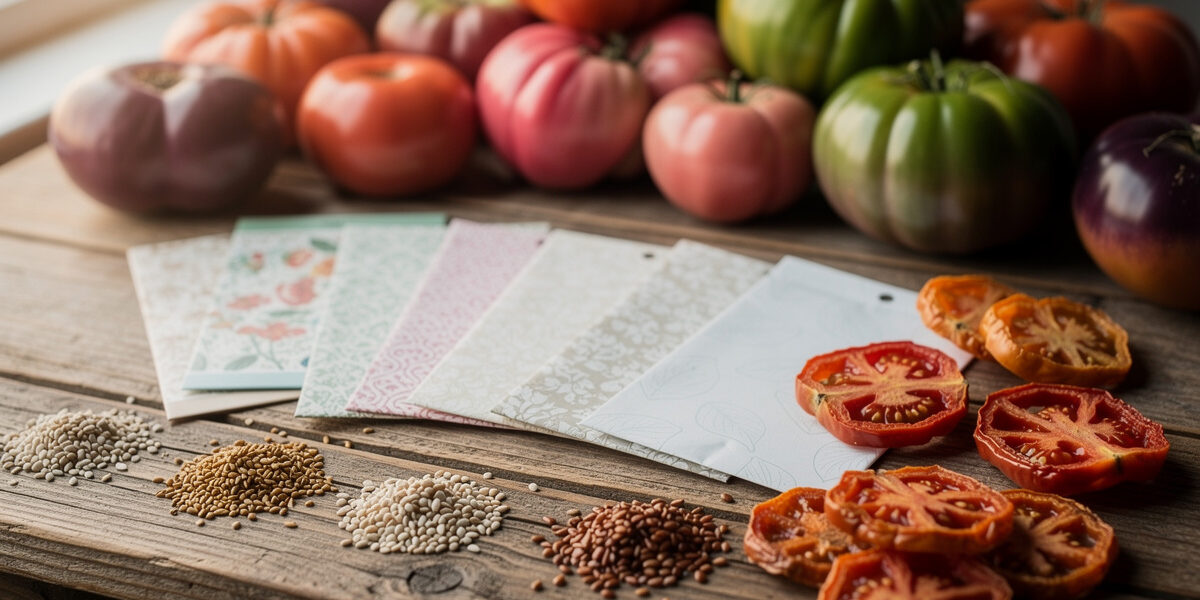
An heirloom tomato is, by accepted definition, an open-pollinated variety at least 50 years old. The technical detail matters: open-pollinated means the seeds you save will grow plants that match the parent, year after year. F1 hybrids — the bulk of the tomato seed market — don’t share this property, which is why heirloom seeds are the foundation of sustainable home gardening. On my balcony in a short Nordic season I prioritize fast-maturing heirlooms — Stupice and Glacier earn their spot every year because 55 to 60 days from transplant fits the May-to-September window, while a 90-day Brandywine would still be green when the frost hits. This guide covers the 12 most worthwhile heirloom varieties to grow, the four reputable U.S. seed houses to source from, and the fermentation-and-dry process for saving your own seeds.
What Counts as an Heirloom Tomato
Two requirements:
- Open-pollinated. The variety reproduces true from seed when self- or wind-pollinated. F1 hybrids are excluded — their saved seeds segregate into varied (usually inferior) plants.
- 50+ years old. Most accepted heirlooms predate 1945. Some growers use the looser “predates the modern hybrid era” definition.
What heirlooms typically lack: modern disease resistance bred into hybrids. Heirlooms get hit harder by fusarium wilt, verticillium, and tobacco mosaic. The tradeoff is flavor, color diversity, and seed-saving sovereignty. For broader variety category context (heirlooms exist within determinate, indeterminate, and dwarf classes), see Tomato Plant Types.
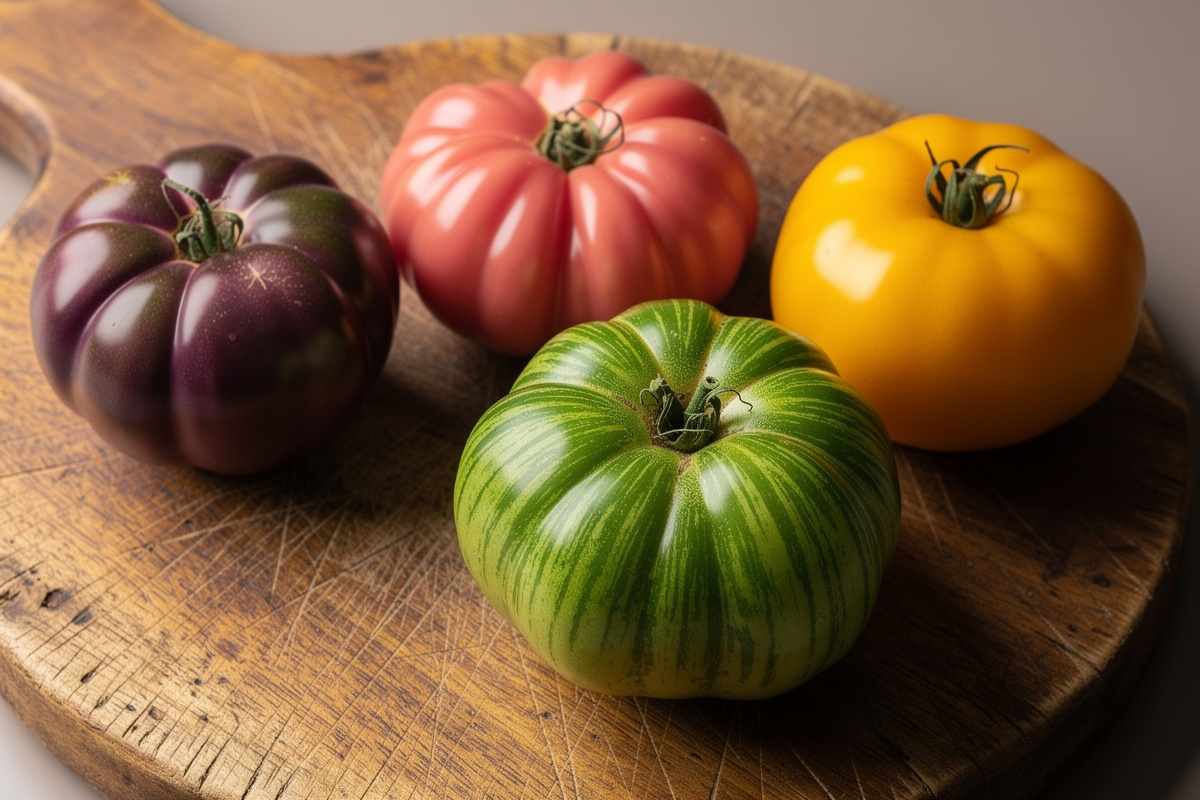
The 12 Heirloom Varieties Worth Growing
Indeterminate slicers
- Brandywine (Pink): The benchmark heirloom slicer since the 1880s. 1-pound fruits, complex sweet-acidic flavor. 85 days. Lower yielding than modern hybrids — accept it for the flavor.
- Cherokee Purple: Dusky purple-red beefsteak. Complex smoky-sweet flavor. 80 days. Crack-prone in heavy rain.
- Black Krim: Russian heirloom, mahogany-brown fruits with deep umami flavor. 80 days. Heat-tolerant — sets fruit when other indeterminates stall in hot summers.
- Mortgage Lifter: 1-to-2-pound pink slicers. Mild, balanced flavor. 85 days. The original 1930s “garden equity” tomato.
- Kellogg’s Breakfast: Bright orange beefsteak. Sweet, low-acid. 80 days. One of the best yellow/orange slicing heirlooms.
Indeterminate cherries and pastes
- Yellow Pear: Bright yellow pear-shaped cherry. Mild flavor, very productive. 75 days. A century-old garden mainstay.
- Green Zebra: Striped green and yellow cherry/saladette. Tangy, almost lime-like flavor. 75 days. Bred in the 1980s but officially recognized as an heirloom now.
- San Marzano (indeterminate type): The Italian sauce tomato. Long plum shape, low water content, perfect for paste. 75 to 80 days.
Determinate types
- Rutgers: Classic 1930s red slicer/canner. Reliable, balanced flavor, 75 days. Workhorse for canning.
- Bush Beefsteak: 4-foot determinate with full beefsteak flavor in a small package. 65 days. Container-friendly.
- Stupice: Fast-maturing semi-determinate from Czech Republic. 55 to 60 days. Best heirloom for short-season zones (3 to 5).
- Glacier: Cold-tolerant red cherry. 55 days. Sets fruit when nighttime temperatures are still in the 40s. This is one of the two short-season workhorses on my balcony — I start heirloom cherry tomato seeds indoors in late March and Glacier is usually the first plant to set ripe fruit, sometimes before July 4th even in a cold spring.
Where to Buy Heirloom Tomato Seeds
Four reputable U.S. seed houses with strong heirloom selections:
- Baker Creek Heirloom Seeds (rareseeds.com). Largest heirloom-only catalog in the U.S. — 800+ tomato varieties. Strong selection of unusual colors and global heirlooms. Free U.S. shipping.
- TomatoFest (tomatofest.com). 600+ tomato varieties, all certified organic. Strong descriptions and grower notes for each cultivar.
- Victory Seeds (victoryseeds.com). Specializes in rare and historical varieties. Smaller catalog (300+ tomatoes) but excellent provenance documentation for each variety.
- Seed Savers Exchange (seedsavers.org). Member-driven seed library. Especially strong for North American heritage varieties. Their annual yearbook offers thousands of varieties not commercially available.
What to avoid: generic seed packets at big-box stores. Most are commodity hybrids relabeled vaguely; you have no provenance and no guarantee the variety matches the picture. I order my heirloom seeds from Baker Creek and Seed Savers Exchange every winter — a mixed heirloom seed pack is the cheapest way to try five or six varieties in one season and figure out which ones finish reliably in your specific climate.
Saving Your Own Heirloom Tomato Seeds
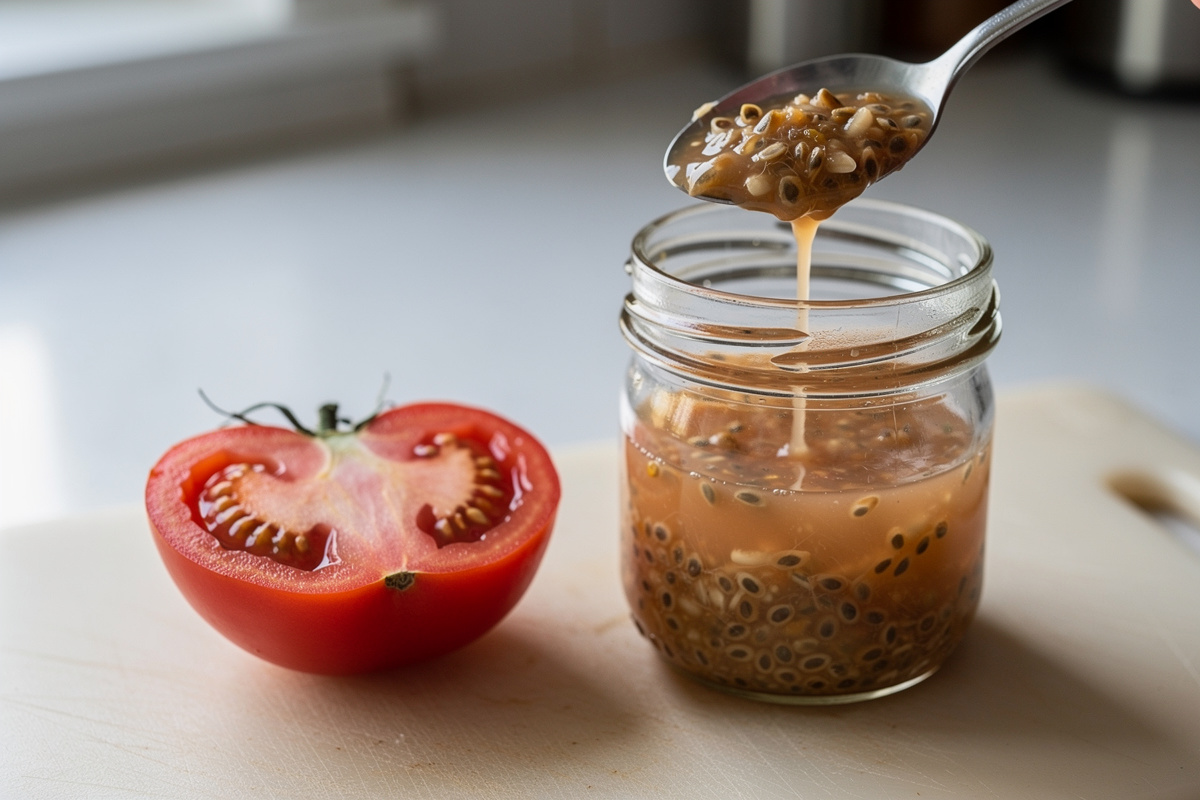
Open-pollinated heirlooms are the only tomato varieties from which seed-saving makes sense. Each seed is wrapped in a gelatinous coating that inhibits germination and can carry surface pathogens; the short fermentation below breaks that coating down and reduces seed-borne disease, which is why it is the step every extension seed-saving guide insists on rather than just rinsing and drying (University of Georgia Extension).
Method:
- Choose a fully ripe (slightly over-ripe) fruit from a healthy plant. Pick from the most representative-looking plant of the variety, not the runt or the outlier.
- Cut the tomato in half across the equator (not stem-to-blossom). Squeeze the seeds and surrounding gel into a small glass jar.
- Add a tablespoon of water per tomato’s worth of seeds.
- Cover loosely with cloth or paper towel (some airflow needed) and set on a counter at 65 to 75°F for 2 to 4 days. The mixture will ferment, develop a layer of mold on top, and start to smell. This is correct — do not be alarmed.
- Rinse vigorously in a fine-mesh strainer until water runs clear. Viable seeds sink; floaters are infertile and can be discarded.
- Spread the cleaned seeds in a single layer on a paper plate or coffee filter (not paper towel — they stick). Dry at room temperature for 7 to 10 days, stirring daily.
- Test for dryness: a properly dried seed snaps cleanly when bent, doesn’t fold.
Storing Saved Seeds
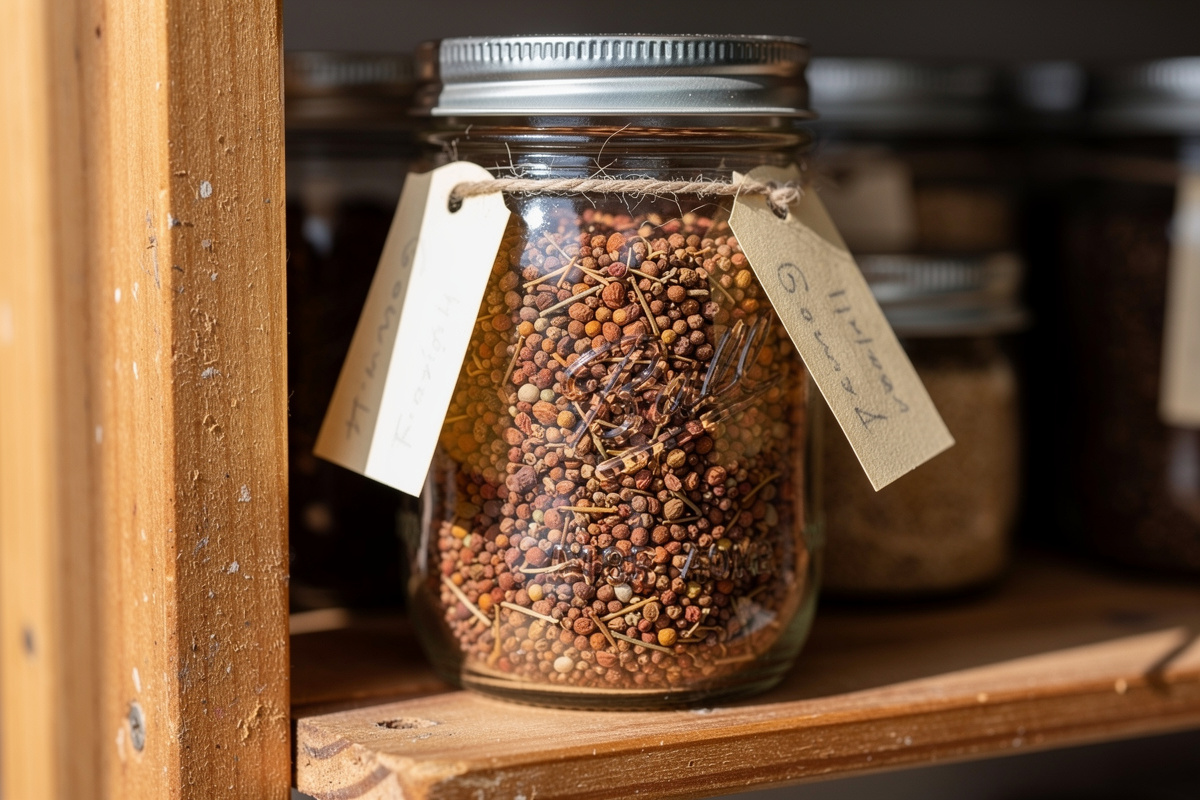
Properly stored tomato seeds remain viable for 5 to 8 years — significantly longer than most vegetable seeds. Storage requirements:
- Airtight container: Glass jar with a tight lid, or a sealed paper envelope inside a sealed jar. Avoid plastic baggies — they trap any residual moisture.
- Cool and dark: 40 to 60°F is ideal. Refrigerator works; freezer is fine if the seeds are fully dry (any moisture causes ice crystals that damage seeds).
- Silica gel desiccant packet in the jar absorbs residual humidity.
- Clear labels with variety name, source/parent plant, and harvest date. Year-old seeds at 90% germination are different from 5-year-old seeds at 60%.
Before I commit a batch of older saved seed to a whole tray in spring, I run a quick germination test: fold ten seeds into a damp paper towel, slip it into a sandbox bag on top of the fridge where it stays warm, and check after a week. If seven or more have sprouted the stock is still good and I sow at normal density; if only four or five come up I either sow twice as thick to compensate or start fresh. It takes five minutes and it is the difference between finding out a line has faded now, in March, versus in June when the balcony bags are already committed for the season.
Connecting Heirloom Seeds to the Rest of the Garden
Once you have heirloom seeds, the next steps are seed starting and transplanting. For indoor seed starting (zones 3 to 7), see Starting Tomato Seeds Indoors. For direct sowing in warm-climate zones, see Growing Tomatoes from Seeds: Direct Sow Outdoors. For the hardening-off and transplant routine that gets seedlings into the garden alive, see Tomato Seedlings: Hardening Off & Transplanting.
For the season-long care that turns heirloom plants into full-size harvests, see Tomato Plant: Complete Outdoor Growing Guide and Indeterminate Tomatoes (since most prized heirlooms are indeterminate).
One planning note that matters more for heirlooms than for hybrids: because they lack the built-in resistance packages, they are less forgiving of soil-borne disease building up in the same spot. If you grow in beds rather than fresh potting mix each year, rotate your tomatoes off any bed that has grown tomatoes, peppers, or potatoes in the last two to three seasons — it is the cheapest disease-management tool there is, and it does more for an heirloom crop than any spray. In containers I simply start each heirloom in fresh mix every spring for the same reason.
The seed-saving rhythm has become one of the most satisfying parts of my growing season — ferment a batch of Stupice seeds in a jar on the kitchen counter in September, dry them on a coffee filter for a week, and by midwinter you have a labeled jar of seeds that cost nothing and are genetically adapted to your specific balcony microclimate. A single heirloom seed collection bought once becomes a self-renewing seed bank if you save and store properly. As an Amazon Associate I earn from qualifying purchases.
Heirloom Seeds Through a Short Season
Heirloom tomatoes are a gamble in a Nordic climate, because many of the classic varieties need 80-plus days to mature and the season here is closer to 110 days total with the first four weeks too cold for fruit set. I grow two heirlooms reliably: Black Krim for slicing and Green Zebra for salads, both in the 70-75 day range. The flavour difference over standard hybrids is real, but the yield per plant is lower and the disease resistance is worse, so I plant two Sun Gold hybrids for every one heirloom to guarantee a harvest.
Heirloom seeds from reputable sources like Johnny’s Selected Seeds or Baker Creek germinate reliably, but the real challenge in a short season is disease. Heirlooms lack the resistance packages bred into modern hybrids, so I spray preventatively with a dilute baking-soda solution once a week from July onward to keep early blight off the leaves. It is not a perfect fix, but it buys an extra two to three weeks of healthy foliage, which in a 16-week season makes the difference between a harvest and a disappointment.
The payoff is flavour standard hybrids cannot match. A Black Krim sliced onto sourdough with salt and olive oil in August is the single best thing that comes off the balcony all season, even if the plant yields half of what the Sun Gold next to it produces. The lower yield and higher disease pressure are real trade-offs, but for a gardener who values flavour over productivity, heirlooms are the right choice for at least a few pots each season.
Frequently Asked Questions
What is the best heirloom tomato to grow?
For pure flavor, Brandywine (pink) is the benchmark — large, complex, sweet-acidic 1-pound slicers. For long-season indeterminate yield, Cherokee Purple. For heat-tolerant fruit set in hot summers, Black Krim. For short-season zones, Stupice or Glacier. There is no universal best — choose based on your climate and end use.
Where can I buy real heirloom tomato seeds?
Baker Creek Heirloom Seeds, TomatoFest, Victory Seeds, and Seed Savers Exchange are the four most reputable U.S. sources with strong provenance documentation. Avoid generic seed packets at big-box stores — variety identity is often unreliable.
How long do tomato seeds stay viable?
Properly stored heirloom tomato seeds remain viable for 5 to 8 years, longer than most vegetable seeds. Store in an airtight container with a desiccant packet at 40 to 60°F, dark. Year-1 seeds typically germinate at 90 percent; year-5 seeds drop to roughly 60 percent.
Can I save seeds from any tomato I grow?
Only from open-pollinated heirloom varieties. F1 hybrid tomatoes (Sun Gold, Big Beef, Sweet Million, etc.) produce seeds that segregate into varied and usually inferior plants when saved. Stick to heirlooms if seed-saving is part of your plan.
Why do I need to ferment tomato seeds before saving?
The fermentation process removes the gel coat that prevents the seed from germinating prematurely inside the fruit. It also kills several seed-borne diseases including bacterial spot and bacterial canker. Skip fermentation and germination rates drop sharply.
Are heirloom tomatoes harder to grow than hybrids?
Slightly. Heirlooms lack the disease resistance bred into modern hybrids — fusarium wilt, verticillium, and viral diseases hit them harder. Compensate with rotation (3-year minimum), heavy mulching, and good airflow through proper spacing and pruning.