On my balcony in Sweden, direct sowing tomatoes outdoors is not viable — the soil won’t hit 65°F before late May, and by the time a seed germinates and matures the October frost has already arrived. I start everything indoors under LEDs. But if you garden in USDA zones 9 to 11, or have a guaranteed 110+ frost-free days ahead, direct-sown tomato seeds catch up to nursery transplants within 4 weeks and often surpass them in root depth and drought tolerance by midsummer. The trick is timing the sow to soil temperature (not calendar date), spacing seeds wider than feels right, and being ruthless about thinning. This guide covers direct sow only — if you garden in a shorter season and need to start indoors first, see the dedicated Starting Tomato Seeds Indoors guide instead.
When Direct Sowing Outperforms Transplanting
Direct sowing tomatoes is the underused option for warm-climate gardeners. The advantages, when conditions allow:
- Deeper taproot. Direct-sown plants develop a true taproot that goes 2 to 3 feet deep. Transplants — which were grown in cells and then disturbed — never recover this trait. The taproot translates directly to drought tolerance in July and August.
- Zero transplant shock. A transplanted seedling pauses 7 to 10 days while it rebuilds root contact with the soil. Direct-sown seedlings never lose that time.
- Lower input cost. A $4 packet of seeds replaces $50+ in nursery seedlings.
- No grow lights, no hardening off, no indoor space. The whole indoor seed-starting infrastructure becomes optional.
The catch: this only works if your remaining frost-free season is long enough for the seed to germinate (5 to 14 days), the seedling to mature (60 to 95 days depending on variety), and you to actually harvest fruit before frost. In zones 3 to 6, the math doesn’t work — start indoors. In zone 7, it works for fast-maturing cherry varieties only. In zones 8 to 11, almost any variety is viable.
The Soil Temperature Rule (Not Calendar Dates)
Tomato seeds need 65 to 85°F soil temperature at 1 inch depth to germinate reliably (Oregon State University Extension). Below 60°F, germination is sporadic and slow — many seeds simply rot before sprouting, and near 50°F it can drag out past 40 days. Above 90°F, the same problem in reverse: heat damages the embryo and germination stalls.
The single tool that makes direct sowing successful is a $12 soil thermometer. Take readings at 8 a.m. (the daily low) for three consecutive mornings. If all three read 65°F or higher, sow. Calendar-based “after Mother’s Day” advice fails roughly half the time because cold springs and warm Aprils alike are common.
Practical sowing windows by zone:
- Zone 7: Mid-May, fast-maturing cherry varieties only (Sun Gold, Stupice, Glacier — 55 to 65 days).
- Zone 8: Late April through mid-May. Most varieties viable except 90+ day beefsteaks.
- Zone 9: Mid-March through April for spring crop, plus August for fall harvest.
- Zone 10: February through March; September for fall.
- Zone 11: Most months viable except the hottest summer weeks (avoid sowing when daytime highs exceed 92°F).
Bed Preparation for Direct Sowing
The bed needs more attention for direct sowing than for transplanting because the seedlings will be born here, not arrive pre-built. Two weeks before your target sow date:
- Work 2 to 3 inches of finished compost into the top 8 inches of soil. The detailed amendment ratios are in Soil and Compost: Complete Guide for Gardeners.
- Test pH and adjust to 6.2 to 6.8 with garden lime (raises pH) or sulfur (lowers pH). Most tomato problems traced back to soil chemistry are pH issues, not nutrient issues.
- Cover with black plastic mulch or a 3-inch layer of compost to pre-warm the bed by 5 to 10°F. This shaves a week off your viable sow date in cooler zones.
- Remove all weeds — tomato seedlings cannot compete with established weeds in their first month.
For container or raised-bed direct sowing (which warms faster than in-ground), the appropriate medium is covered in Best Potting Soil for Tomatoes and Best Soil for Raised Beds.
The Sowing Procedure
The mechanics of putting seeds in the ground:
- Mark planting sites at final spacing. 24 inches for determinates, 36 inches for indeterminates, 18 inches for dwarves. (Type matters — see Tomato Plant Types if you’re unsure what you bought.) Resist the urge to plant closer “just in case some don’t germinate.” You’ll regret it at thinning time.
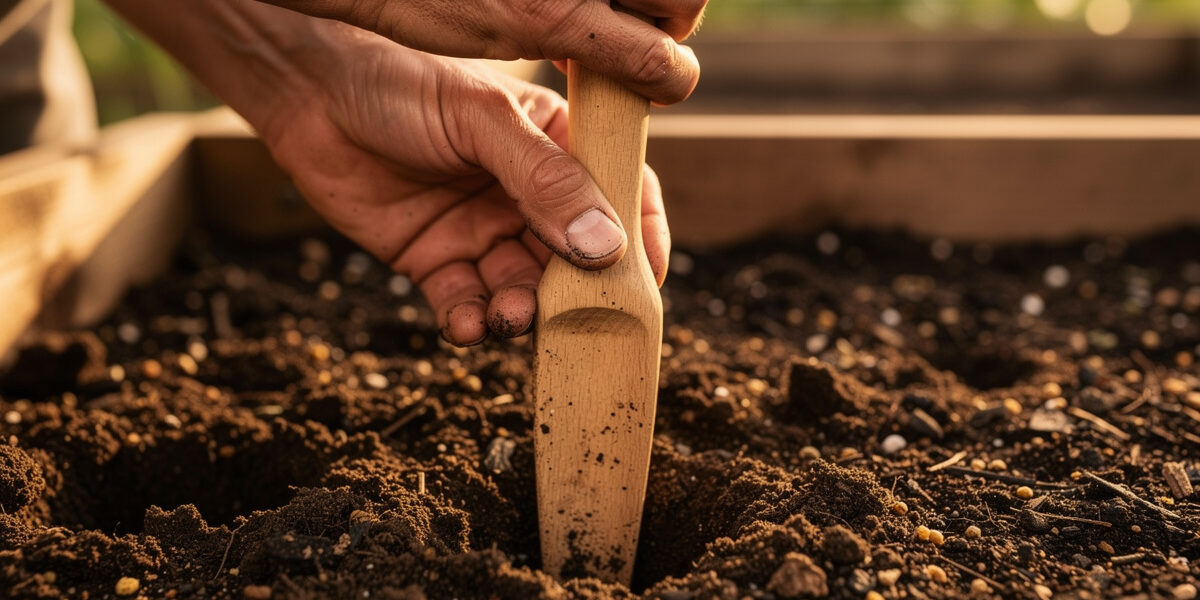
- Dig a shallow planting hole 1/4 to 1/2 inch deep at each site. Tomato seeds need light contact but cannot push through more than 1/2 inch of soil reliably.
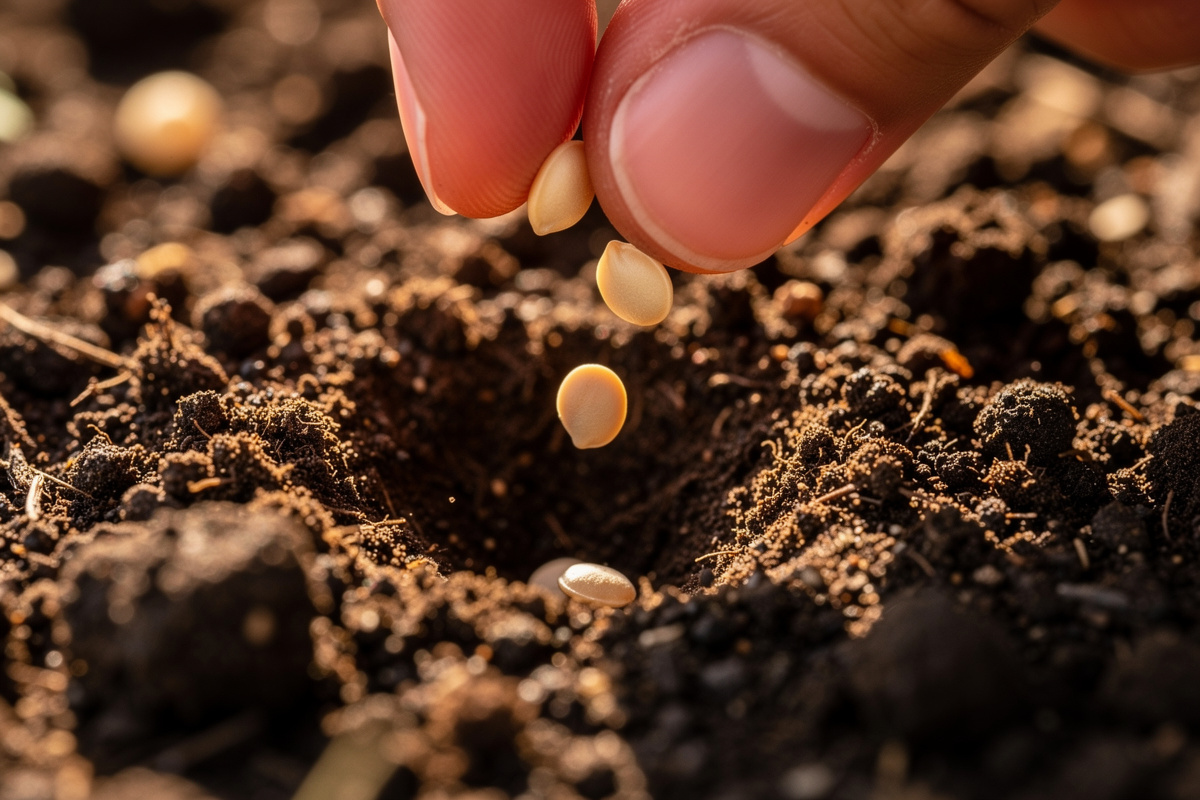
- Drop 3 to 4 seeds into each hole. Direct sowing germination rates run 60 to 80%. Multiple seeds per hole guarantees at least one viable seedling per spot. You’ll thin to one later. For reliable germination, start with fresh heirloom tomato seeds from a reputable source — a $4 packet of 30 seeds covers a 4×4 foot bed with seeds left over for succession sowing.
- Cover lightly with 1/4 inch of fine soil or sifted compost. Press gently with the flat of your hand to ensure seed-to-soil contact.
- Water with a fine spray, not a stream. A watering can rose or a misting nozzle prevents washing seeds out of position.
- Mark each planting spot with a stake or label. Tomato seedlings look identical to many garden weeds at the cotyledon stage.
The First Three Weeks: What to Watch For
Days 1 to 14: Germination. Keep the soil consistently moist but not waterlogged. A dry surface kills emerging radicles within hours. Light daily watering is better than heavy watering every few days at this stage.
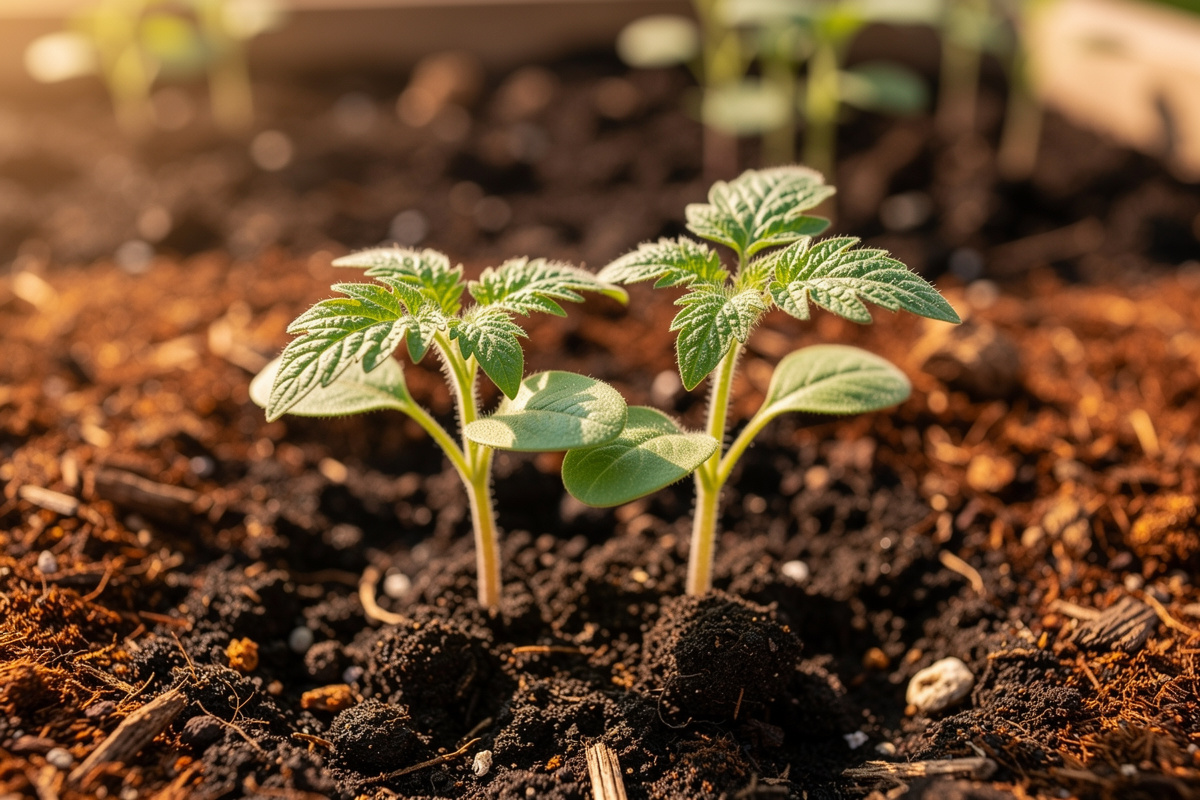
Days 7 to 14: Cotyledons emerge. These are the first two seed-leaves — smooth, oval, and unlike true tomato foliage. Do not confuse them with weeds. Two to three days later, the first set of true leaves (jagged, recognizable tomato-leaf shape) appears.
Days 14 to 21: Active leaf production. Seedlings should be 2 to 3 inches tall with 2 sets of true leaves. This is when thinning begins.
The most common first-three-weeks failure is damping off — a fungal disease that collapses seedlings at the soil line. The soil-borne fungi behind it (chiefly Pythium and Rhizoctonia) thrive in cold, wet, poorly drained ground, which is exactly why sowing too early into cold soil is the classic trigger (UC IPM). Prevention: avoid overwatering, ensure good airflow, and never sow into cold soil. Once damping off appears, affected seedlings cannot be saved; remove them and the surrounding soil, and wait for the ground to warm before resowing that patch.
Thinning: The Step Most People Skip and Pay For
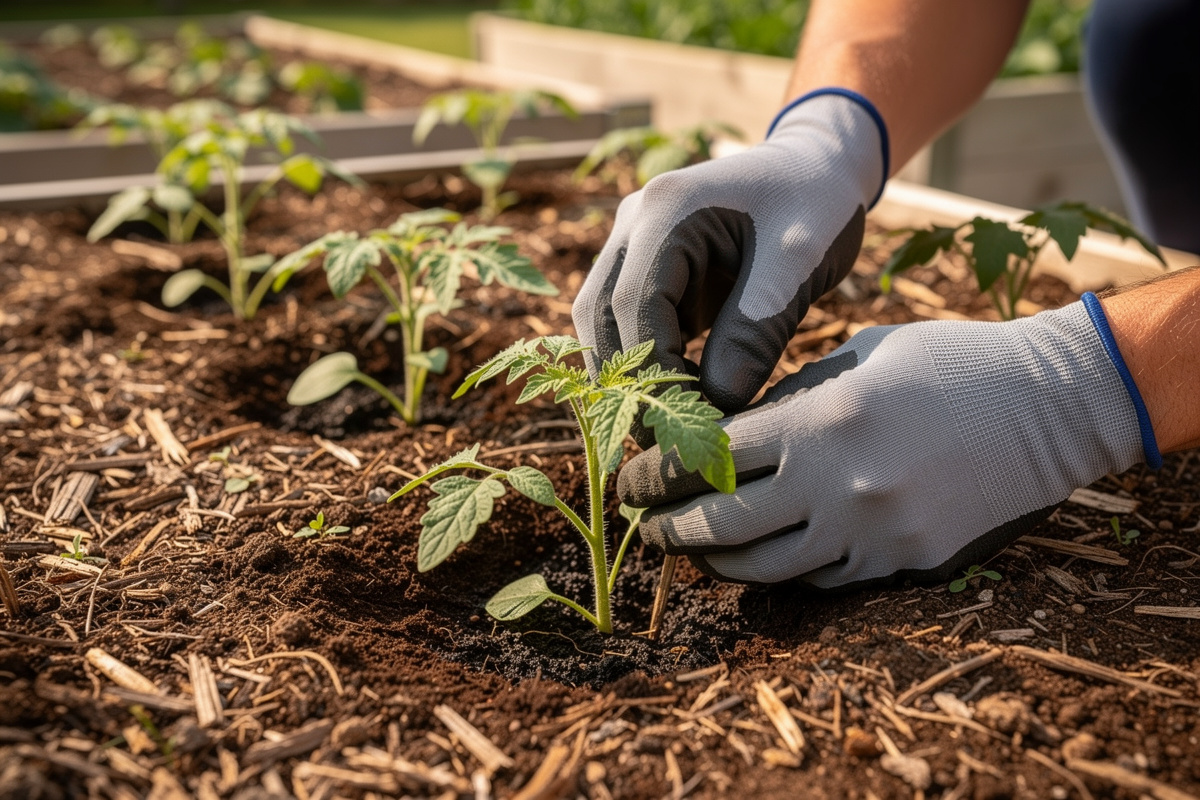
Once seedlings have their first set of true leaves and are 2 inches tall, thin each cluster down to one seedling — the strongest, most upright one. Use scissors at soil level rather than pulling, which disturbs the roots of the keeper.
This is the step direct sowers most often skip, hoping all the seedlings will somehow coexist. They won’t. Three tomato plants growing in the same hole will compete for water, nutrients, and light, and the resulting trio will collectively produce less fruit than a single well-spaced plant. Be ruthless. The thinned-out seedlings can be transplanted to extra spots if you have room and they pull cleanly with intact roots, but most people are better off composting them.
What Happens at Week 4 and Beyond
From here, direct-sown plants follow the same care arc as transplanted ones. The main differences:
- Earlier support installation. Get stakes or cages in by week 4. Direct-sown plants tend to grow faster than transplants once established and quickly outgrow late-installed support.
- First feed at week 5 or 6. When the seedling is 6 to 8 inches tall, apply the first dose per the Fertilizing Tomatoes: NPK Schedule.
- Skip the hardening off step entirely — direct-sown plants are already hardened to outdoor conditions from emergence. Compare to transplants, which need the routine in Tomato Seedlings: Hardening Off & Transplanting.
For the rest of the season — pruning, watering, harvest — see the season-long playbook in Tomato Plant: Complete Outdoor Growing Guide.
I keep a packet of fast-maturing cherry seeds on hand for succession sowing in the indoor seedling shelf — the same determinate cherry tomato seeds that would work as a zone 7 direct sow are the ones I start under my LED bar in late March for a mid-May transplant. Whether you’re direct sowing in zone 9 or starting indoors in zone 5, the seed quality is what determines whether the plant that emerges is worth six months of watering and feeding. As an Amazon Associate I earn from qualifying purchases.
Starting Tomatoes Indoors in a Cold Climate
I start tomato seeds the first week of March under a full-spectrum LED bar, 16 hours a day, in a room that stays at 20 to 22 degrees C year-round. The seedlings need eight to ten weeks indoors before they are ready for the balcony, and the grow light is non-negotiable — a windowsill in March at 59 degrees north gives maybe six hours of weak light which produces leggy seedlings that never recover. I use a sterile seed-starting mix in 3-inch cells, bottom-water once a day, and the seedlings are stocky and dark green by mid-May when I start hardening them off on the balcony.
Seed-starting mix matters more than most first-time tomato growers realize. A sterile peat-perlite blend with no added fertilizer works for four weeks, then I switch to a diluted fish emulsion feed once the first true leaves appear. The sterile mix prevents damping-off, which killed two full trays of seedlings my first season. Bottom-watering the trays rather than misting from above keeps the seedlings dry where it matters and is the single technique that eliminated damping-off from my setup entirely.
Frequently Asked Questions
Can I direct sow tomato seeds in zone 6 or colder?
Not reliably for fruit production. The frost-free season is too short for seeds sown after the soil reaches 65°F to germinate, mature, and ripen fruit before fall frost. Gardeners in zones 3 to 6 should start seeds indoors 6 to 8 weeks before the last frost, then transplant.
How long do tomato seeds take to germinate outdoors?
5 to 7 days in 75 to 85°F soil; 10 to 14 days in 65 to 70°F soil. Below 60°F, germination is unreliable and many seeds rot. The single biggest variable is consistent soil temperature, not seed quality or variety.
Should I soak tomato seeds before planting?
Optional and not necessary in most cases. A 4 to 6 hour soak in lukewarm water can speed germination by 1 to 2 days but offers no other benefit. Skip soaking for very small seeds, which are hard to handle when wet.
How deep should I plant tomato seeds outdoors?
1/4 to 1/2 inch deep, no more. Tomato seeds are small and lack the energy reserves to push through deeper soil. The most common direct-sow failure mode is planting too deep — the seed germinates but the radicle exhausts itself before reaching the surface.
How many seeds should I plant per hole?
3 to 4 seeds per planting site, then thin to the strongest single seedling once true leaves appear. This compensates for the 60 to 80 percent germination rate typical of outdoor sowing and ensures a viable plant in every spot.
Can I save and direct sow seeds from store-bought tomatoes?
Most store-bought tomatoes are F1 hybrids, meaning saved seeds either won’t germinate or will produce plants very different from the parent. Save seeds only from open-pollinated heirloom tomatoes if you want predictable results — see the heirloom seed guide for sourcing reliable varieties.
Related Articles
- Tomato Plant: Complete Outdoor Growing Guide
- Starting Tomato Seeds Indoors: Complete Guide
- Tomato Seedlings: Hardening Off & Transplanting
- Tomato Heirloom Seeds: Best Varieties & Where to Buy
- Tomato Plant Types: Determinate vs Indeterminate vs Dwarf
- Fertilizing Tomatoes: NPK Schedule by Growth Stage