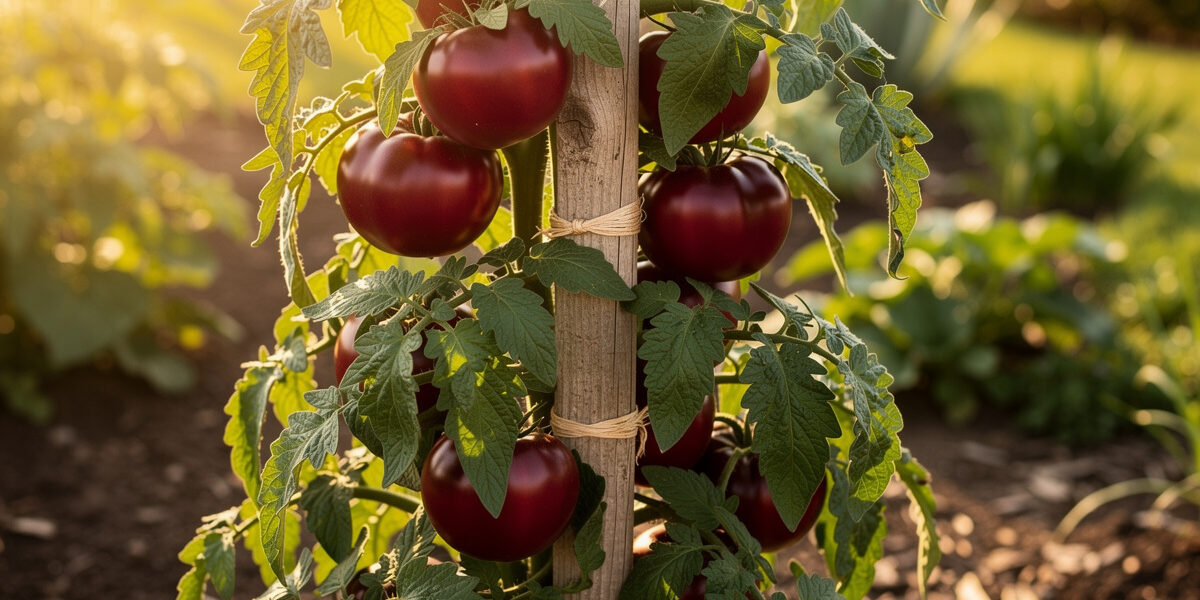
Indeterminate tomatoes are the highest-yielding category for fresh eating — a single well-managed plant produces 15 to 30 pounds across the season — but they demand weekly hands-on management that determinates and dwarves never need.
On my balcony I run mostly determinate cherries because the short Nordic season rewards compact plants that finish fast. But I keep one 10-gallon fabric grow bag of an indeterminate slicer against the back rail each summer — trained to a single leader on a heavy-duty 8-foot hardwood stake — because when the first Brandywine ripens in late August it is worth the extra pruning sessions. Below are the seven varieties worth your bed space, the suckering routine that concentrates the plant’s energy into fewer, larger, earlier-ripening fruit, and the topping cutoff that ripens remaining fruit before the first frost hits.
What “Indeterminate” Actually Means
Indeterminate tomatoes lack the genetic switch that tells determinate varieties to stop growing once they reach mature height. The main stem (called the leader) keeps extending all season, generating a new flower truss roughly every three sets of leaves. Left alone, the plant keeps making more stem, more leaves, and more flowers right up until frost kills it.
This sounds like a feature — and it is, if you want continuous fresh tomatoes from July through October. But indeterminate plants will not manage themselves. Without weekly intervention, the plant prioritizes leaf and stem mass over fruit, ends up sprawling on the ground, and becomes a fungal disease magnet. For the broader category overview and how indeterminate compares to determinate and dwarf types, see Tomato Plant Types: Determinate vs Indeterminate vs Dwarf.
The Seven Indeterminate Varieties Worth Your Bed Space
Out of hundreds of available cultivars, these seven cover the use cases home gardeners actually need:
- Cherokee Purple — Heirloom dusky-purple beefsteak. Complex, smoky-sweet flavor. 80 days. Crack-prone in heavy rain, so mulch heavily and water consistently.
- Brandywine (Pink) — The benchmark heirloom slicer. 1-pound fruits, 85–90 days. Lower yielding than modern hybrids, but flavor is unmatched.
- Sun Gold — F1 hybrid orange cherry. The sweetest cherry tomato most people will ever eat. 60 days, prolific. Splits if you let it ripen too long on the vine — full management in Sun Gold Tomato Plants.
- Sweet Million — Red cherry. Lighter flavor than Sun Gold but with massive disease resistance and trusses of 30+ tomatoes. 65 days.
- San Marzano (indeterminate type) — The Italian sauce tomato. Long plum shape, low water content, perfect for paste. 75–80 days.
- Big Beef — F1 hybrid red beefsteak. Built for reliability — disease-resistant, consistent 8 to 12 oz fruits, 73 days. The “if you only grow one indeterminate, grow this” choice for new gardeners.
- Black Krim — Russian heirloom. Mahogany-brown fruits with deep umami flavor. 80 days. Heat-tolerant — sets fruit when other indeterminates stall in summer.
For an open-pollinated heirloom-only selection and reputable seed sources, see Tomato Heirloom Seeds: Best Varieties & Where to Buy.
Suckering: The Single Highest-Yield Move
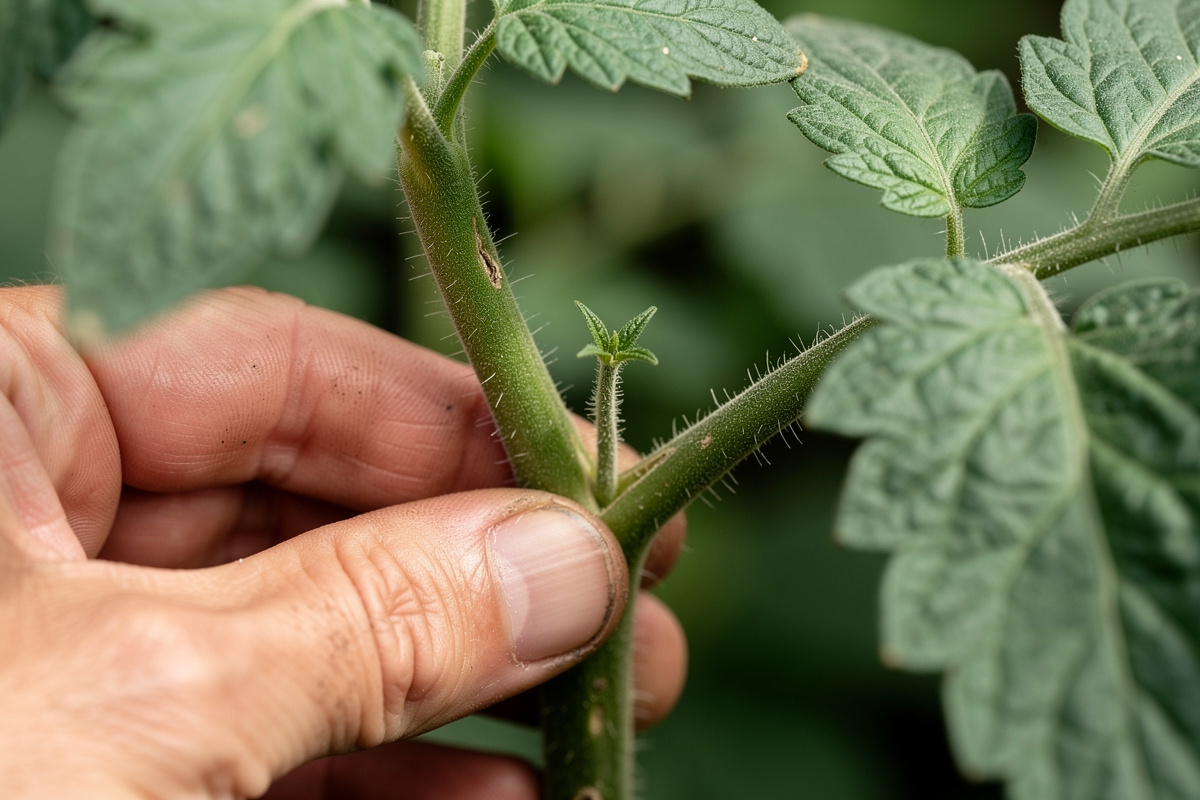
A sucker is the small shoot that emerges from the V-shaped junction (axil) where a leaf branch meets the main stem. Left alone, every sucker becomes a full secondary leader with its own leaves, flowers, and fruit. That sounds like more tomatoes — but it isn’t. The plant has a fixed energy budget. Splitting that budget across 4 leaders instead of 1 means smaller fruit that ripens later; training to one or two stems instead gives fewer but larger, earlier fruit (Iowa State University Extension).
The suckering routine:
- Inspect every Sunday. Suckers are easiest to remove when they’re 1 to 3 inches long — small enough to pinch off cleanly with thumb and forefinger.
- Pinch, don’t cut, while small. Larger suckers (over 4 inches) need clean pruners — tearing wounds the main stem and invites infection.
- Leave one or two low suckers as backup leaders if you have height room. Some growers train indeterminates as 2-leader or 3-leader plants for extra fruit on tall trellises. This works only if you have 8+ feet of vertical space.
- Strip the lowest 12 inches of leaves once the plant is 3 feet tall. These leaves are too shaded to photosynthesize meaningfully and stay damp from soil splash — early blight starts here.
For the support system that makes weekly suckering practical, see Staking Tomatoes: Single-Stake Method or Trellis for Tomatoes. A plant flopping on the ground cannot be effectively suckered. On my balcony the Sunday morning sucker check takes about five minutes for the one indeterminate I run — I pinch off anything under 3 inches with my thumb, and I learned the hard way that skipping even one week in July means a sucker becomes a side-leader you’ll need pruners for.
Yield: What Actually Drives the Numbers
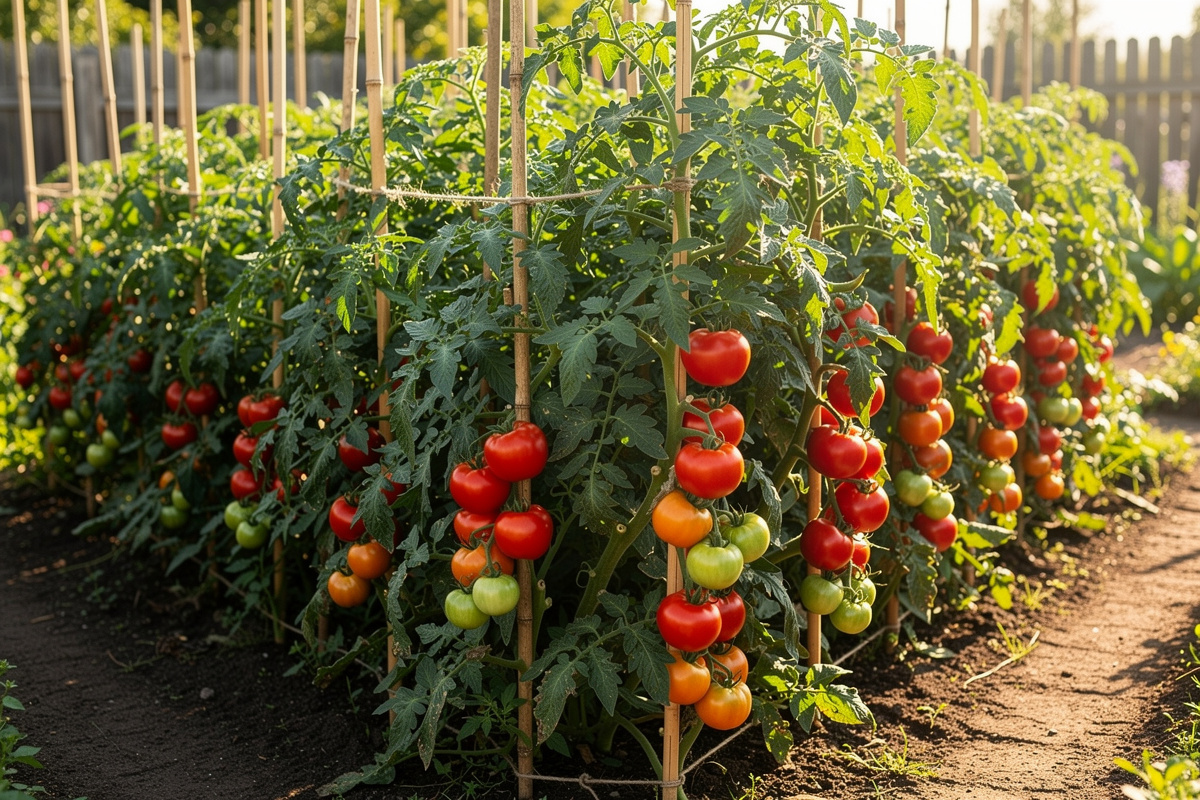
Published yield ranges for indeterminate tomatoes span a massive 10 to 50 pounds per plant. The difference between low and high end comes down to four variables, in order of impact:
- Suckering discipline. A consistently suckered plant outproduces a neglected one by roughly 100%.
- Soil fertility and feeding. Heavy feeding through the season is non-negotiable for indeterminates — they’re producing fruit for 90+ days. The detailed schedule is in Fertilizing Tomatoes: NPK Schedule by Growth Stage.
- Variety. Sweet Million produces 3 to 4× the fruit count of Brandywine, though much smaller fruit. Big Beef produces 30+ pounds in a good season.
- Length of growing season. A zone 9 gardener with 200 frost-free days will outproduce a zone 4 gardener regardless of skill — pure days-on-the-vine math.
Topping: The Late-Season Finishing Cut
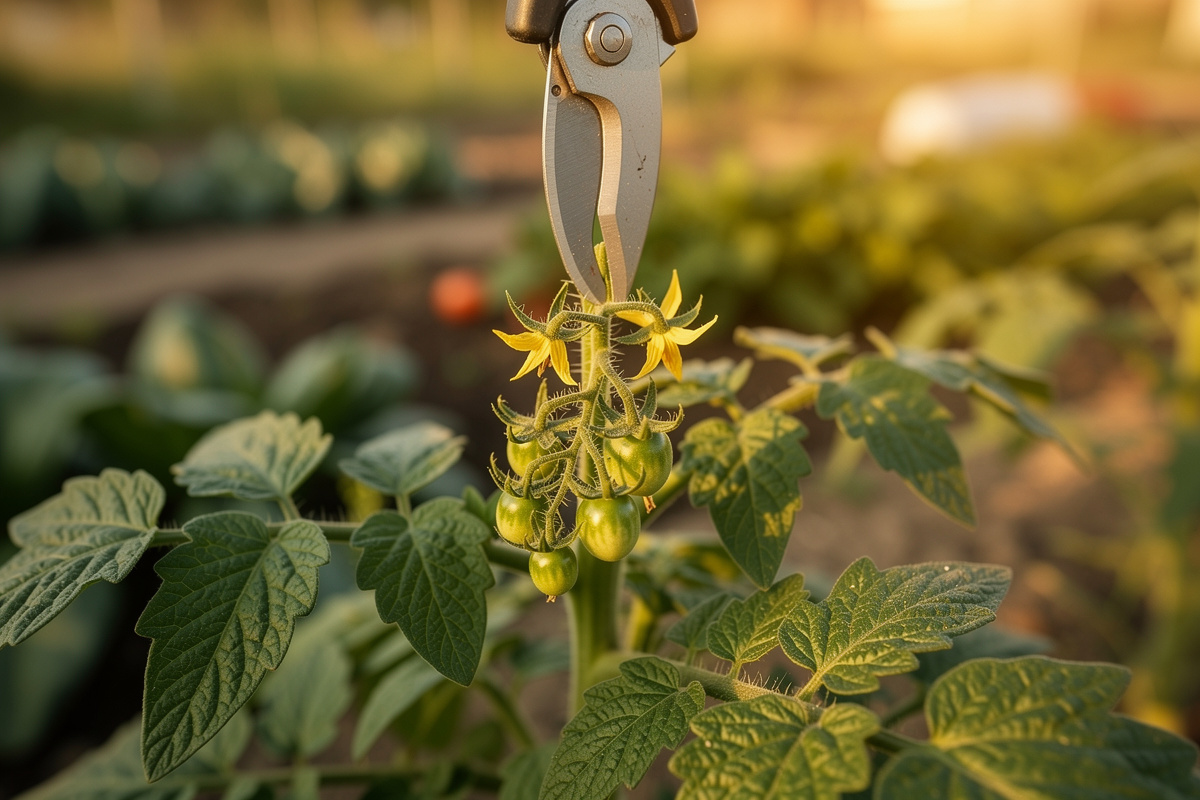
Once you’re 30 days from your average first frost date, the plant cannot ripen any new flowers it produces — there isn’t enough remaining warm weather. At this point, every gram of energy the plant spends making more flowers and shoots is a gram it isn’t spending finishing the green fruit already on the vine.
The fix is topping: cut the main growing tip (and any active sucker leaders) 1 inch above the topmost flower truss with clean pruners. The plant immediately reroutes resources into ripening existing fruit. Expect 20 to 40% more ripe fruit by frost compared to an un-topped plant.
Topping cutoff dates by zone:
- Zones 3–4: Late July to early August.
- Zones 5–6: Mid-to-late August.
- Zones 7–8: Early to mid-September.
- Zones 9–10: Often unnecessary — long enough season that new flowers can still finish.
In my Nordic balcony season — roughly mid-May to late September — I top during the first week of August. A high-potassium tomato fertilizer applied right after the topping cut pushes the last green fruit toward ripening faster than letting the plant figure it out on its own. The short-season playbook is the same whether you’re in zone 4 or growing on a Swedish balcony: top early enough that the plant has 30 warm days left, feed potassium, and accept that anything still golf-ball sized by September 1st probably won’t finish.
Spacing and Bed Layout
Indeterminate plants need 36 inches of in-row spacing minimum — and that is for a single-leader trained plant. If you’re running a 2-leader or 3-leader system, bump to 48 inches. Closer spacing creates two compounding problems: roots competing for the same water and nutrients, and canopies that block airflow and hold humidity, which essentially guarantees early blight by mid-July.
Row spacing depends on access. If you can walk between rows for picking and pruning, 4 feet is plenty. If you’ll be reaching across from one side, 30 inches works.
On a balcony the spacing rules compress: I run one indeterminate per 10-gallon fabric grow bag backed against the rail, and I position it so the stake leans slightly toward the building — a single 8-foot indeterminate with wet soil weighs close to 80 pounds, and on a balcony you need the weight centered over the beam, not the rail edge. I tie the main stem to the stake every 12 inches with soft garden twine in a figure-eight knot — tight enough to hold the stem, loose enough that the twine doesn’t cut into expanding tissue as the plant thickens through July.
Common Indeterminate-Specific Problems
- Massive plant, few tomatoes. Almost always nitrogen overdose. Stop nitrogen feeding immediately, switch to high-potassium feed, and accept that this season’s yield is largely set.
- Plant collapses under fruit weight. Support failure. Indeterminates need genuine 8-foot stakes or trellis posts driven 18 inches deep. Tomato cones from the hardware store fail every year.
- Lower leaves yellow and spot. Either nitrogen deficiency from heavy fruit set, or early blight. Remove affected leaves and assess: if upper leaves are deep green, it’s blight; if upper leaves are also pale, it’s nitrogen.
- Flowers drop without setting fruit. Daytime temperatures above 92°F or nighttime above 75°F shut down pollen viability. Wait for the heat wave to pass — fruit set will resume.
For the season-long care framework that ties suckering, feeding, watering, and pest management together, see the Tomato Plant: Complete Outdoor Growing Guide. For the comprehensive pruning routine including topping and lower-leaf stripping in detail, see Pruning Tomato Plants: Sucker Removal & Topping.
For most balcony growers I’d still recommend starting with determinate cherries — they’re the faster, lower-maintenance path to a real harvest. But if you have the vertical space and the willingness to do a five-minute sucker check every Sunday morning, a single indeterminate vine in a 10-gallon fabric bag with an 8-foot stake will give you fresh slicers from late July through the first October frost. Grab a packet of indeterminate heirloom seeds, a 10-gallon fabric grow bag, and a sturdy 8-foot stake — that trio is the minimum viable setup for a balcony indeterminate that actually produces. As an Amazon Associate I earn from qualifying purchases.
Frequently Asked Questions
How tall do indeterminate tomatoes really get?
In long seasons (zones 7+), 8 to 10 feet is normal, with documented cases over 20 feet in greenhouses. In shorter seasons (zones 3 to 5), most plants top out at 5 to 7 feet by frost simply because they run out of growing time. Plan for at least 6 feet of vertical support no matter where you garden.
What happens if I don’t sucker an indeterminate tomato?
The plant becomes a sprawling 3-leader or 4-leader bush that produces lots of foliage and roughly half the total fruit a properly suckered plant would. Disease pressure also rises significantly because airflow through the dense canopy is poor.
Can I grow indeterminate tomatoes in containers?
Yes, in 10 to 15 gallon fabric pots minimum, with a 6 to 8 foot stake driven into the pot. Expect 30 to 40 percent lower yield than in-ground due to limited root volume. Most container growers get better total yield from a dwarf or determinate, but a single indeterminate in a large pot is workable.
How do I know if I bought an indeterminate or a determinate?
The seed packet or seedling tag should specify. If it does not, search the cultivar name on a reputable seed company site. As a field test, watch the first month after transplant: indeterminates put on 2+ inches of new growth per week and quickly outgrow any cone cage; determinates fill out laterally and stop gaining height around week 6.
Should I leave a backup sucker as a second leader?
Optional. Two-leader training increases total fruit count but reduces individual fruit size and requires more vertical space. Use it if you have 8+ feet of trellis height and want maximum harvest from fewer plants. Stick with single-leader if you have shorter support or want larger individual fruits.
Do indeterminate tomatoes need to be topped every year?
Yes in zones 3 to 7, where the season is short enough that late flowers cannot ripen. In zones 8 to 10, topping is optional — many gardeners get useful late fruit through fall.