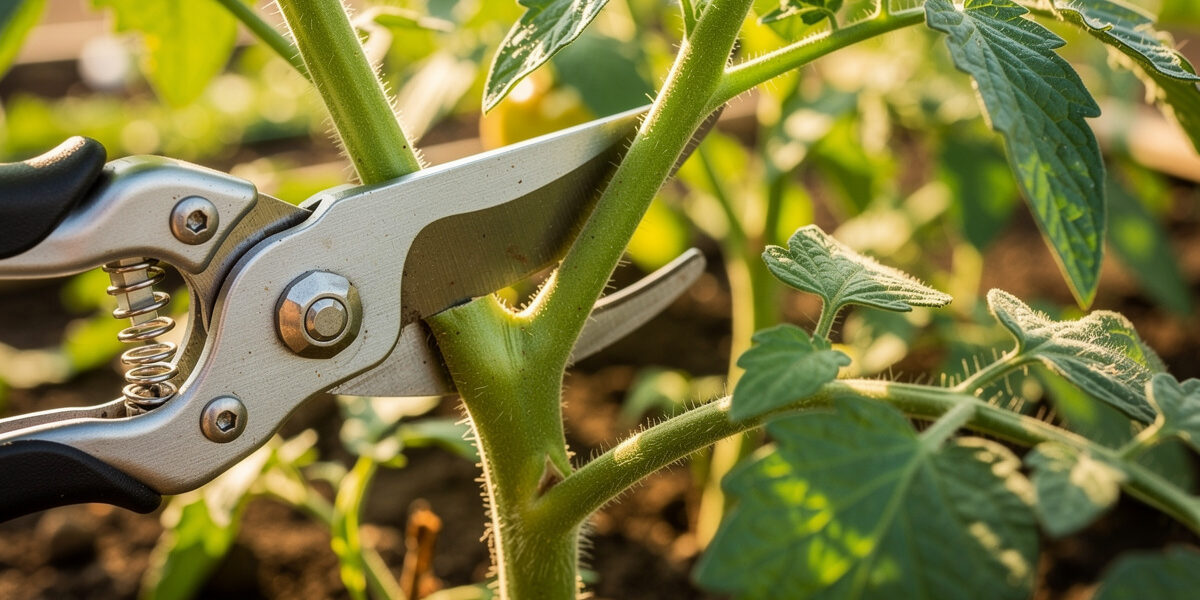
Pruning is the highest-leverage maintenance task on indeterminate tomato plants — and the single most damaging mistake on determinate ones. Sucker removal on an indeterminate redirects the plant’s energy out of runaway leaf production and into fewer, larger, earlier-ripening fruit; the same removal on a determinate cuts directly into the final harvest. This guide covers all three pruning operations — sucker removal, lower-leaf stripping, and end-of-season topping — with type-specific guidance on what to do for indeterminate, determinate, and dwarf varieties.
The Three Pruning Operations and When Each Applies
| Operation | Indeterminate | Determinate | Dwarf | Semi-determinate |
|---|---|---|---|---|
| Sucker removal | Weekly, all season | Never | Light only | Below first cluster only |
| Lower-leaf stripping | Once plant is 3 ft tall | Only diseased leaves | Only diseased leaves | Light only |
| Topping (end of season) | 30 days before frost | Never (natural stop) | Optional | Optional |
Get this matrix wrong and you cut yield. The most common mistake is suckering a determinate plant — every leaf removed is one the plant needed for its single concentrated harvest. If you’re not sure what type you bought, see Tomato Plant Types to identify before pruning.
Sucker Removal: The Weekly Routine for Indeterminates
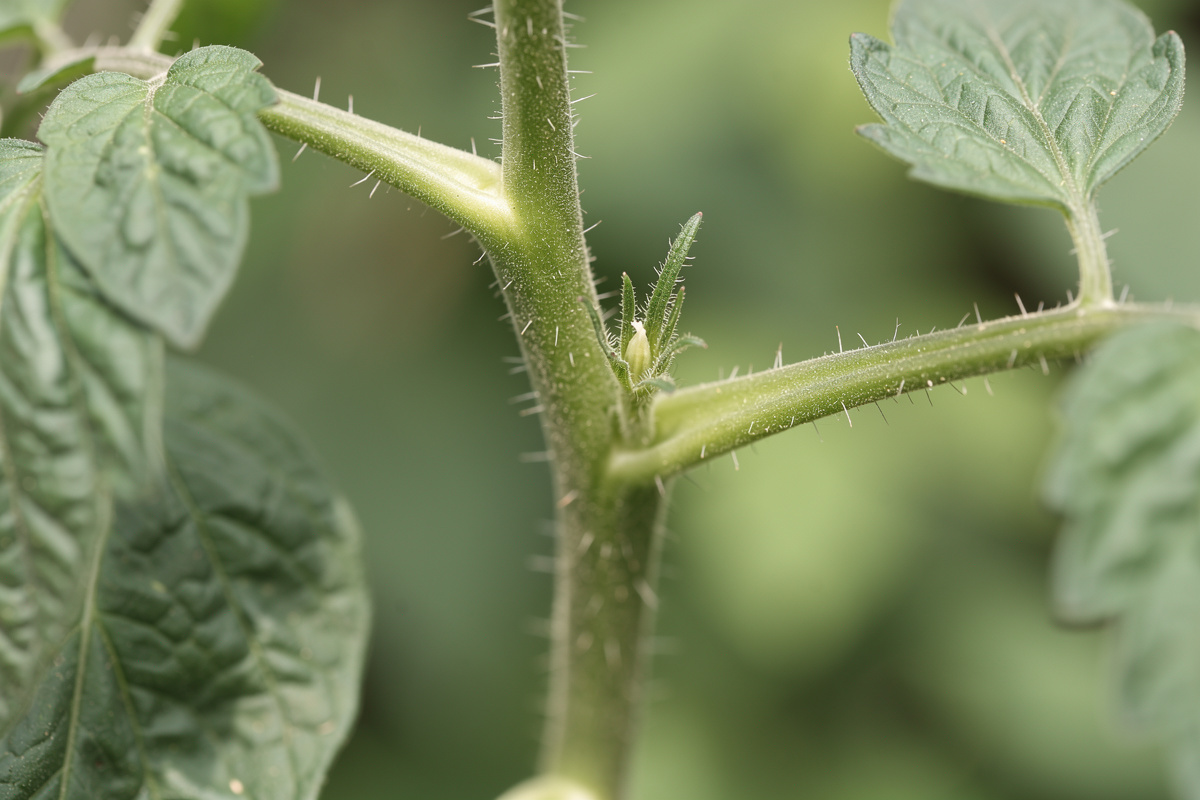
A sucker is the small shoot that emerges from the V-shaped junction (axil) where a leaf branch meets the main stem. Left alone, every sucker becomes a full secondary leader with its own leaves, flowers, and fruit. That sounds like a free harvest — but the plant has a fixed energy budget. Splitting that budget across 4 leaders instead of 1 produces more total foliage and less total fruit, with smaller fruit and slower ripening across the board — which is why University of Wisconsin Horticulture most commonly recommends training an indeterminate to a single leader.
Identifying a sucker:
- Location: Always in the leaf axil (the V between main stem and leaf branch).
- Direction: Grows roughly 45 degrees upward, parallel to the leaf branch directly below it.
- Difference from a leaf branch: The leaf branch grows from the main stem in a single position; the sucker emerges from the axil above the leaf branch’s base.
- Difference from a flower truss: Flower trusses emerge directly from the main stem (not from leaf axils) and have visible flower or fruit structures.
The removal procedure:
- Inspect every Sunday morning. Suckers are easiest to remove when 1 to 3 inches long.
- Pinch off small suckers (under 3 inches) cleanly with thumb and forefinger.
- Use clean pruners for larger suckers (over 4 inches). Tearing wounds the main stem and invites infection.
- Cut close to the main stem, leaving a short stub. Do not strip flush against the stem — the small remaining stub heals over more cleanly.
- Disinfect pruners between plants if any plant in the bed shows disease symptoms — a quick wipe with rubbing alcohol prevents spread.
If you want a higher-yield (but lower per-fruit-size) approach, leave one or two suckers low on the plant as backup leaders. This 2-leader or 3-leader training works only if you have 8+ feet of vertical support. The full indeterminate-specific care arc is in Indeterminate Tomatoes: Varieties, Pruning & Yield.
Lower-Leaf Stripping for Airflow
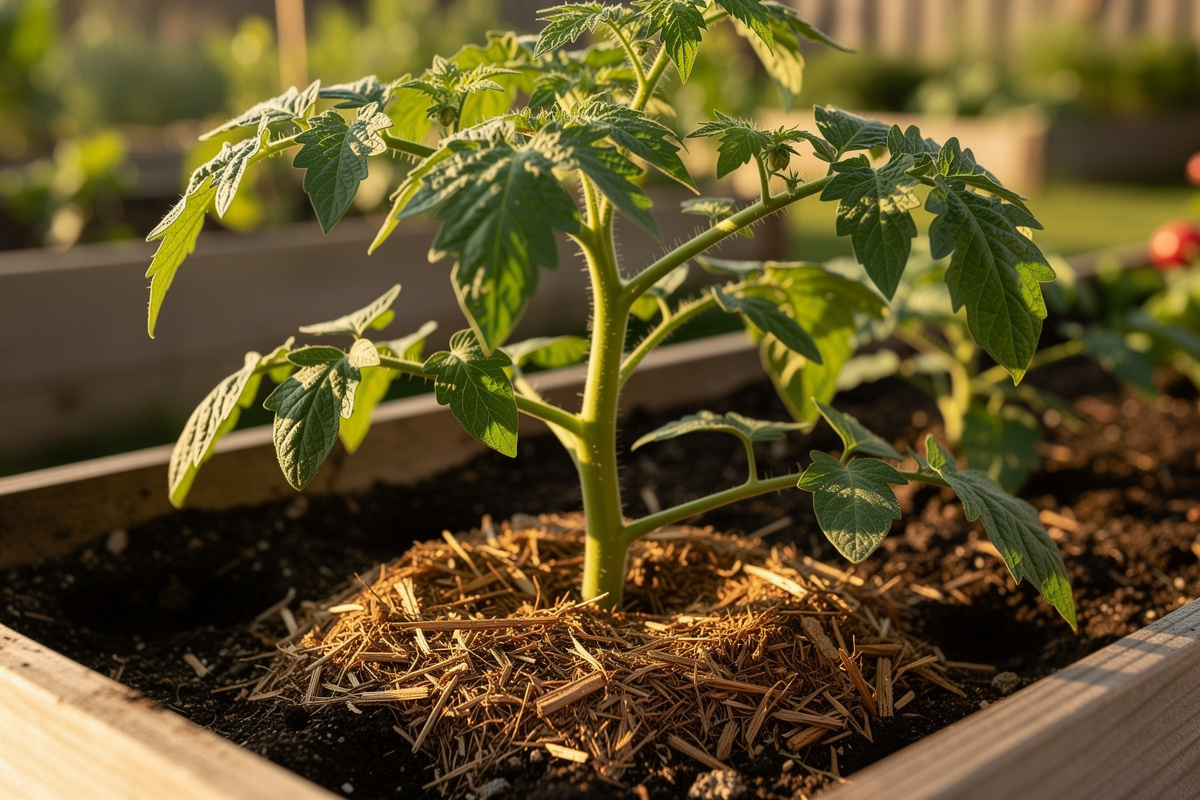
Once a tomato plant reaches 3 feet tall, the bottom 12 inches of leaves contribute almost nothing to the plant’s photosynthesis — they’re shaded, often dust-coated, and stay damp from soil splash during rain or irrigation. They are also the entry point for early blight and septoria leaf spot, which infect the lowest leaves first from soil-splashed spores and work their way up.
Strip all leaves from the bottom 12 inches of stem once the plant clears 3 feet. Add a few more inches every 2 to 3 weeks as the plant grows, but never strip more than the bottom third of the plant — you need significant leaf mass for fruit production.
Always remove and destroy yellowing or spotted leaves immediately, regardless of where on the plant they are. Don’t compost diseased tomato leaves — early blight spores survive in compost and reinfect next year’s bed.
On a balcony this matters more than it does in an open garden, because the surrounding walls trap humid air and slow the morning dry-down that keeps foliage healthy. Stripping the lower leaves is the single cheapest thing I do to keep fungal pressure down through a damp Nordic summer — it costs nothing, takes a minute per plant, and opens up the stem base so a breeze can actually reach the soil surface. I strip a little higher on the containers pushed against the wall than on the ones out on the open rail, simply because the sheltered corner stays wetter for longer after rain.
For pest and disease pressure tied directly to airflow management, the broader guide is in Tomato Plant: Complete Outdoor Growing Guide. For specific fungal issues like fungus gnats that affect seedlings and container plants, see Fungus Gnats in Houseplants.
Topping: The End-of-Season Finishing Cut
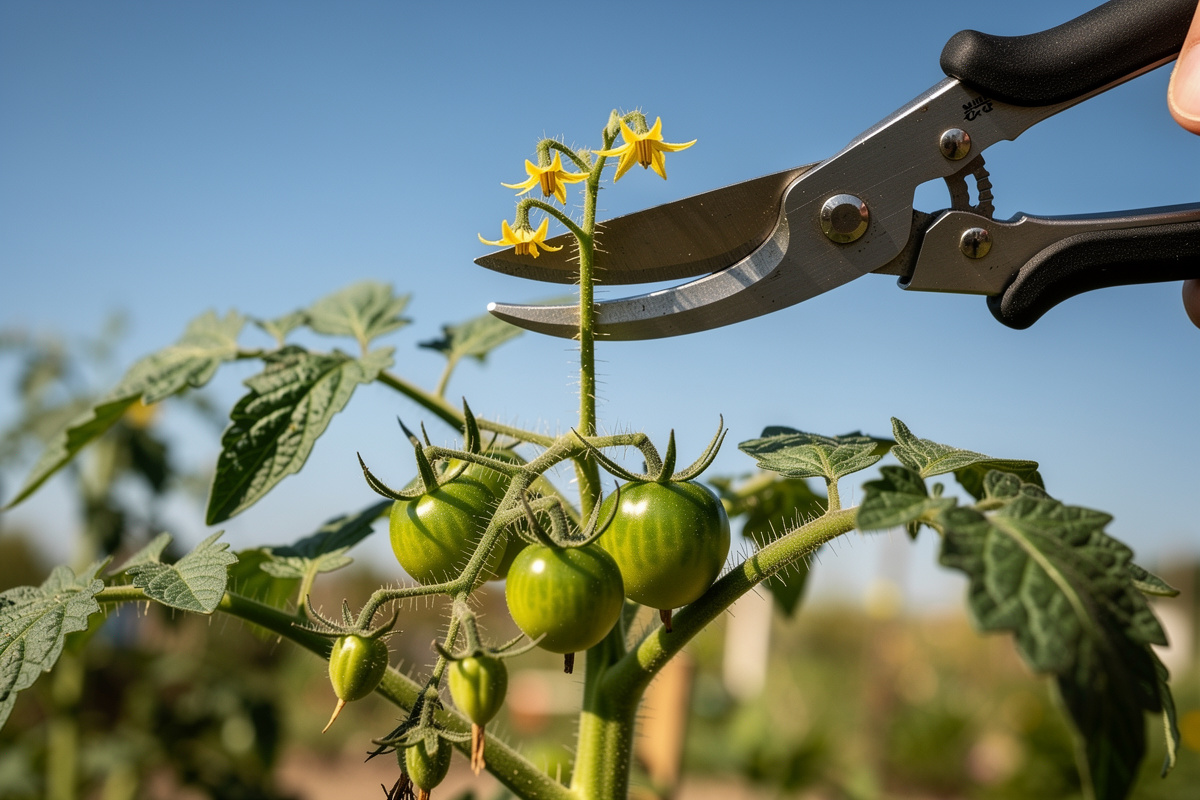
By 30 days before your average first frost, the plant cannot ripen any new flowers it produces — the remaining season is too short. At this point, every gram of energy the plant spends making more flowers and shoots is one it isn’t spending finishing the existing green fruit on the vine.
Topping procedure:
- Identify the main growing tip at the top of the plant. For 2-leader or 3-leader systems, identify each tip.
- Cut 1 inch above the topmost flower truss with clean pruners.
- Continue weekly suckering through the remaining season — the plant will try to grow new shoots from existing leaf axils, and you don’t want those wasting energy either.
- Strip any remaining flowers that haven’t set fruit. They cannot finish in time.
Topping cutoff dates by USDA zone:
- Zones 3–4: Late July to early August.
- Zones 5–6: Mid-to-late August.
- Zones 7–8: Early to mid-September.
- Zones 9–10: Often unnecessary — long enough season that new flowers can still finish.
On my Nordic balcony I top during the first week of August — that leaves roughly 30 days for the remaining green fruit to ripen before the September cooldown slows everything to a crawl. I learned this cutoff date by losing a full truss of golf-ball-sized green cherries to an early October frost two seasons ago. Now I set a calendar reminder for August 1st and top every indeterminate on the balcony that weekend, no exceptions.
Expect noticeably more ripe fruit by frost than you’d get from an un-topped indeterminate — the plant pours what’s left of the season into finishing the green fruit already on the vine instead of starting growth it can’t complete.
What NOT to Prune
The pruning operations to avoid:
- Removing leaf branches that have flowers or fruit. The fruit needs the photosynthate from the immediately-attached leaves. Strip leaves from a fruiting branch and the fruit ripens slowly with poor flavor.
- Removing healthy upper leaves. The upper canopy is the plant’s photosynthesis engine. Reducing it directly reduces fruit production.
- Pruning during heavy rain or wet conditions. Wet wounds invite bacterial and fungal infection. Prune in dry weather.
- Removing more than one-third of the plant at any time. Aggressive pruning shocks the plant.
- Suckering determinates. Cuts directly into yield with no compensating benefit.
Tools and Hygiene
- Bypass pruners with a sharp clean blade. Anvil pruners crush stems rather than cutting them. I use bypass garden pruners for all tomato work — the thin blade reaches into tight leaf axils where a bulkier shear would nick the main stem.
- Disinfectant: 70% rubbing alcohol or a 10% bleach solution. Wipe blades between plants if any plant in the bed shows disease.
- Disposal: Removed suckers and healthy leaves can compost. Diseased material goes in the trash, never the compost.
The Pruning Routine in Context
Pruning works alongside the other season-long care operations. For the seedling and transplant work that precedes the first prune, see Tomato Seedlings: Hardening Off & Transplanting. For the support systems that make weekly suckering practical (a sprawling unsupported plant cannot be effectively pruned), see Staking Tomatoes or Trellis for Tomatoes. For the feeding schedule that supplies the energy the plant redirects after pruning, see Fertilizing Tomatoes: NPK Schedule.
On my balcony pruning is about five minutes every Sunday morning through July and August — enough time to pinch off the week’s suckers, strip a few lower leaves for airflow, and tie the new top growth to the stake. The determinate cherries in the fabric grow bags need none of this, which is why they’re the majority of what I grow. But for the one indeterminate slicer on the rail, the Sunday morning routine is what turns a sprawling vine into a productive plant. A pair of sharp bypass pruners and a roll of soft garden twine for tying are the only tools the routine requires.
As an Amazon Associate I earn from qualifying purchases.
Pruning Timing in a Short Season
Pruning indeterminate tomatoes on a Nordic balcony is a weekly task from late June through August, because the long daylight hours push growth at a pace that surprises anyone used to southern growing. Suckers appear at every leaf axil and need pinching before they reach 3 inches, or they start diverting energy from fruit. The single-stem method works best in a container: it channels growth into one manageable vertical column that fits a 6-foot stake and produces cleaner fruit with better airflow.
The difference between a well-pruned indeterminate and an unpruned one is visible from across the balcony. The pruned plant channels its energy into fewer but larger fruit clusters with clean airflow between the stems; the unpruned plant becomes a dense tangle of foliage with small fruit hidden inside a humid canopy that invites fungal disease. Pruning also makes harvesting easier — you can see every cluster from the side of the plant instead of pushing through a wall of leaves to find a ripe tomato.
A single-stem indeterminate trained on a 6-foot stake is the cleanest, most productive setup I have found for a balcony. I prune suckers every Sunday morning through July and August — five minutes per plant — and the result is healthy foliage, clean airflow, and fruit clusters visible from across the balcony.
Frequently Asked Questions
Should I prune determinate tomatoes?
No, never sucker determinates. Determinate plants ripen their entire crop in a single 3 to 4 week flush, and every leaf is needed to fuel that flush. The only acceptable pruning on a determinate is removing diseased or yellowing lower leaves for airflow once the plant is well-established.
What is a tomato sucker?
A sucker is the small secondary shoot that emerges from the V-shaped junction (leaf axil) between the main stem and a leaf branch. Left alone, each sucker becomes a full secondary leader with its own leaves and flowers, splitting the plant’s energy budget and reducing total yield in indeterminates.
How do I know if I’m pruning a sucker or a fruit truss?
Suckers grow from leaf axils (the V between main stem and leaf branch) and look like miniature stems with leaves. Fruit trusses emerge directly from the main stem (not from axils) and have visible flower buds or developing fruit. When in doubt, leave it for a few days — fruit trusses become unmistakably obvious.
When should I top my tomato plants?
30 days before your average first frost date. Zones 3 to 4: late July to early August. Zones 5 to 6: mid-to-late August. Zones 7 to 8: early to mid September. In zones 9 to 10, topping is often unnecessary because the season is long enough for new flowers to finish.
How often should I sucker indeterminate tomatoes?
Weekly, ideally every Sunday morning so it becomes routine. Suckers grow fast in mid-summer — a missed week turns into 20+ suckers to remove the following week, and at 4+ inches they require pruners rather than thumb-pinching.
Can pruning hurt my tomato plant?
Yes if done wrong. Removing too many leaves at once shocks the plant, removing healthy upper canopy reduces fruit production, and pruning in wet conditions invites infection. The biggest mistake is suckering determinate varieties — this directly cuts into yield with no upside.