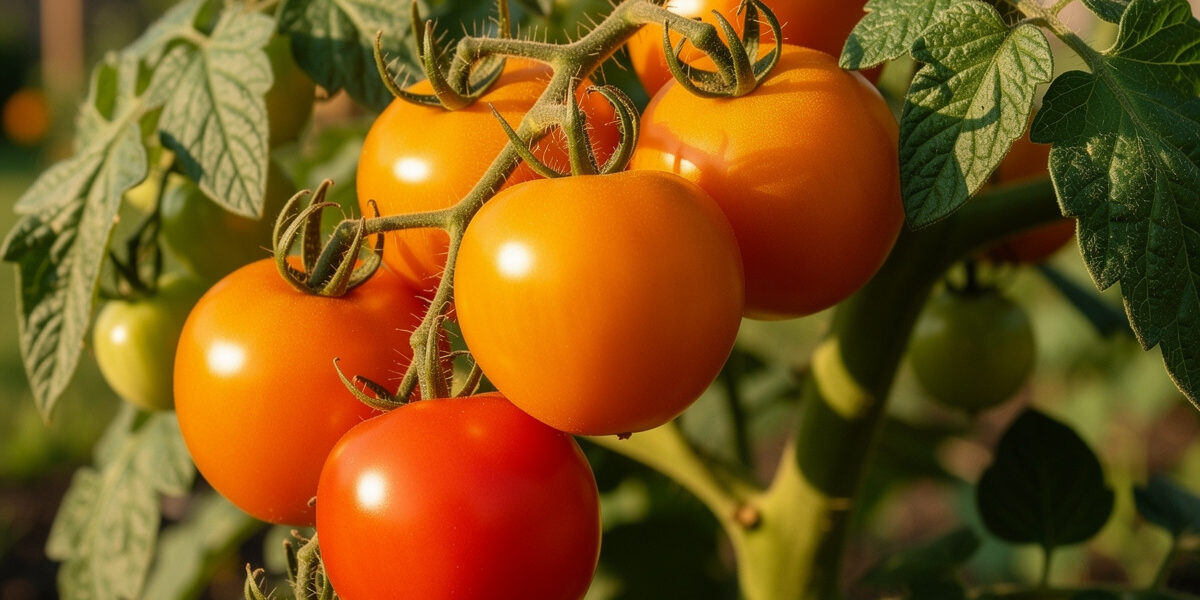
Sun Gold is the cherry tomato that converts people who think they don’t like tomatoes. The orange F1 hybrid hits Brix sugar levels around 8 to 10% — well above the 4 to 5% of a standard tomato and sweeter than a typical red cherry — and bears 200 to 400 fruits per plant across a full season. The trade-offs: it’s an aggressive indeterminate that needs serious vertical support, the fruit splits if left on the vine 24 hours past peak, and saved seeds won’t grow true. I grow Sun Gold on my balcony every season — one plant in a 10-gallon fabric bag against the back rail, trained to a single leader on an 8-foot stake. In a short Nordic summer it reaches about 6 feet before the September cooldown, which is tall enough for 200+ fruits if I stay on the suckering routine. This guide covers the variety-specific care for getting Sun Gold to its full potential, filtered through what actually holds up on a balcony with a limited season.
What Makes Sun Gold Different
Sun Gold (sometimes labeled “Sungold,” same plant) is an F1 hybrid bred by Tokita Seed Company in Japan and released in the early 1990s. It’s distinguishable from other orange cherry tomatoes by three traits:
- Brilliant orange color at full ripeness — almost glowing, much brighter than yellow cherry varieties.
- Tropical-fruit flavor profile with notes of mango and pineapple — not the typical tomato umami.
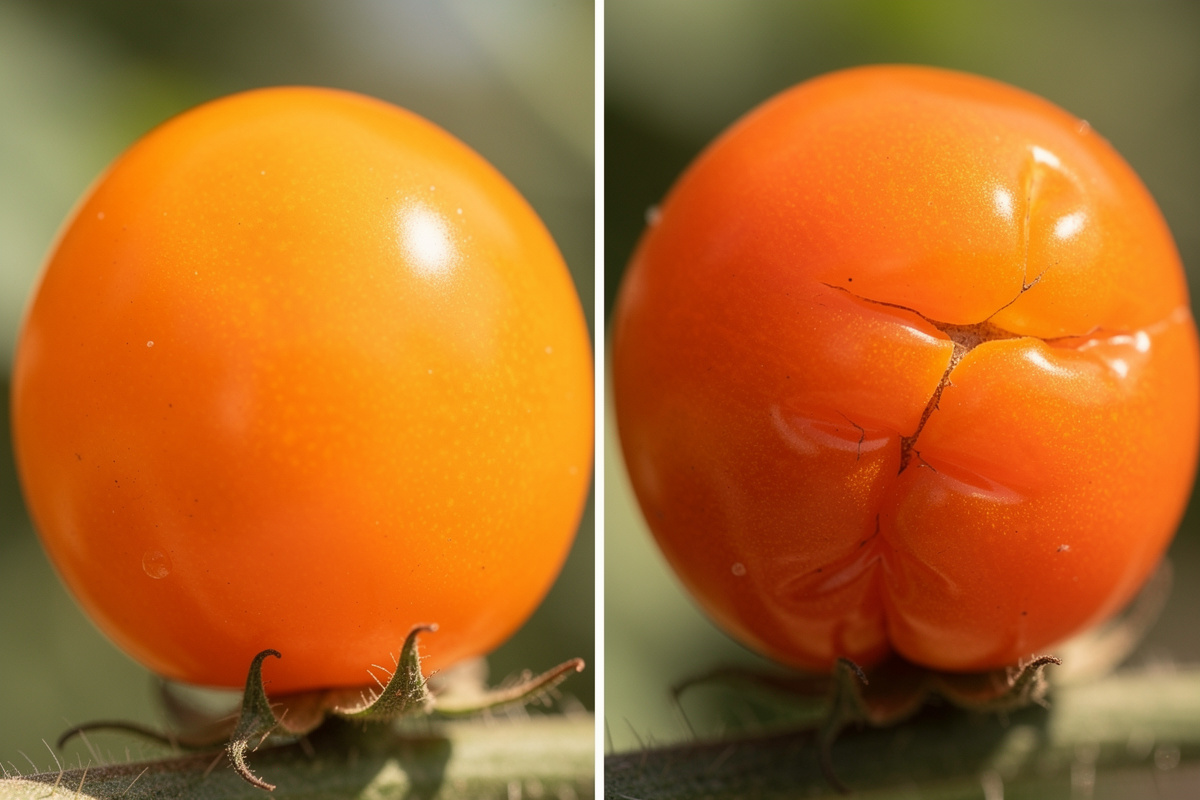
- Translucent thin skin that splits readily — the source of its main growing problem.
Sun Gold is a vigorous indeterminate. For type-specific support and pruning context, see Indeterminate Tomatoes: Varieties, Pruning & Yield. For the broader category overview, see Tomato Plant Types.
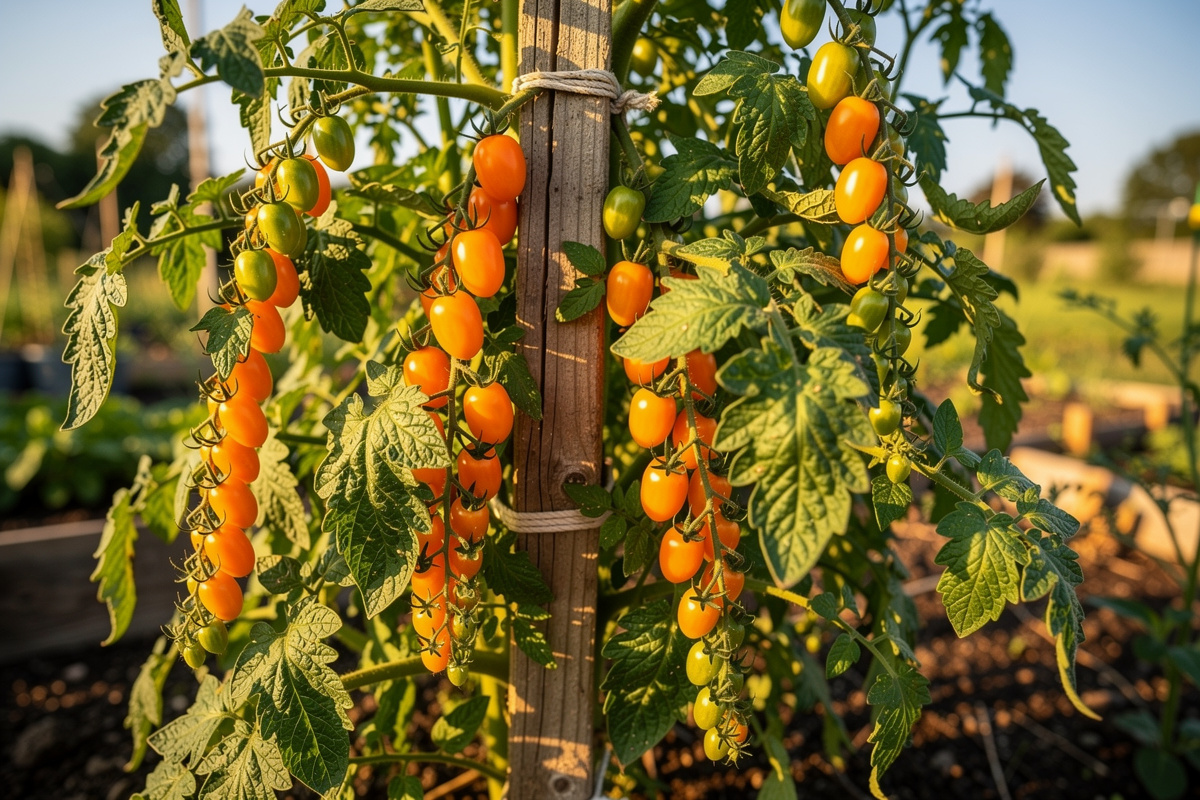
Plant Specs and What to Expect
| Trait | Specification |
|---|---|
| Type | Indeterminate, F1 hybrid |
| Days to maturity | 57 to 65 days from transplant |
| Mature height | 6 to 8 feet (10+ in long seasons) |
| Fruit size | 0.5 to 0.75 oz, roughly 1 inch diameter |
| Fruits per truss | 10 to 20 |
| Total yield per plant | 200 to 400+ fruits |
| Brix (sugar content) | 8 to 10% (very high) |
| Disease resistance | Fusarium wilt, tobacco mosaic virus |
| Spacing | 36 inches between plants |
| Container size | 15+ gallons (it’s vigorous) |
Starting and Transplanting
I start my Sun Gold from seed indoors under LEDs in late March — this variety needs the full 6-to-8-week head start in a Nordic climate because it is a vigorous indeterminate that demands warm soil. A packet of Sun Gold seeds runs about $5 and each viable seedling produces hundreds of fruits — easily the best return on a single seed purchase in my entire balcony garden. Sun Gold is sensitive to cold soil more than most cherry varieties — wait until soil reaches 65°F minimum at 4 inches deep before transplanting. In zones 3 to 7, start indoors 6 to 8 weeks before last frost (full method in Starting Tomato Seeds Indoors); in zones 8+, direct sow is viable per Growing Tomatoes from Seeds.
At transplant, follow the standard tomato deep-planting procedure (bury so only top 4 inches of foliage shows above ground) — see Tomato Seedlings: Hardening Off & Transplanting for the full transplant routine. Sun Gold’s vigor specifically benefits from the extra root mass deep planting produces.
Support: Don’t Underbuild
Sun Gold is one of the tallest indeterminate varieties common in home gardens. Plants regularly hit 8 feet by mid-summer and 10+ feet in zones 8 to 10. Planning for less is the most common Sun Gold mistake.
Minimum support:
- Single stake: 8-foot minimum (10 feet preferred), driven 18 inches deep. Method in Staking Tomatoes: Single-Stake Method.
- Multi-plant trellis: Florida weave with 8-foot T-posts, or a 6 to 8 foot A-frame. See Trellis for Tomatoes.
- Cages: Skip standard 4-foot cages. Sun Gold will outgrow them by 4 feet.
Suckering and Pruning Sun Gold Specifically
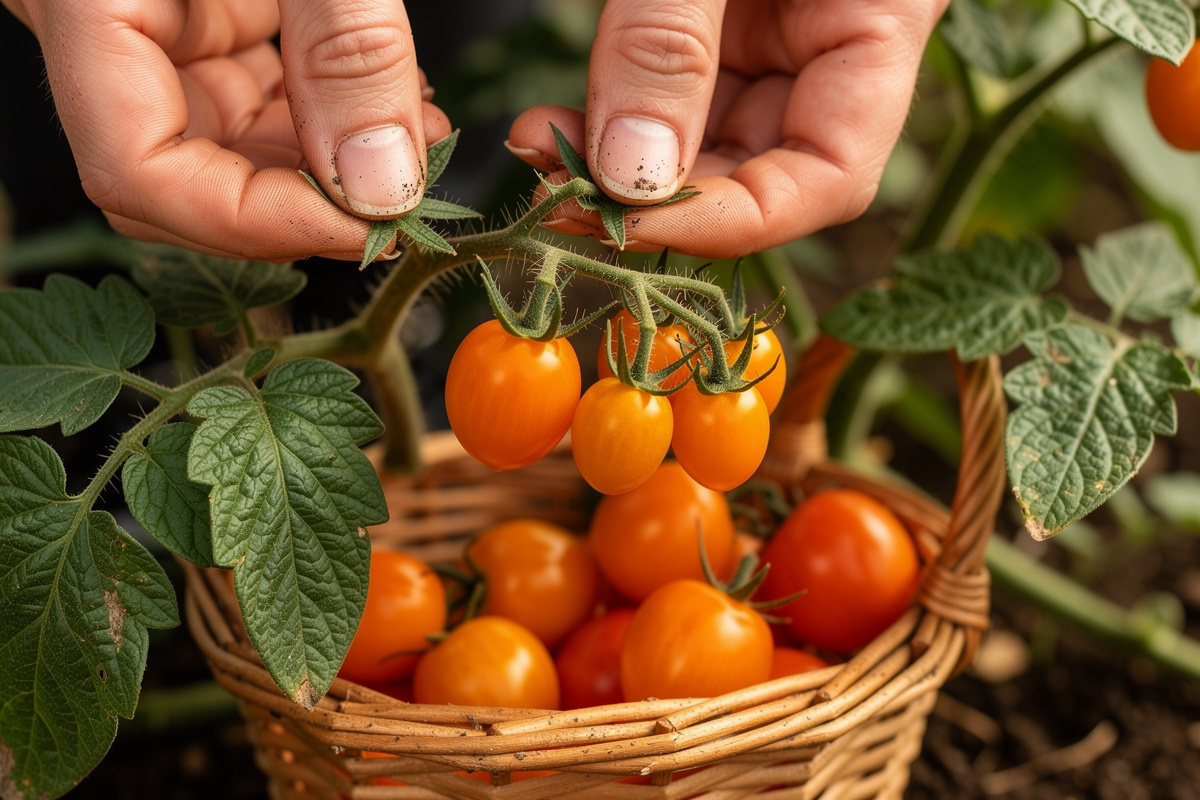
Single-leader training (weekly sucker removal, no backup leaders) produces the largest individual fruit and earliest ripening. Two-leader training works for gardeners with 8+ feet of trellis room and produces more total fruit but on a slower timeline.
Sun Gold’s vigor means suckers form fast — every leaf axil produces one within a week of leaf emergence. A skipped Sunday inspection turns into 20+ suckers to remove the following week. Stay on schedule. The full pruning routine including topping is in Pruning Tomato Plants: Sucker Removal & Topping.
The Splitting Problem and How to Manage It
Sun Gold’s thin translucent skin is what gives it the texture people love — and what makes it split readily. The mechanism is simple: when a dry spell is broken by heavy rain or a big watering, the roots take up water faster than the skin can stretch, and the fruit cracks — either in rings around the stem or in lines radiating out from it (University of Missouri IPM). Fruits that ripen during a heavy rain or get over-ripe on the vine crack open within hours. The crack itself isn’t dangerous — split fruits are still edible immediately — but split tomatoes invite fruit flies and rot quickly, which is exactly why Sun Gold’s especially thin skin makes staying ahead of the weather matter more than it does with any thick-skinned red cherry.
Prevention strategies:
- Pick at the breaker stage — when the first orange blush appears on the bottom, with the rest still yellow-green. Ripen on the kitchen counter for 1 to 2 days. This is the highest-flavor pick window for Sun Gold; vine-ripening past this stage adds nothing and risks splitting.
- Maintain even soil moisture. Splits worsen when dry soil suddenly gets a big rain. Mulch heavily and water deeply on a regular schedule.
- Pick before forecasted heavy rain. If rain is predicted in the next 24 hours and you have orange fruits, harvest them all and ripen indoors.
- Pick daily during peak. A truss that has 5 perfectly ripe fruits today will have 5 split fruits tomorrow if you skip the pick.
Feeding for Maximum Sweetness
Sun Gold’s high Brix is partly genetic, partly environmental. Two practices push it higher:
- High potassium during fruiting. Use a tomato-specific 3-4-6 or similar K-heavy fertilizer from first flower through harvest. Detail in Fertilizing Tomatoes: NPK Schedule by Growth Stage.
- Slight water stress in the final 7 days before peak harvest. Reducing water by ~30% concentrates sugars in the fruit. Don’t apply this to container plants — their root volume is too small to buffer dry-down stress.
The tension here is real, and it is why I don’t chase maximum sweetness on the balcony. The same steady watering that keeps Sun Gold from splitting is slightly at odds with the mild dry-down that concentrates its sugars, and in a small fabric pot you cannot safely swing between the two without risking a wave of split fruit. My compromise is to grow it in full, all-day sun — which does more for flavour than any watering trick — feed it a potassium-heavy tomato food through the fruiting weeks, and accept that a container Sun Gold in a Nordic summer is already sweeter than almost anything I could buy.
Why You Can’t Save Sun Gold Seeds
Sun Gold is an F1 hybrid, meaning the seeds are the first-generation cross of two distinct parent lines. Saved seeds (the F2 generation) segregate into many different traits — only roughly 25% will resemble the original Sun Gold; the rest produce smaller, less sweet, and less reliable plants.
If you want orange cherry tomatoes from saved seed, grow an open-pollinated variety like Sungold’s Children, Galina’s Yellow, or Snow White. For seed sourcing and reliable open-pollinated varieties, see Tomato Heirloom Seeds: Best Varieties & Where to Buy.
Sun Gold in Containers
Sun Gold can grow in containers — but only large ones. The vigor that makes Sun Gold so productive in-ground demands serious root volume:
- 15-gallon fabric pot minimum. Smaller and the plant chronically wilts in summer.
- Daily watering during peak summer. Container Sun Golds can drink 2 gallons a day in 90°F weather.
- Weekly fertilization during fruiting — not every 10 to 14 days like in-ground plants.
- 8-foot stake driven into the pot. Yes, the stake-in-pot situation is awkward; lash the stake to a wall or fence for additional stability.
For container medium and bed setup, see Best Potting Soil for Tomatoes. For overall season care that ties Sun Gold-specific work into the standard tomato playbook, see Tomato Plant: Complete Outdoor Growing Guide.
Sun Gold is the one indeterminate I make room for every season despite the pruning commitment — the flavor is worth the Sunday morning sucker checks, and a single plant on the balcony produces more cherry tomatoes than two people can eat fresh. Grab a packet of Sun Gold seeds, a 10-gallon fabric grow bag, and an 8-foot hardwood stake — that setup has produced for me every summer I’ve run it. As an Amazon Associate I earn from qualifying purchases.
Sungold on a Nordic Balcony
Sun Gold is the one indeterminate tomato I grow every year, because it sets fruit reliably in cool weather and the first orange cherries ripen by mid-July even in a short season. A single plant in a 7-gallon fabric pot on a south-facing balcony produces more than a household of two can eat fresh. The plant needs a heavy-duty cage or stake and daily watering in July, but the flavour return on that effort beats any other variety I have tried, and it keeps producing well into September when many other indeterminates have slowed to a stop.
The one thing to stay ahead of is splitting. Sun Gold’s skin is thinner than most cherry varieties, so the fruit cracks easily after rain or heavy watering, and an erratic soak-dry-soak schedule produces the concentration swings that split it. In wet weather I pick the cherries slightly under-ripe and let them finish on the counter for a day — the flavour is nearly identical and none of them split — and through the dry stretches a steady daily morning watering from late June through August keeps the fruit intact.
Frequently Asked Questions
How tall do Sun Gold tomato plants get?
6 to 8 feet in zones 5 to 7, regularly 10+ feet in zones 8 to 10. Sun Gold is one of the tallest indeterminate cherry varieties common in home gardens — plan for 8 feet of vertical support minimum, more if you garden in a long-season climate.
Why are my Sun Gold tomatoes splitting?
Sun Gold’s thin translucent skin splits when the fruit is over-ripe on the vine, when soil moisture swings from dry to wet (heavy rain after drought), or both. Pick at the breaker stage (first orange blush) and ripen on the counter to avoid most splitting. Maintain even soil moisture with mulch.
How many tomatoes do Sun Gold plants produce?
200 to 400 fruits per plant across a full season is normal, with each truss producing 10 to 20 cherry-sized tomatoes. A single mature plant in zones 7+ can yield well over 500 individual fruits.
Can I save seeds from Sun Gold tomatoes?
You can save them, but they will not grow true to the parent plant. Sun Gold is an F1 hybrid, and saved seeds segregate into many different traits. Only about 25 percent of saved-seed plants resemble the original. For reliable saved seed, grow an open-pollinated variety like Galina’s Yellow or Sungold’s Children instead.
When are Sun Gold tomatoes ready to pick?
At the breaker stage — when the first orange blush appears on the bottom of the fruit while the top is still yellow-green. Ripen on the kitchen counter for 1 to 2 days. Vine-ripening past breaker stage adds no flavor but dramatically increases splitting risk.
Can Sun Gold tomatoes grow in containers?
Yes, in 15-gallon fabric pots minimum with an 8-foot stake. Expect daily watering in summer heat and weekly fertilization during fruiting. Smaller containers cause chronic wilt and significantly reduce yield.