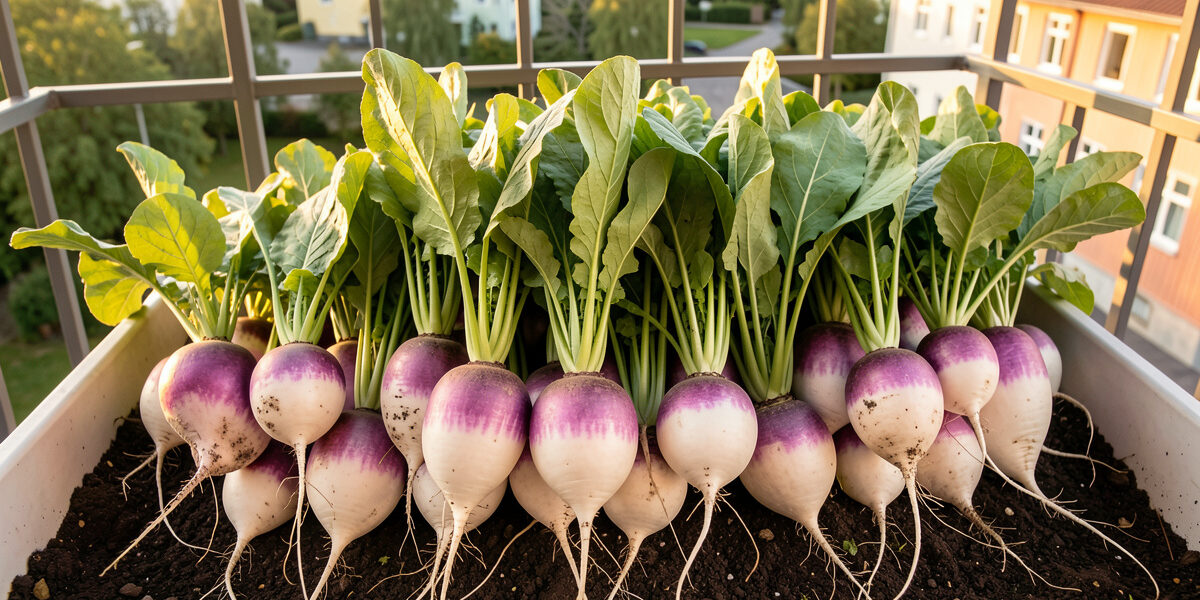
Turnips are the fast, under-rated brassica root that grows beautifully in a container and is ready in as little as 50 to 60 days. They want a pot around 20 to 25 cm deep, cool weather, and steady moisture, and like beets they give you two harvests in one — the sweet, crisp root and the peppery greens, which are a genuinely good cooked vegetable in their own right.
Turnips do not get the attention carrots and potatoes do, and that is a shame, because for a cold-climate balcony they are almost ideal. They thrive in exactly the cool conditions that slow down warm-season crops, they mature quickly enough to fit a short season comfortably, and a young, freshly pulled turnip eaten raw is a completely different vegetable from the woody, bitter thing most people remember. On my balcony they are one of the most reliable autumn crops I grow.
Why Turnips Suit Cold-Climate Containers
Turnips are a cool-season brassica that actively prefers the cold, sizing up fast in spring and autumn and turning sweeter after a touch of frost. That makes them a natural fit for a short Nordic season, where they slot neatly into the shoulder months when the weather is too cool for tender crops.
The container advantage is the same one that helps every root up here: a pot warms early, so I can sow turnips while the open ground is still cold, and it drains freely, which turnips appreciate. Their speed is the other gift — a spring sowing is pulled well before midsummer heat can push it to bolt, and a late-summer sowing matures into the cool of autumn exactly when turnips are at their best. They fit into the same cool-season rotation as the rest of my container root vegetables, filling the pots that summer crops vacate.
Pot Size, Soil and Sowing
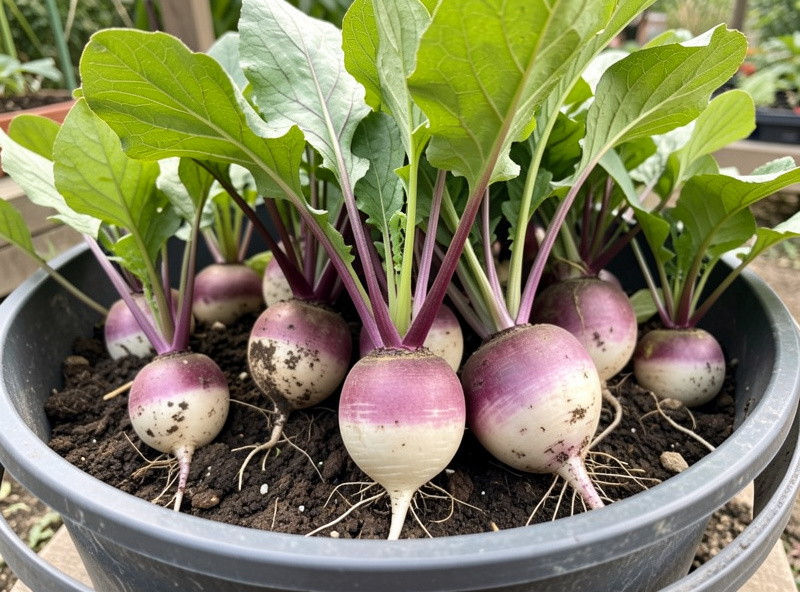
A pot 20 to 25 cm deep and reasonably wide is right for turnips, which sit fairly shallow and bulk sideways more than they drive down. Fill it with a loose, free-draining mix of compost, coir and perlite, sow thinly about 1 cm deep, and thin the seedlings to roughly 10 to 15 cm apart so each root has room to swell.
As with their brassica relatives, the spacing is what separates a good crop from a pot of leaves — crowded turnips stay small and run to top growth. I sow thinly, thin in two passes, and eat the thinnings as greens. Turnips are not heavy feeders and a compost-rich mix usually carries them, but they do share the brassica family’s liking for a firm, fertile, slightly limed soil; the same restraint I describe for fertilizing brassicas in containers applies directly. Go easy on fresh nitrogen, which pushes leaf over root, and build fertility with compost and worm castings instead. For the full medium I use, see my best soil mix for root vegetables in containers.
Watering and Steady Growth
Keep turnip soil evenly moist — fast, uninterrupted growth is what gives you a sweet, tender root, while a check from drying out makes them woody, bitter and prone to splitting. Consistent moisture is the single biggest lever on turnip quality.
A turnip that grows quickly and steadily is mild and crisp; one that stops and starts because the pot keeps drying out turns sharp and fibrous. In warm spells a pot can dry fast, so I keep the watering regular and, in my deeper troughs, lean on a self-watering insert to hold the even moisture turnips reward. The flip side matters too: a waterlogged pot rots the root and invites trouble, so let it drain freely and learn the signs of overwatering. My general rhythm is in the watering guide.
Timing, Harvest and the Two-Crop Bonus
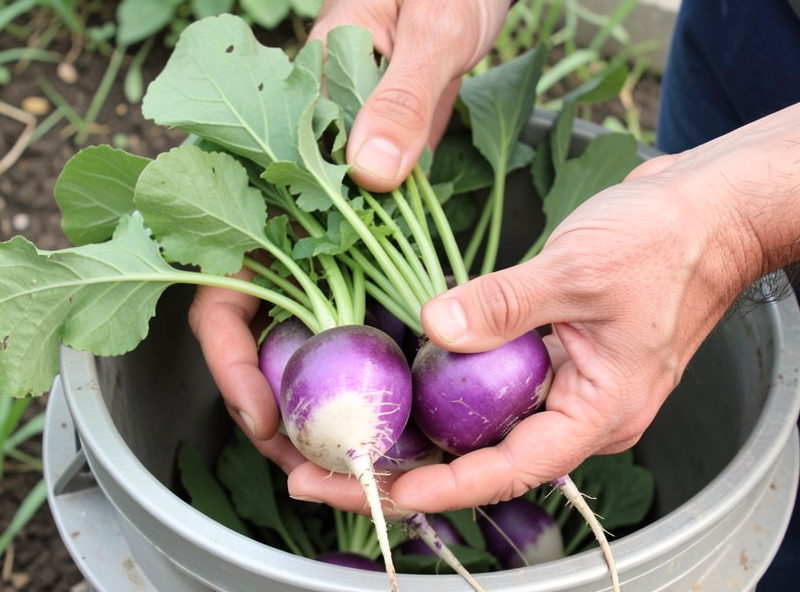
Harvest turnips young and small — golf-ball to tennis-ball size is the sweet spot, and roots left to grow large turn woody and strong-flavoured. From a spring sowing they are ready in around 50 to 60 days; an autumn crop sweetens after the first light frosts and can hold in the pot until a hard freeze.
This is where turnips repay the small-space grower twice over. Long before the roots are ready I am picking young turnip greens to cook like spring greens or kale, then I pull the roots as I need them, smallest gaps first. In a cold climate I treat the autumn sowing as the main event: sown in late summer, it matures into cool weather, and that frost-kissed sweetness is the turnip at its absolute best. The thinnings, the greens and the roots together make turnips one of the most productive things you can put in a pot, and the leftover trimmings close the loop straight into the worm bin. For pushing the autumn crop later, see the frost protection methods and the season extension guide, and for how turnips fit the wider picture, the balcony gardening complete guide and the container gardening guide.
Choosing the Right Turnip Variety
For containers and a short season, fast small-rooted varieties beat the big maincrop fodder types every time. A quick variety like Purple Top Milan or a Tokyo-type white salad turnip matures in well under two months and is bred for eating young and tender — exactly what a pot grower wants.
The flat-rooted Milan types are the traditional choice and crop fast; the round white Japanese salad turnips are even quicker and mild enough to eat raw, sliced into a salad like a radish. I lean toward the salad types for spring sowings, when I want something fast and crisp, and the hardier purple-topped kinds for the autumn crop that has to sit through cooling weather. Avoid the large livestock or storage varieties on a balcony — they take far longer, grow coarse, and need more depth and space than a pot sensibly gives. As with carrots, matching the variety to your pot and your season is half the battle, a theme that runs through my whole approach to container roots.
Common Turnip Problems and How to Avoid Them
Most turnip trouble in pots comes down to three things: heat-driven bolting, woodiness from uneven water, and the cabbage-family pests that occasionally find them. Sow into the cool shoulder seasons, water steadily, and keep an eye out for flea beetle, and you sidestep nearly all of it.
Bolting — running to flower instead of bulking a root — is usually the result of sowing into heat or letting the plant get stressed and dry, so I keep turnips to spring and autumn and never the peak of summer. Woody, bitter roots trace back to inconsistent watering or simply leaving them in too long, both easy to fix once you know to look. As brassicas, turnips can attract flea beetle, which peppers the leaves with tiny holes; up on a balcony I rarely see it badly, but a light insect-mesh cover over the pot in spring handles it without chemicals. Clubroot, the serious brassica disease, is far less of a worry in fresh container mix than in old garden ground — one more quiet advantage of growing in pots. Cracking is the last one, and it is the same wet-dry story as splitting in carrots and beets: keep the moisture even and it does not happen.
From Pot to Kitchen
A young container turnip is a far better vegetable than its reputation suggests, and growing your own is the only way most people ever taste one at its best. Pulled small and used fresh, the root is crisp and faintly sweet, good raw, roasted, or added to a soup, while the greens cook down like any other leafy brassica.
This whole-plant usefulness is exactly the kind of small-space efficiency I chase across every pot on the balcony — nothing wasted, two foods from one sowing, and the spent material going back into the worm bin to feed next year’s mix. The turnip greens in particular are a free bonus crop most growers throw away; I treat them as the first harvest and the root as the second. It is the same logic that makes beets such good value, and the reason both earn a permanent place in my cool-season rotation rather than being grown once and forgotten.
Succession Sowing for a Continuous Supply
Because turnips mature fast, the way to keep a steady supply rather than one glut is to sow a short row every two to three weeks through the cool seasons. Little-and-often sowing means you are always pulling young, tender roots and never facing a pot that all comes ready at once and then turns woody waiting to be eaten.
I treat the pot that just gave me a crop of radishes or salad as the next turnip pot, refreshing the top with fresh compost and worm castings before re-sowing. That rolling reuse is how a small balcony stays productive from spring right through to the first hard frosts — one cool-season crop following another in the same containers, with the medium topped up rather than thrown out. A spring run of sowings carries me to early summer, I pause through the hottest weeks when turnips would only bolt, and then I start again in late summer for the autumn crop that, frost-sweetened, is the best of the year. Planned that way, turnips stop being an afterthought and become one of the quiet backbones of the cool-season balcony, every bit as dependable as the carrots and beets growing in the pots beside them.
As an Amazon Associate I earn from qualifying purchases. Turnips ask very little — a wide fabric grow bag and a packet of a fast variety like Purple Top Milan turnip seed will give you both roots and greens from one cool-season sowing.