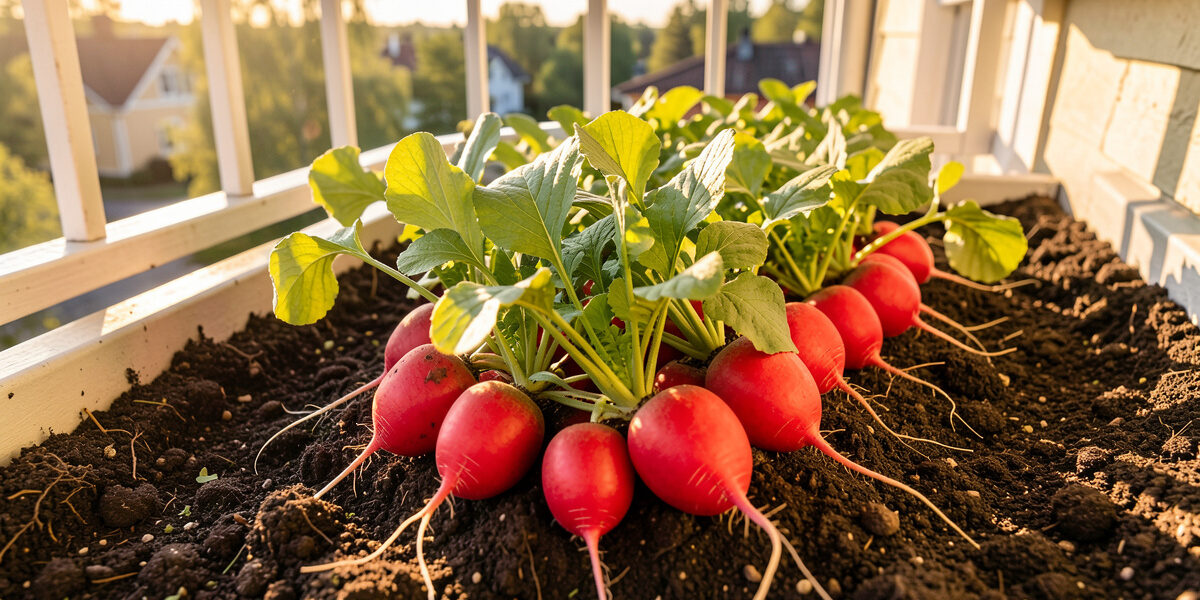
Radishes are the fastest, most forgiving root you can grow in a container — many are ready to pull in 25 to 35 days, and they need only a shallow 15 to 20 cm pot. They are the crop I hand to anyone who thinks they cannot grow food: sow, keep moist, thin a little, and you will be eating in under a month, even in a cool climate.
On my balcony radishes are the gap-fillers and the morale crop. I tuck them into the edges of bigger pots, sow a fresh pinch every couple of weeks, and they are up almost before I have put the seed packet away. Their speed is also their best teaching tool — you see the result of good or bad watering in days, not months, which makes them the perfect first container root.
Why Radishes Are the Perfect Container Crop
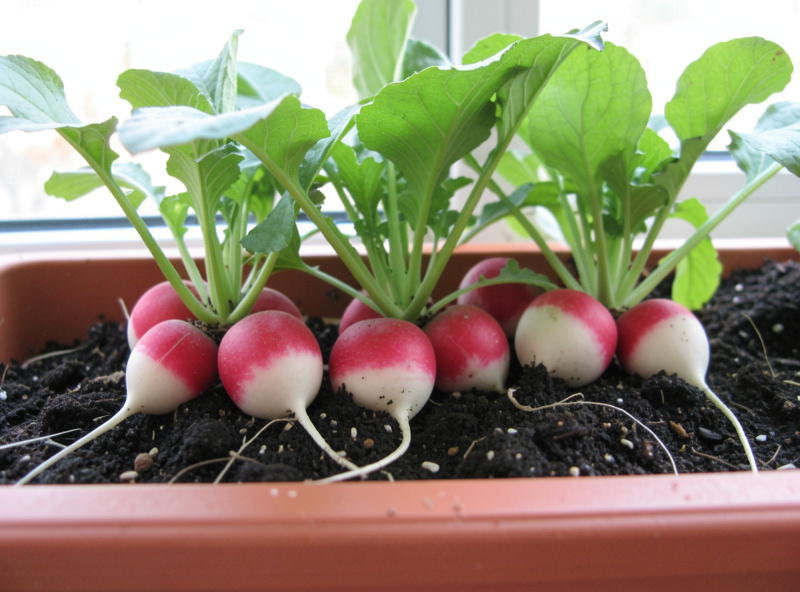
Radishes suit containers because they are shallow-rooted, fast, and undemanding — a 15 to 20 cm deep pot is all a standard salad radish needs. That shallow depth means you can grow a worthwhile crop in a window box, a trough, or the unused surface around a taller plant.
Speed is the other gift. Because a radish goes from seed to harvest in under five weeks, you can fit several crops into a single short season and slot them in wherever a pot has a free corner. I sow them around the base of slower crops like kale or in the gaps between carrot rows — they are pulled and eaten long before the bigger plant needs the space. For how radishes fit alongside every other root, see my guide to growing root vegetables in containers.
Sowing and Spacing
Sow radish seed about 1 cm deep and thin seedlings to 3 to 4 cm apart — crowded radishes make all leaf and no bulb, so spacing is the one rule that matters. Radish seed is large enough to space-sow by hand, which lets you skip heavy thinning if you are careful.
Because the seed is easy to handle, I station-sow it a few centimetres apart from the start and barely thin at all. Where I have scattered it, I thin early, while the seedlings are tiny, because a radish left crowded will bolt to leaf and never bulb up. Succession sowing is the secret to a steady supply: a fresh pinch every 10 to 14 days means you are always pulling tender young radishes rather than facing a glut followed by nothing. This little-and-often rhythm is the same one I use across all my container crops.
Water: The One Thing You Cannot Skip
Steady, generous moisture is everything for radishes — a dry spell makes them woody, splits them, and turns them unbearably hot, while it also pushes them to bolt. Keep the soil consistently damp and radishes stay crisp, mild, and tender.
This is where radishes earn their keep as a teaching crop: because they grow so fast, the effect of inconsistent water shows up within days as cracked or peppery roots. A shallow pot dries especially quickly, so in warm weather I check daily, and a self-watering insert keeps the even moisture that makes the difference between a crisp radish and a hot, pithy one. If you hand-water, never let the pot dry hard between drinks — and watch for the signs of overwatering too, since a sodden shallow pot rots the roots just as fast.
Timing, Heat, and Bolting
Radishes are a cool-season crop that bolts in heat, so spring and autumn are their seasons — in summer they run to flower and turn woody fast. In a cold climate this is a perfect fit: sow as soon as the soil is workable and again from late summer, and avoid the hottest weeks.
The container’s early warmth lets me sow my first radishes weeks before the open ground is ready, and they will take a light frost without complaint. The mistake is sowing them into the peak of summer heat, where they bolt before they bulb; I either skip the hottest stretch or move the pot into afternoon shade. At the other end of the year a late-summer sowing gives crisp autumn radishes, and the broader tactics are in my season extension guide and frost protection methods.
Soil and Variety Choice
Radishes are not fussy about soil, but a loose, free-draining mix that is not over-rich gives the cleanest roots — too much nitrogen again grows leaf over bulb. A standard container blend of compost, coir, and perlite is ideal, and there is no need for deep fertility on such a fast crop.
| Radish type | Days to harvest | Min pot depth | Best season |
|---|---|---|---|
| Round salad (e.g. Cherry Belle) | 25–30 | 15 cm | Spring & autumn |
| French Breakfast (oblong) | 25–30 | 15 cm | Spring & autumn |
| Daikon / winter (long) | 50–70 | 30 cm+ | Late summer sow |
| Watermelon / mooli | 55–70 | 25–30 cm | Autumn |
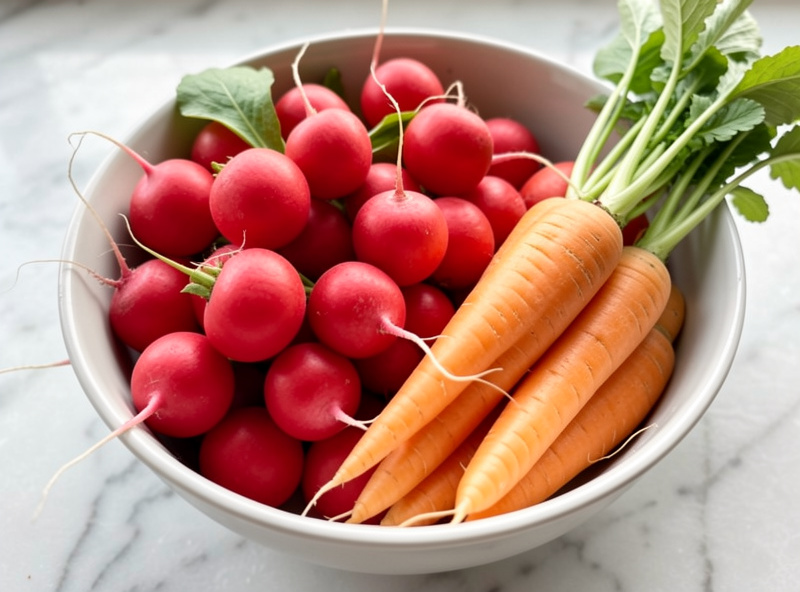
If you want a winter project, the long daikon and mooli types need a deeper pot but store well and bring a different flavour — just remember they are slow, unlike their speedy salad cousins. For the mix I build under all of these, see my best soil mix for root vegetables in containers.
Harvesting at the Right Moment
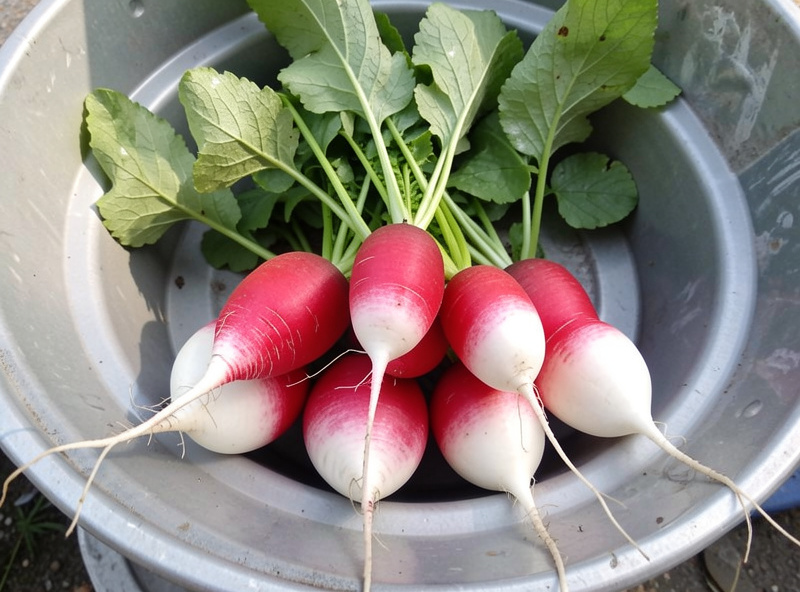
Pull radishes young and pull them on time — the window between perfect and pithy is short, often just a few days for a fast salad type. A radish is ready when the shoulder of the root is showing and roughly the size you would buy, and waiting “just a bit longer” is how good radishes turn woody and split.
Because they mature so quickly and so unevenly, I check a pot every day or two once the shoulders appear and pull the biggest first, which gives the smaller ones room to size up. Lift the whole root with a gentle twist, trim the tops promptly so the leaves stop drawing moisture, and use them fresh — radishes do not store, which is the whole point of growing them in a steady succession rather than one big crop. The leaves are edible too, good wilted or in a soup, so nothing from the pot is wasted. This pull-young-pull-often habit is exactly why radishes pair so well with slower roots in my balcony system, filling every gap with a fast crop while the carrots and beets take their time.
As an Amazon Associate I earn from qualifying purchases. Radishes need almost nothing — a shallow window box planter and a packet of Cherry Belle radish seed will have you harvesting inside a month.
Frequently Asked Questions
How long do radishes take to grow in a container?
Standard salad radishes are ready in 25 to 35 days from sowing, making them the fastest root vegetable for containers. Long winter types like daikon take 50 to 70 days. The speed lets you fit several crops into one short cool-climate season.
How deep should a pot be for radishes?
A standard salad radish needs only a 15 to 20 cm deep pot, shallow enough for a window box or trough. Long daikon and mooli types are the exception and need a deeper pot of 25 to 30 cm or more to size up properly.
Why are my radishes all leaves and no bulb?
Usually overcrowding, too much nitrogen, or heat. Thin seedlings to 3 to 4 cm apart, use a mix that is not over-rich, and avoid sowing in peak summer heat, which makes radishes bolt to leaf instead of forming a bulb.
Why are my container radishes too hot and woody?
Inconsistent watering and slow growth. A dry spell or a check in growth makes radishes pithy, woody and fiercely peppery. Keep the soil evenly moist so they grow fast and stay crisp, and harvest them young rather than leaving them in.
Can you grow radishes in containers in cool weather?
Yes, radishes are a cool-season crop that suits a cold climate perfectly. Sow as soon as the soil is workable in spring and again from late summer for autumn. They tolerate light frost, but bolt quickly in summer heat, so avoid the hottest weeks.