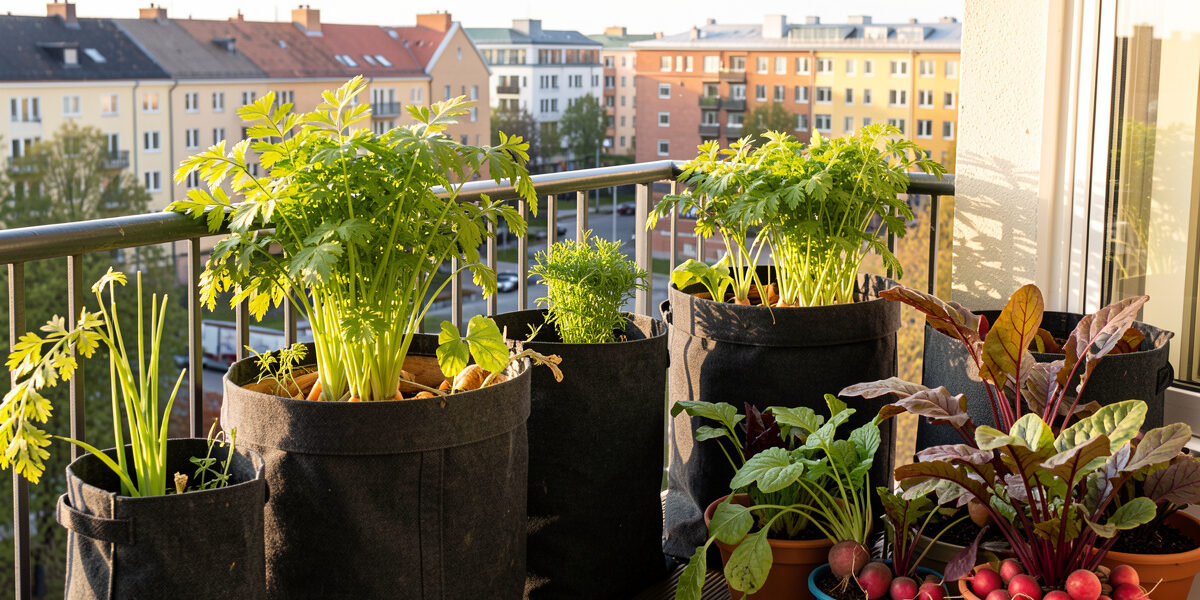
You can grow a genuine harvest of root vegetables in containers, and on a cold-climate balcony it often beats the ground: a pot of soil warms faster in spring, drains better, and dodges the carrot fly. The single rule that decides everything is depth — give carrots and parsnips a container at least 30 cm deep, radishes and turnips 20 cm, and you have removed the most common reason container roots stall.
I grow nearly all of mine this way. My balcony in Sweden gives me a short season, a late frost that lingers into May some years, and soil-warming that arrives weeks after the calendar says spring. Roots are the crops that have rewarded that setup most reliably, because a black or fabric pot up off a cold slab is warmer at the root zone than the open ground ever is here. This guide is the whole system I run — depth, soil, watering, timing and the specific crops — pulled together so you can pick a pot and start.
Why Containers Beat the Ground for Roots in a Cold Climate
In a Nordic or short-season climate, containers warm faster, drain harder, and let you start three to four weeks earlier than open ground — the soil in a 20 L black pot can sit 4–6°C above the bed beside it on a sunny April day. For roots specifically, that early warmth is the difference between a crop and a sulk.
Open ground here stays cold and wet long after the air warms up. Carrot and beet seed sown into cold, sodden soil rots or sits dormant, and a slow start in a short season is a harvest you never get. A container is a small, fast-warming, free-draining block of soil I control completely — I choose the medium, I lift it into the sun, and I can cover it with fleece on a frost night and uncover it by lunch. The trade-off is that pots dry out faster and need feeding, but for roots those are easy problems compared with cold clay.
There is also the carrot fly. Raised up on a balcony rail, well above the half-metre the low-flying females tend to cruise, container carrots simply get missed more often than ground rows. It is not a force field, but it is a real, free advantage of growing up high.
Container Depth: The One Number That Decides Your Crop
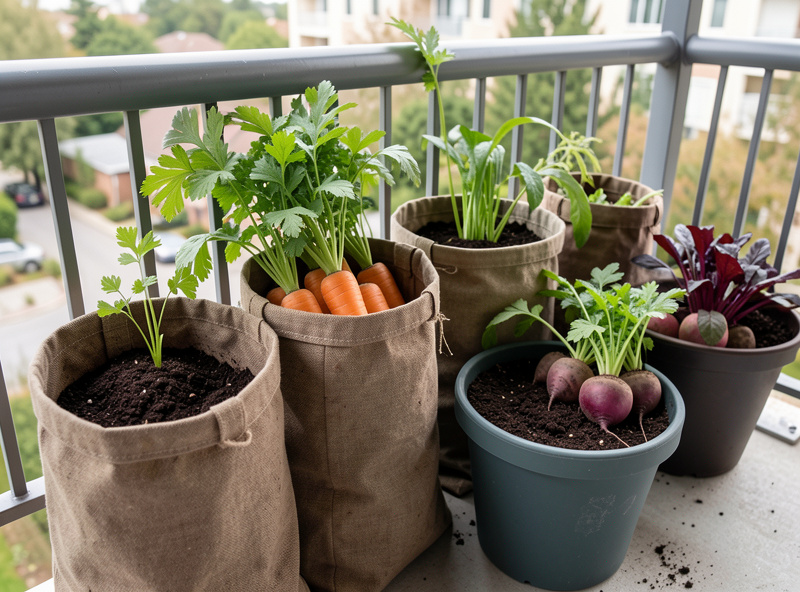
Match the pot depth to the root and almost everything else falls into place. As a working rule: radishes need 15–20 cm, beets and turnips 20–25 cm, carrots 25–30 cm minimum, and long maincrop carrots or parsnips want 35 cm or more. Width buys you more plants; depth buys you the actual vegetable.
Most container failures with roots are depth failures. A carrot that hits the bottom of a shallow pot forks, stunts, or turns into a stubby nub — the plant is doing exactly what the pot told it to. When people tell me their container carrots “didn’t work,” nine times in ten they were grown in a 15 cm windowbox. Choose your crop to fit the pot you have, or choose the pot to fit the crop you want, but never ignore this table.
| Root crop | Minimum depth | Pot size guide | Days to harvest (cool season) |
|---|---|---|---|
| Radishes | 15–20 cm | 5 L window box | 25–35 |
| Beets | 20–25 cm | 10 L pot / grow bag | 55–70 |
| Turnips | 20–25 cm | 10 L pot | 50–60 |
| Garlic | 20–25 cm | 15 L wide trough | 240–270 (overwintered) |
| Carrots (short) | 25–30 cm | 15–20 L deep pot | 65–80 |
| Potatoes | 30–40 cm | 30–40 L sack / bag | 80–100 |
| Carrots (maincrop) | 35 cm+ | 25 L+ deep pot | 90–110 |
One word on weight, because it is the constraint the American YouTube growers never mention: a 40 L pot of wet soil is heavy, and a balcony has a load limit. I keep my deepest, heaviest pots — potato sacks especially — over a load-bearing edge or against the wall, not floating in the middle of the slab. Fabric grow bags are my answer for depth without dead weight; they give roots their run, drain freely, and you can move them empty. My full reasoning on pots versus bags is in the container gardening complete guide.
The Soil Mix Roots Actually Want
Bagged “potting soil” is the wrong medium for root vegetables in pots — it compacts within a season, holds water like a sponge, and forces roots to push through dense, airless material. The mix roots want is loose and free-draining: roughly two parts quality compost, one part coir or peat for structure, and one part perlite or pumice for drainage and air.
The reason this matters more for roots than for anything else is that the crop is the part growing through the soil. A leafy plant can tolerate a heavy mix and just grow up out of it; a carrot has to physically force a clean taproot down through it. Compacted, stony, or lumpy medium gives you forked, hairy, split roots. I screen my container mix to take out anything chunky, and I never reuse last year’s spent mix for carrots without refreshing it with fresh compost and a handful of perlite. I have written the exact recipe, ratios and amendments up in detail — see the best soil mix for root vegetables in containers.
One amendment I keep coming back to is worm castings — a couple of handfuls worked through the top third of the pot. It feeds gently, improves structure, and never burns young roots the way a heavy synthetic feed can. If you run a kitchen worm bin, this is where the output goes; the benefits of worm castings are real and the loop is free.
Watering: The Make-or-Break Skill
Root vegetables in containers want steady, even moisture — not the wet-dry-wet swings that pots fall into. Inconsistent water is the direct cause of split carrots, woody beets and bolting radishes; a pot that dries hard and then gets soaked tells the root to crack. Aim to keep the medium evenly damp, like a wrung-out sponge, never bone-dry and never waterlogged.
This is the single hardest part of container growing, because pots dry out far faster than ground — a sunny, breezy balcony day can take a 15 L pot from damp to dry. My fix is self-watering: I run 3D-printed self-watering reservoir inserts in my deeper pots and a couple of wicking-bed conversions for the bigger troughs. A reservoir at the base wicks moisture up evenly and cuts my watering to roughly twice a week even in high summer, which is exactly the steadiness roots want. If you are hand-watering, water deeply and less often rather than a daily splash that only wets the top.
Knowing when you have over-watered matters too, because a constantly soggy pot rots roots and breeds fungus gnats just as readily as it drowns them — the signs of overwatering are worth learning before you lose a crop. For a sensible baseline rhythm across crops, my garden watering guide lays out the schedule I work from.
Timing for a Short Season
In a cold climate, timing is a crop in itself. Roots are mostly cool-season vegetables that germinate and bulk in the shoulder months, so I sow the fast ones as soon as the medium hits about 8–10°C — often weeks before the ground is workable — and I succession-sow rather than planting everything at once.
Because a container warms early, I can direct-sow radishes and the first carrots in April here and have them up while the beds are still cold mud. The risk is a late frost, so I keep fleece within reach into May; roots are hardy once up, but a hard frost on emerging seedlings still sets them back. At the other end, the same early-warming pot lets me sow a second and third round of radishes and a late carrot crop for autumn pulling. My approach to stretching both ends of the season is in the season extension guide, and for the cold nights specifically, the frost protection methods I actually use.
Succession Sowing and Thinning
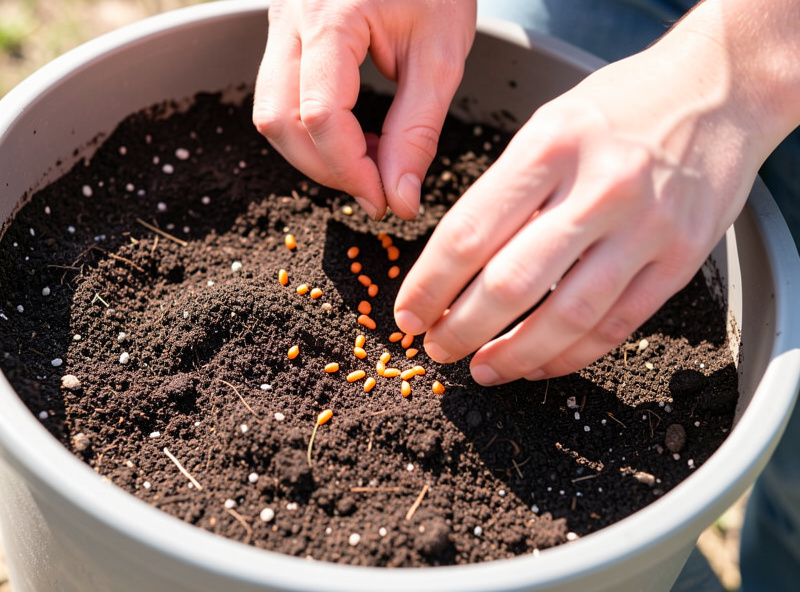
Two habits separate a real container root harvest from a disappointing one: succession sowing and ruthless thinning. Sow a short row every two to three weeks instead of one big batch, and thin seedlings to their final spacing early — crowded roots compete and you end up with a pot of green tops and pencil-thin vegetables.
Thinning is the step beginners skip, and it costs them the crop. Carrots need roughly 4–5 cm between plants, beets 8–10 cm, radishes 3–4 cm. Sown thickly and left, every root stays small. I sow as thinly as I can manage, then thin in two passes — once when seedlings are a few centimetres tall, again a couple of weeks later — and the thinnings of beets and turnips go straight into a salad, so nothing is wasted. Succession sowing then keeps a container producing for months rather than giving one glut and quitting.
The Best Root Crops for Containers
Not every root is worth a pot, but most of the everyday ones are excellent. The reliable container roots for a cold climate are radishes, beets, carrots, turnips, garlic and potatoes — fast, forgiving, and productive in a small footprint. Each has its own quirks, which is why every one has a full guide of its own below.
Radishes are the gateway crop — up in 25 days, almost impossible to fail, ideal for filling gaps. Beets give you two harvests in one (roots and edible leaves) and shrug off cold. Carrots are the prize that depth and good soil unlock. Turnips are the fast, under-rated brassica root that loves cool weather. Garlic is the set-and-forget crop you plant in autumn and pull the next summer. Potatoes turn a single sack into a satisfying balcony harvest. Start with whichever fits your pot and your nerve, and add the rest as you go.
Feeding Container Roots Without Overdoing It
Root vegetables want a soil rich in potassium and phosphorus but low in fresh nitrogen — too much nitrogen gives you lush leafy tops and a feeble root underneath. Feed the soil before sowing with compost and worm castings, then go light on liquid feeds, favouring a balanced or tomato-type feed over anything high-nitrogen.
This is the feeding mistake I see most: people treat carrots like lettuce, pour on a nitrogen-rich feed, and grow a magnificent canopy over a useless root. Roots store energy down below, and they do that best in a fertile but not forced soil. I build fertility in at the start with my mix, top-dress with castings mid-season, and only reach for a diluted liquid feed if the leaves actually pale. The same restraint that works for these works for the brassica roots — my notes on fertilizing brassicas in containers carry straight over to turnips. For a good base medium to start from, see my pick of the best potting soil for vegetables and why potting soil differs from garden soil.
Common Problems and Fixes
Most container root problems trace back to one of four causes: shallow pots, uneven water, heavy soil, or skipped thinning. Forked carrots mean stony or shallow medium; split roots mean wet-dry watering; all leaf and no root means too much nitrogen; tiny roots mean overcrowding. Almost every fix is a tweak to one of those four.
Bolting — running to flower instead of bulking — is the other one, and it is usually heat or stress, especially in radishes hit by a hot dry spell. The answer is steady water and not sowing the cool-season roots into the peak of summer heat. Pests are fewer up on a balcony, but fungus gnats can appear in a soggy pot, which is another reason not to over-water. A drink from my herb-grade free-draining mixes habit — loose and airy — keeps most of these from ever starting.
Where Roots Fit in the Whole Balcony System
Roots are the backbone of a productive small space because they store, stagger, and stack with everything else. I run them alongside strawberries in pots and the container fruit on the rail, the salad crops in shallow troughs, and the deeper pots given over to roots and potatoes. The whole thing is one system, and the more of it you run, the more the pieces feed each other.
The crossovers are real, too. The compost from the worm bin and the kitchen pile — the same slow microbial chemistry I write about in vermicomposting for beginners — is what fills these pots each spring. The 3D printer that makes hydroponic parts also prints my self-watering inserts. And the beet greens and turnip tops that come off the thinnings are food in their own right. If you want the broader picture of growing on a balcony, my balcony gardening complete guide and the raised beds and planters guide set the stage these roots grow in.
As an Amazon Associate I earn from qualifying purchases. When a pot has to do real work I reach for deep fabric grow bags for the drainage and the manageable weight, and a bag of perlite to keep the mix open — the two things that turn a tub of soil into a medium roots will actually run through.
Harvesting and Storing Your Container Roots
Pull roots at the right size rather than the biggest possible — most container roots are at their best young and tender, and leaving them in too long trades flavour for woodiness. Lift a test radish or carrot to check, harvest in the cool of the morning, and twist or cut the tops off promptly so the leaves stop drawing moisture from the root.
The advantage of containers is that the harvest is staggered and to-hand: I pull what I need and leave the rest in the pot, which is the best storage there is for carrots and beets in a mild autumn. Once the cold really sets in, I lift the remainder, twist off the tops, and keep them in a box of barely-damp sand in the coolest corner — the apartment equivalent of a root cellar, and it holds carrots and beets for weeks. Garlic and potatoes are the exceptions: both want curing in a dry, airy spot before storage, never washed and never in the fridge. The thinnings and tops are not waste either — beet and turnip greens are a crop in their own right, and anything truly spent goes into the worm bin to come back as next spring’s potting mix.
Frequently Asked Questions
What is the easiest root vegetable to grow in a container?
Radishes. They germinate in days, are ready to pull in 25 to 35 days, and need only a 15 to 20 cm deep pot. They are nearly foolproof and ideal for filling gaps between slower crops or for a first try with container roots.
How deep does a container need to be for root vegetables?
It depends on the crop. Radishes need 15 to 20 cm, beets and turnips 20 to 25 cm, carrots 25 to 30 cm minimum, and potatoes 30 to 40 cm. Depth, not width, decides whether you get a real root or a stunted nub.
Why are my container carrots forked and stunted?
Almost always shallow or stony soil. A taproot that hits the bottom of a shallow pot, or has to push past lumps and grit, forks or stunts. Use a pot at least 30 cm deep and a screened, loose, stone-free mix.
Can you grow root vegetables in containers in a cold climate?
Yes, and often better than in the ground. A pot warms faster in spring, drains better, and lets you sow several weeks earlier. Roots are cool-season crops, so the short Nordic season suits them well once you match pot depth to the crop.
What soil should I use for root vegetables in pots?
Not bagged potting soil on its own, which compacts and waterlogs. Use a loose, free-draining mix of roughly two parts compost, one part coir or peat, and one part perlite or pumice, screened to remove anything chunky that would fork the roots.
How often should I water root vegetables in containers?
Keep the medium evenly damp, never wet-dry-wet, since swings cause splitting and bolting. In summer a 15 L pot may need water every one to two days by hand, or twice a week with a self-watering reservoir that wicks moisture up evenly.