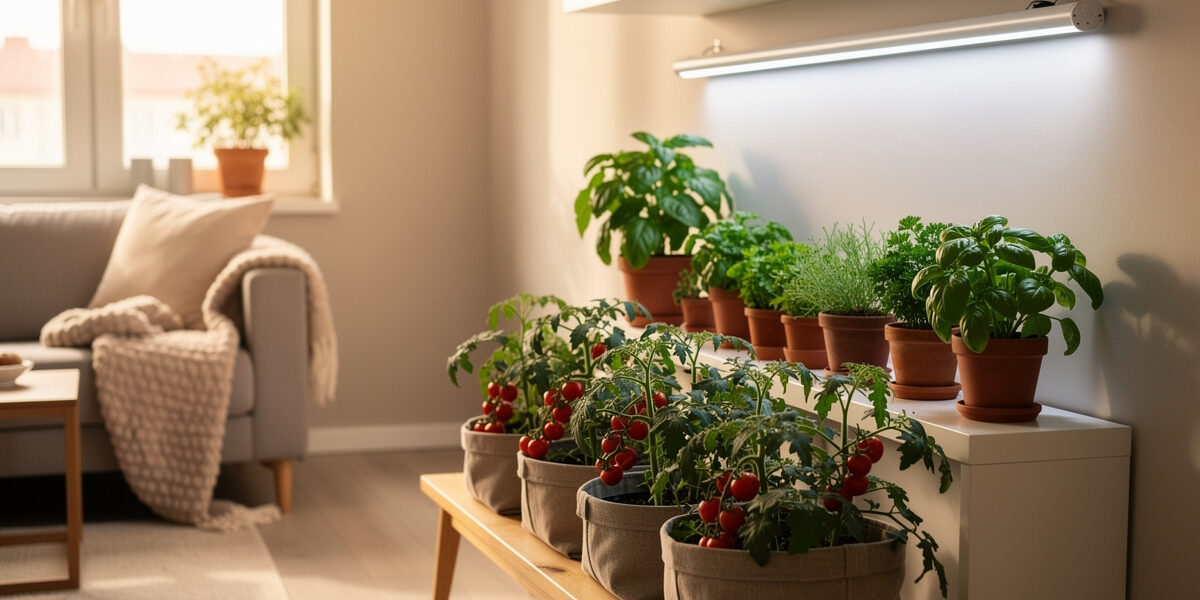
Indoor gardening essentials come down to twelve items: a grow light, a timer, three container types, potting mix, fertilizer, worm castings, a moisture meter, a hygrometer, and a small fan. After years of running a shelf through Swedish winters, that is the full kit I keep on hand — it costs about $130-150 and turns any 4-square-foot space, a kitchen counter, a hallway shelf, or a sunny windowsill, into a year-round garden capable of producing herbs, leafy greens, and dwarf vegetables. This guide breaks down each essential, what to spend on each, and why some “must-haves” sold online are actually optional for a first-year indoor gardener. Need plant suggestions to fill the kit? See my indoor plants for beginners picks.
For the broader context on indoor crops and growing methods, see the complete guide to growing plants indoors.
Why Indoor Gardening Essentials Matter More Than Outdoor
Indoor plants depend entirely on you for light, water, airflow, and nutrients — outdoor plants get most of those for free. A windowsill basil plant fails more often than it succeeds in apartments because the grower assumed the south-facing window was enough; a $25 LED bar fixes that single failure point overnight.
The right essentials replace what nature does outside. Sun becomes LEDs. Rain becomes a watering schedule. Wind becomes a small fan. Healthy soil becomes a bag of indoor mix plus liquid fertilizer. Skip any of these and your plants struggle; nail all twelve and a single 1020 tray feeds two adults fresh greens for six weeks straight.
The Lighting Essentials (Items 1-3)
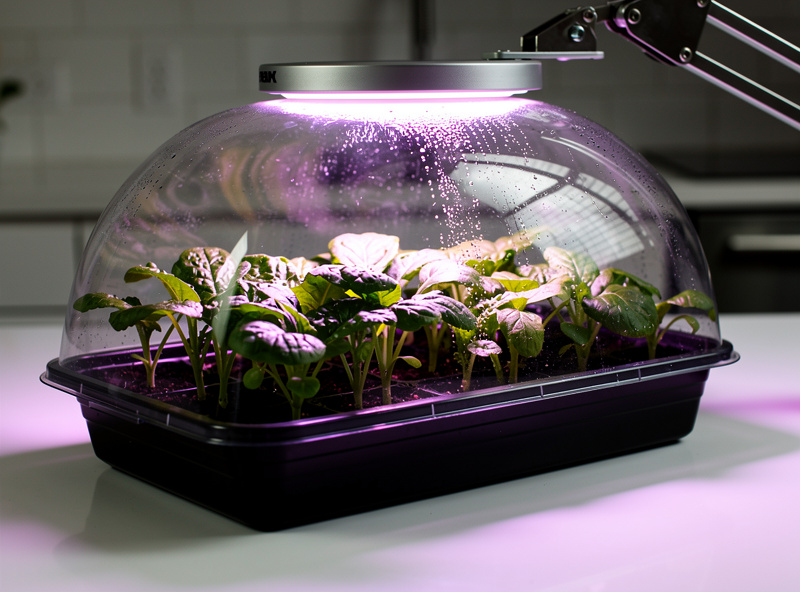
Lighting is where most indoor gardens succeed or fail. Even the brightest north-facing window provides only 1,000-2,000 lux at noon — most edible plants want 10,000-25,000 lux. Three lighting items close the gap. Iowa State Extension has the clearest explanation of why lux (a human-eye unit) under-sells what plants actually need, and why PPFD and DLI are the metrics that matter for an indoor setup (Growing Indoor Plants Under Supplemental Lights).
1. 24-Inch Full-Spectrum LED Bar ($15-25)
A 24-inch full-spectrum LED bar covers exactly one 1020 tray (10×20 inches) and pulls 20-30 watts. Mounted 2-4 inches above seedlings and run 14-16 hours per day, it delivers PAR values comparable to direct April sunlight. This is the single highest-impact piece of indoor gardening gear — buy this before anything else if budget is tight. Look for fixtures with both blue (440nm) and red (660nm) diodes; pure-white “daylight” LEDs work but underperform on flowering crops.
2. Clip-On Grow Light for Single Plants ($12-18)
For one or two herb pots on a counter, a clip-on grow light is more practical than a bar fixture. Most clip-ons offer 3 brightness levels and a flexible neck for positioning. They are also the easiest light to recommend to a first-time indoor gardener: clip it to a shelf, point it at the plant, plug it in. Done.
3. Mechanical Outlet Timer ($6-10)
Run your light on a timer or you will forget to switch it on or off — and a missed light cycle for two days running can kill basil seedlings. Mechanical pin timers cost less than $10, last for years, and survive power outages without resetting. Set 14 hours on, 10 hours off, then never think about lighting again. University of Illinois Extension makes the same case for seed starting: consistent photoperiod on a timer is what produces stocky seedlings rather than leggy ones (Supplemental Lighting for Indoor Seed Starting).
Container and Tray Essentials (Items 4-6)
Containers govern root health. Indoor plants confined to the wrong vessel either drown in stagnant water or dry out between watering. Three container types cover every indoor crop you would reasonably grow.
4. 1020 Trays with Humidity Dome ($8-12)
A 1020 tray (10×20 inches) is the universal indoor gardening base. Pair it with a 72-cell insert for seed starting, or fill it with one large root ball for a microgreen flat. The clear humidity dome retains moisture during germination and lifts off once seedlings reach 2 inches. Buy three at once — you will use them constantly.
5. 5-Gallon Fabric Grow Bags ($4-6 each)
Fabric grow bags breathe, drain better than plastic pots, and prevent root circling — the leading cause of stunted indoor tomato and pepper plants. They fold flat in the off-season, weigh almost nothing, and cost a fraction of equivalent ceramic or terracotta pots. For one mature tomato or pepper plant indoors, a 5-gallon fabric bag with a saucer beneath is the standard.
6. Self-Watering Planters for Herbs ($15-25)
Self-watering planters with built-in reservoirs reduce watering frequency from daily to weekly — invaluable for travelers and busy households. The wicking action keeps the root zone evenly moist without saturating. They are particularly forgiving for basil, mint, parsley, and chives, all of which suffer from inconsistent watering.
Soil and Nutrient Essentials (Items 7-9)
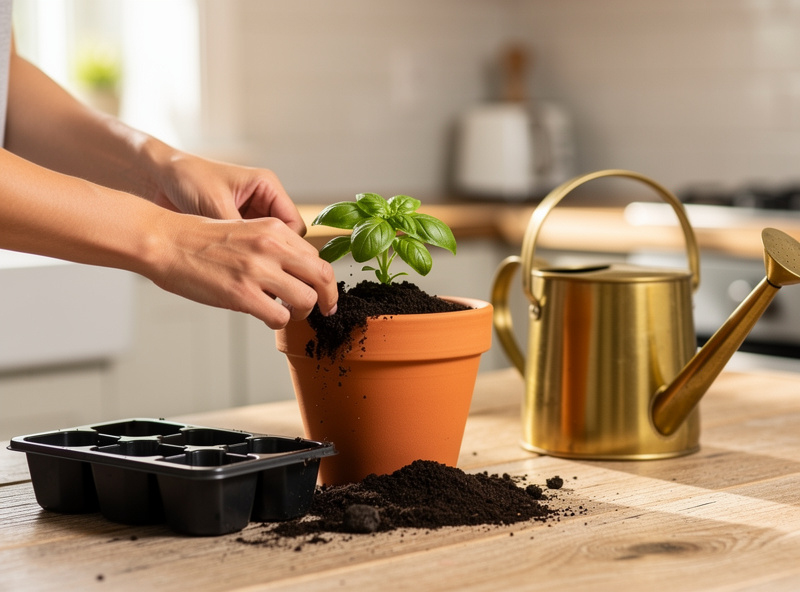
Indoor plants live in a closed system. The soil and nutrients you choose at week one feed them for the next three months. Get this wrong and no amount of perfect lighting recovers the loss.
7. Indoor Potting Mix, Not Garden Soil ($12-18)
Bagged “indoor potting mix” or “container mix” is mandatory — never use outdoor garden soil indoors. Garden soil compacts in pots, harbors fungus gnat eggs, and brings disease. Reliable indoor mixes include Espoma Organic Potting Mix, Pro-Mix HP, and FoxFarm Ocean Forest. One 16-quart bag fills three 5-gallon containers.
8. Liquid All-Purpose Fertilizer ($10-15)
Indoor potting mix runs out of nutrients in 6-8 weeks. A balanced liquid fertilizer (5-5-5 or 10-10-10) applied at half strength every two weeks keeps plants productive. Liquid is preferred over granular indoors because it does not attract fungus gnats and dissolves immediately. Dr. Earth, Espoma, and Neptune’s Harvest all make beginner-friendly liquid options.
9. Worm Castings ($12-20)
A handful of worm castings per pot — added at planting and refreshed monthly — provides slow-release nitrogen, beneficial microbes, and improved water retention. Castings also suppress fungus gnat larvae, the most persistent indoor pest. A single 5-pound bag amends 30+ pots and lasts most apartment gardeners a full year.
Monitoring and Maintenance Essentials (Items 10-12)
Indoor environments hide problems until they are advanced. Three inexpensive sensors and one fan catch issues before plants suffer visible damage.
10. Soil Moisture Meter ($8-12)
An analog soil moisture meter (no batteries) eliminates the single biggest beginner mistake: over-watering. Push the probe two inches into the soil; if it reads wet, wait. If dry, water. Models from XLUX and Sonkir cost under $12 and last for years. This is the cheapest indoor gardening item that prevents the most plant deaths.
11. Digital Thermometer/Hygrometer ($10-15)
Indoor humidity below 30% stresses tropical plants; above 70% invites fungal disease. A small digital hygrometer with min/max memory shows you the actual range your space holds — often surprising in winter when forced-air heating drops humidity to 15-20%. Solve low humidity with a tray of water and pebbles or a $25 cool-mist humidifier.
12. Small Oscillating Fan ($15-25)
Stagnant air invites damping-off fungus, mold, and weak stems. A small clip-on or desktop oscillating fan running at low speed for 4-6 hours per day mimics outdoor breeze, strengthens stems, and reduces fungal pressure dramatically. This is the most overlooked essential — most indoor gardens that fail with otherwise perfect setups lack air movement.
Indoor Gardening Essentials Cost and Priority Table
| Item | Cost | Priority | Skip If |
|---|---|---|---|
| 24″ LED bar | $15-25 | Critical | Window gets 6+ hr direct sun |
| Clip-on grow light | $12-18 | Critical | You bought the bar instead |
| Outlet timer | $6-10 | Critical | Never — always buy |
| 1020 trays (3-pack) | $8-12 | Critical | Only growing 1 plant |
| 5-gal fabric grow bags | $4-6 each | High | Only growing herbs |
| Self-watering planters | $15-25 | Optional | Home daily, never travel |
| Indoor potting mix | $12-18 | Critical | Never — always buy |
| Liquid fertilizer | $10-15 | High | Microgreens only (no fert needed) |
| Worm castings | $12-20 | High | First month only |
| Soil moisture meter | $8-12 | High | You read soil by feel reliably |
| Hygrometer | $10-15 | High | Live in humid climate year-round |
| Oscillating fan | $15-25 | High | Open windows 6+ months/year |
Total for the critical items only: $59-93. Full kit including high-priority items: $113-163.
How to Set Up Your Indoor Gardening Essentials in 60 Minutes
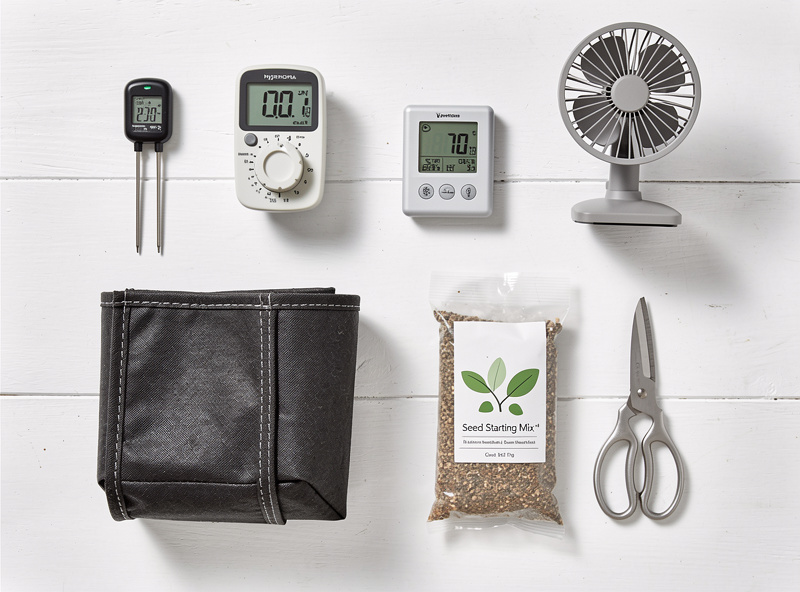
Order the kit in one shopping trip — Amazon, a local hardware store, or a hydroponics shop will all have everything. Set aside one hour for installation:
- Minutes 0-10: Place the 1020 tray on your chosen surface. Run the timer cord behind the surface to a nearby outlet.
- Minutes 10-20: Mount or position the LED bar 4 inches above the tray. If using a wire shelf, zip-tie the fixture to the shelf above; on a counter, prop it on books.
- Minutes 20-30: Set the timer pins for 14 hours on (typically 6 a.m. to 8 p.m.). Test by manually advancing the dial.
- Minutes 30-45: Fill the 72-cell insert with pre-moistened indoor potting mix. Add 1-2 seeds per cell of your chosen crop.
- Minutes 45-55: Place the humidity dome over the tray, set on a saucer or plant tray to catch drainage. Plug in the timer.
- Minutes 55-60: Place the moisture meter and hygrometer beside the tray. Position the fan 3-4 feet away on low oscillation. Note today’s humidity reading as a baseline.
Within 5-10 days you will see the first cotyledons emerge. Lift the dome, raise the LED an inch as the seedlings grow, and start your watering and fertilizing schedule from there.
Common Indoor Gardening Mistakes to Avoid
These five mistakes account for the majority of indoor gardening failures even when the gear is correct:
- Buying gear before choosing a crop. Different plants want different lights, containers, and feeding schedules. Pick basil, lettuce, or microgreens first; size the kit to that plant.
- Hanging the LED too high. A 24-inch bar mounted a foot or more above the canopy loses most of its useful intensity. Keep it 2-4 inches above the canopy at all stages.
- Using outdoor garden soil indoors. Always use an indoor potting mix; covered in my best potting soil for indoor plants guide.
- Over-watering. The moisture meter exists for a reason — use it before every watering for the first month until you can read the soil by weight.
- Skipping the fan. Air movement is invisible until you do not have it. Stagnant indoor air is the leading cause of damping-off in seedlings under 2 inches tall.
For deeper troubleshooting on the most common indoor pest, see my guide to getting rid of fungus gnats.
Frequently Asked Questions
What are the absolute essentials for indoor gardening on a $50 budget?
On a $50 budget, prioritize these five items: a 24-inch LED bar ($20), an outlet timer ($8), one 1020 tray with dome ($10), one 16-quart bag of indoor potting mix ($10), and a soil moisture meter ($8). That covers lighting, growing surface, soil, and watering — the four failure points that kill most failed indoor gardens.
Do I really need a grow light if my window faces south?
Even south-facing windows in spring provide only 2,000-5,000 lux at noon, far below the 10,000-25,000 lux most edible plants want. A south window grows herbs adequately and lettuce in summer; for tomatoes, peppers, or year-round growing, a $20 LED bar is non-negotiable.
How many hours per day should an indoor grow light run?
Run a full-spectrum LED 14-16 hours per day for vegetative growth (lettuce, herbs, leafy greens) and 12 hours per day once flowering crops like tomatoes and peppers set fruit. Use a mechanical outlet timer to make this automatic.
Are self-watering planters worth buying for indoor herbs?
Yes, especially for basil, mint, parsley, and chives — all of which suffer from inconsistent watering. A self-watering planter cuts watering frequency from daily to weekly and reduces over-watering deaths to nearly zero. The $15-25 cost pays for itself in plants saved.
What is the cheapest essential that prevents the most plant deaths?
A $10 soil moisture meter. Over-watering kills more indoor plants than any other cause. Pushing the probe two inches into the soil before each watering eliminates the guesswork and saves more plants per dollar than any other indoor gardening item.
Do I need a fan for a small indoor garden?
Yes — even a small clip-on or desktop fan running 4-6 hours per day at low speed prevents damping-off fungus, strengthens stems, and reduces fungal pressure. Stagnant air is the most overlooked cause of seedling failure in otherwise perfect setups.
How often should I fertilize indoor plants?
Apply liquid all-purpose fertilizer at half strength every two weeks once seedlings have their first true leaves. Indoor potting mix runs out of nutrients in 6-8 weeks, so consistent biweekly feeding is what keeps indoor plants productive long-term.