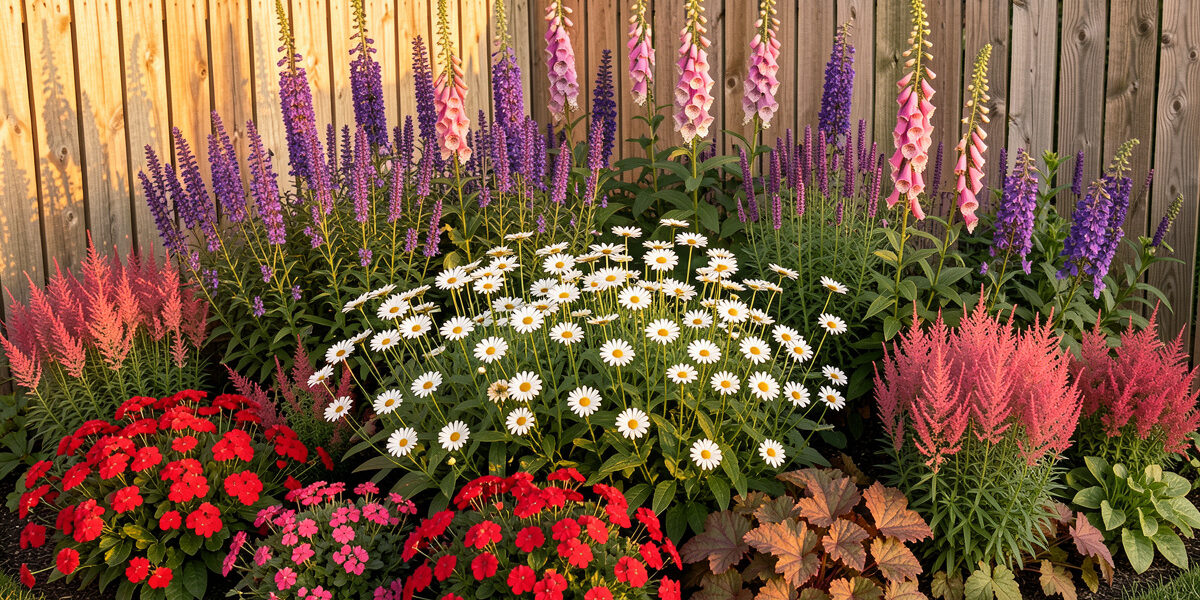
Ready planting schemes for small borders combine three layers: tall anchor plants at the back, medium fillers in the middle, and low edging at the front. These proven combinations create professional-looking gardens without guesswork.
Effective planting schemes for small borders use a three-layer structure — structural evergreens for year-round form, flowering perennials for seasonal color, and groundcovers to suppress weeds — within a footprint as small as 3×6 feet. While most of my growing is in containers and balcony planters, the layering principles that make a small border work are the same ones that make a mixed container planting look intentional rather than haphazard. These design layouts translate directly.
For a complete overview of all small garden trees, shrubs, and container planting methods, see the complete small garden trees and shrubs guide.
Successful border design follows simple principles. Choose plants with complementary colors, varying heights, and staggered bloom times. The best schemes look good year-round, not just during peak flowering season. Ready-made plans eliminate the trial-and-error that frustrates many new gardeners.
Why Use Planting Schemes
Planting schemes offer multiple advantages. They eliminate costly mistakes from incompatible plant combinations. Professional designers have tested these combinations for visual appeal and cultural compatibility. You benefit from their experience without the design fees.
Schemes ensure continuous interest. By selecting plants with different peak seasons, borders never look empty. When spring bulbs finish, summer perennials take over. As those fade, autumn grasses and foliage plants maintain structure.
Color harmony happens automatically. Schemes use complementary or analogous color palettes that please the eye. No clashing combinations or unintentional chaos. The result looks intentional and polished.
Time savings: Researching individual plants and imagining combinations takes hours. Schemes provide instant shopping lists and planting plans. This efficiency helps you execute beautiful borders quickly.
Scalability: Repeat the same scheme along longer borders for cohesive look. Adjust quantities based on border length while maintaining design integrity.
Scheme 1: Cool and Calming Blue Border
This serene combination creates peaceful garden spaces. Blue flowers recede visually, making borders appear deeper and larger than they are.
Back row (18-24 inches): Russian sage (Perovskia) — silvery foliage with lavender-blue flower spikes from midsummer through fall. Tolerates heat and drought. At least 3 plants for 6-foot border.
Middle row (12-18 inches): Nepeta (Catmint) — continuous blue flowers all summer. Shear it back by about a third after the first flush and it reblooms; Wisconsin Horticulture recommends exactly this cutback to keep the sterile ‘Walker’s Low’ tidy and flowering into autumn. Plant 4-5 specimens for continuity.
Front row (6-12 inches): Cerastium (Snow-in-summer) — silver foliage with white flowers in late spring. Evergreen in mild climates. Spreads moderately to fill gaps. Space 6 inches apart.
Extras: Add spring bulbs like grape hyacinths and scilla for early color before perennials emerge. These extend the season and provide vertical contrast.
Care: All three tolerate drought once established. Cut back Russian sage to 6 inches in spring. Shear nepeta after first bloom for reblooming.
Scheme 2: Sunny Yellow and Gold Border
Yellow borders brighten shady corners and energize garden spaces. This warm combination attracts attention and lifts spirits.
Back row: Rudbeckia (Black-eyed Susan) — bold yellow daisies from July through October. Goldsturm variety offers reliable perennial performance. Attracts butterflies and bees. Plant 3 specimens minimum.
Middle row: Coreopsis (Tickseed) — delicate yellow flowers on airy plants. Blooms all summer. Moonbeam offers pale yellow; Zagreb provides brighter gold. Deadhead for continuous flowering. Space 4 plants.
Front row: Sedum Angelina — golden succulent foliage that turns orange in autumn. Evergreen in mild climates. Trails slightly over edges. Extremely drought tolerant. Space 6-8 plants.
Extras: Spring daffodils provide early yellow before perennials fill in. Tete-a-Tete varieties work well in mixed borders.
Care: All tolerate full sun and heat. Deadhead rudbeckia and coreopsis regularly. Sedum needs virtually no care beyond occasional trimming.
Scheme 3: Romantic Pink and Purple Border
This feminine combination suits cottage gardens and informal spaces. Soft colors blend harmoniously without harsh contrasts.
Back row: Echinacea (Coneflower) — pink or purple daisy flowers with prominent centers. Attracts butterflies and birds. PowWow Wild Berry offers compact growth. Plant 3 specimens.
Middle row: Astrantia — delicate pincushion flowers in pink or white. Thrives in partial shade. Major variety offers larger blooms. Long-lasting cut flowers. Space 4-5 plants.
Front row: Lamium — ground cover with silver-variegated leaves and pink or white flowers. Tolerates dry shade. Spreads to fill gaps quickly. Pink Pewter or White Nancy varieties.
Extras: Allium bulbs add purple spheres in late spring. Globemaster or Purple Sensation provide vertical accents before perennials reach full height.
Care: Echinacea tolerates drought; astrantia prefers consistent moisture. Lamium handles dry shade. All offer long bloom periods with minimal maintenance.
Scheme 4: Foliage-Focused Architectural Border
This scheme emphasizes texture and structure over flowers. Perfect for modern gardens and areas where long-lasting structure matters more than seasonal blooms.
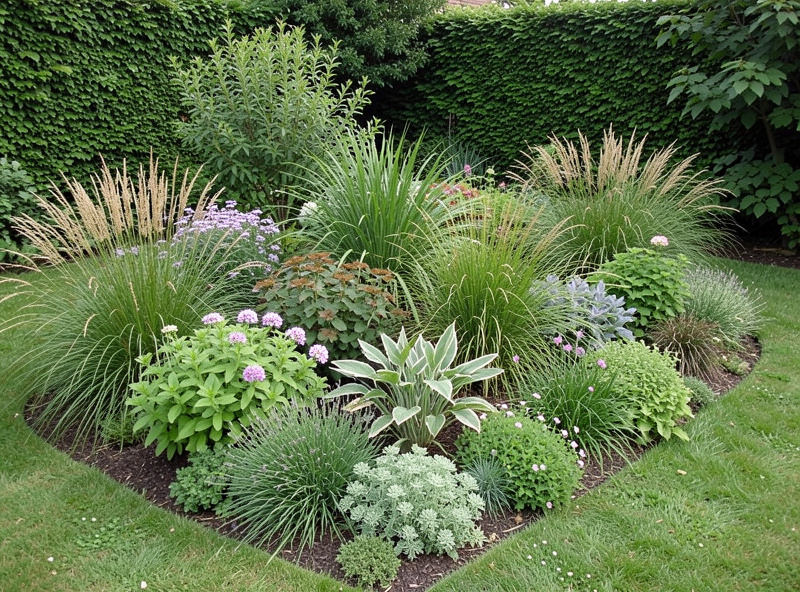
Back row: Feather reed grass (Calamagrostis Karl Foerster) — vertical accent with feathery plumes in summer. Upright habit reaches 4-5 feet. Turns golden in autumn. Remains standing through winter.
Middle row: Heucheras — colorful foliage in purple, lime, or caramel. Year-round structure. Obsidian offers black; Caramel provides orange; Lime Rickey gives bright chartreuse. Plant 5-6 different varieties.
Front row: Carex (Sedge) — grass-like foliage in green, gold, or bronze. Evergreen in mild climates. Evergold provides bright striping; Brunnea offers blue-green color. Handles shade and moisture.
Extras: Add a few white Astrantia or Anemone flowers for seasonal accent. These provide delicate contrast without overwhelming the foliage focus.
Care: Cut back grass in early spring before new growth. Heucheras benefit from annual mulching. Carex needs minimal attention beyond occasional trimming.
Scheme 5: Heat and Drought Tolerant Border
For hot, dry locations where irrigation is limited. These tough plants thrive in challenging conditions while providing season-long color.
Back row: Yarrow (Achillea) — flat flower heads in yellow, pink, or red. Extremely tough. Moonshine offers bright yellow; Paprika provides terracotta red. Tolerates poor soil. Plant 3 specimens.
Middle row: Lavender — fragrant purple spikes. Handles heat and poor soil. Munstead or Hidcote varieties stay compact. Combines beauty with utility. Space 4 plants.
Front row: Thyme — creeping ground cover with tiny flowers. Tolerates foot traffic. Red Creeping offers pink flowers; Woolly thyme provides fuzzy texture. Spreads to fill gaps.
Extras: Sedum Matrona adds late-season pink flowers and autumn interest. Provides vertical accent and attracts butterflies.
Care: Minimal requirements once established. All tolerate drought and heat. Avoid overwatering which causes root rot. Shear lavender after flowering.
Scheme 6: The Edible Border I Actually Run
This is the scheme I can vouch for personally, because a version of it lives in the long planter boxes on my balcony: a border where every layer earns its place twice, once as structure and once as dinner. Mixing food plants into ornamental layouts is a legitimate design discipline, not a compromise — Illinois Extension’s edible landscaping guide makes the case that chard borders, herb groundcovers, and berry structure follow exactly the same design rules as their ornamental equivalents.
Back row: rainbow chard and curly kale — honestly better foliage plants than half the ornamentals in this article. The chard stems glow red and gold from June until hard frost, the kale turns sweeter after the first cold nights, and harvesting leaf by leaf from the outside keeps the architecture intact all season. Three or four plants anchor a small border.
Middle row: chives and sage. Chives give you allium-purple pom-poms in early summer that pollinators mob, then regrow after every cutting; sage contributes silvery evergreen-ish structure and blue flowers. Both are hardy perennials that come back reliably in a cold climate.
Front row: alpine strawberries and creeping thyme. Alpine strawberries make tidy, runnerless clumps with white flowers and a trickle of intense little berries from June to October — the single best edible edging plant I know for a northern garden — and the thyme fills the gaps with a walkable, fragrant mat.
Care: richer soil and more even watering than the ornamental schemes, since the back row is a leaf crop; a handful of compost per plant in spring, and resow the chard in any gap that appears. The whole thing reads as a border from the street and works as a salad bar from the kitchen side.
Mistakes That Break a Small-Border Scheme
Every failed small border I have seen — including my own early planter attempts — died from one of the same few design errors, and none of them were plant-quality problems.
One of everything. The collector’s instinct is fatal in a small space. Nine different species in a 6-foot border reads as chaos; three species in drifts of three to five plants each reads as design. If a scheme above lists three plants, that restraint is the design.
Ignoring mature spread. The border is planted for how it looks in photos in year one and becomes a wrestling match by year three. Space for the mature plant and let bulbs and annuals cover the temporary gaps.
Mixing water regimes. Lavender and astrantia are both beautiful and cannot share a bed: one rots in the moisture the other requires. Every scheme in this article groups plants with compatible needs — swap plants between schemes and that compatibility is the first thing to check, before color.
Skipping the boring plant. The evergreen sedge, the mound of unremarkable foliage — the plants nobody buys on impulse are what carry the border for the seven months the stars are dormant. In a Nordic garden this is the difference between a border and a patch of winter mud.
Implementation Tips
Spacing: Plant in triangular patterns rather than straight rows. This looks more natural and fills space efficiently. Space plants at 75% of their mature spread.
Soil preparation: Dig the entire border area and amend with compost before planting. This ensures even growth across the scheme. Poor soil preparation shows for years.
Planting sequence: Place back row plants first, then middle, then front. Step back frequently to assess the overall composition. Adjust positions before final planting.
Mulching: Apply 2-inch mulch after planting. This unifies the design and reduces maintenance. Keep mulch away from plant stems to prevent rot.
Watering schedule: Water thoroughly after planting. Continue regular irrigation until plants establish (usually first growing season). Even drought-tolerant plants need initial moisture to root.
Quantity Calculations
For 6-foot border: Plan 3 back row plants, 4-5 middle row plants, and 6-7 front row plants (13-15 total).
For 10-foot border: Increase to 5 back, 7-8 middle, and 10-12 front plants (22-25 total).
For 20-foot border: Use 10 back, 15 middle, and 20 front plants (45 total).
Repeat the same scheme along longer borders for cohesive look. Or alternate two different schemes for variety while maintaining harmony.
Seasonal Adjustments
Spring: All schemes benefit from spring bulbs. Plant narcissus, tulips, or alliums among perennials for early color. Place bulbs where they will not interfere with perennial growth.
Summer: Deadhead regularly to extend bloom time. Some plants like nepeta benefit from mid-season shearing. Cut back by one-third after first flush for reblooming.
Autumn: Leave seed heads for winter interest and wildlife. Ornamental grasses look best during this season. Seed heads of rudbeckia and coneflower feed birds.
Winter: Evergreen structure from grasses, heucheras, or sedums maintains border definition when herbaceous plants die back. This is why foliage-focused schemes excel in winter.
Further Reading
Learn about individual border plants in detail.
Discover vegetable options for edible borders.
Find flowers for borders in sunny locations.
Start with urban gardening basics.
For the complete framework covering container sizing, soil mixing, watering systems, and seasonal planning, see the balcony gardening complete guide.
Planting Schemes for a Nordic Winter
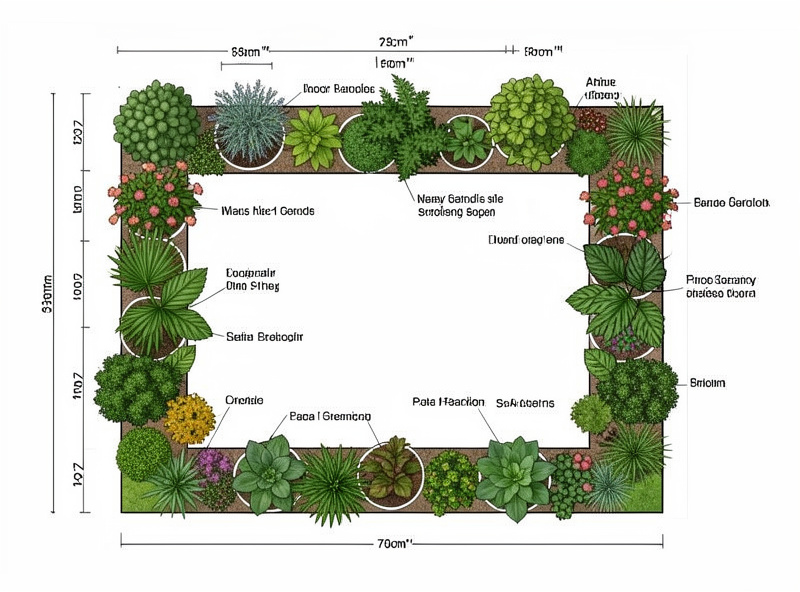
Every scheme above assumes a growing season longer than mine. In a Nordic climate the real design problem is the four months when the perennials are dormant and the border is mostly bare soil and mulch, so I build every scheme around something that holds structure through the dark months — evergreen perennials like hellebores, creeping phlox, and a dwarf conifer or two for backbone. The spring bulbs go in beneath them, and in April the whole border wakes up at once as the bulbs push through the evergreen foliage. It is the same instinct that makes the foliage-focused Scheme 4 the most reliable one this far north: colour is a bonus, but standing structure through a long winter is what actually earns a plant its spot in a small cold-climate border.
Frequently Asked Questions
What is the best planting scheme for small borders?
Layer by height with tallest plants at the back, medium in the middle, and shortest at the front. Combine plants with contrasting foliage and staggered bloom times.
How do you plan a small border garden?
Measure the space, note sun exposure and soil conditions, choose plants that fit the mature size constraints, and create a planting plan on paper before buying plants.
What color schemes work best for small borders?
Monochromatic schemes (all whites, all purples) make small spaces feel larger and more cohesive. Complementary colors (purple and yellow) create vibrant contrast. Limit to 3-4 colors maximum.