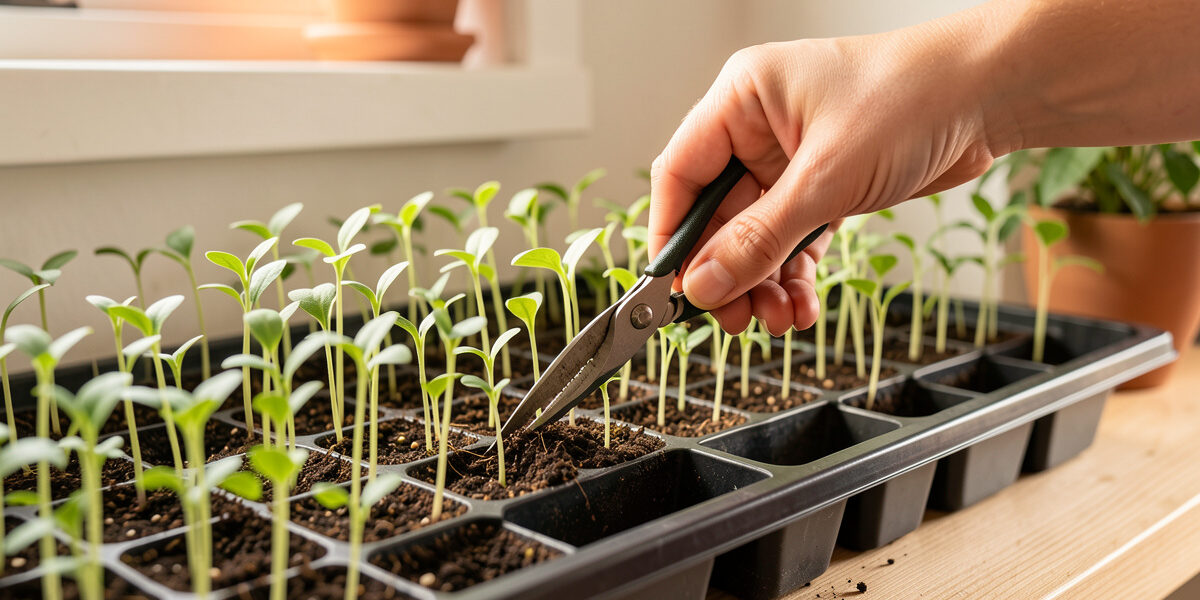
Thin seedlings as soon as the first true leaves appear, because every extra day of crowding forces them to compete for light, water, and root space and produces exactly the leggy, stalled, diseased seedlings the rest of this cluster is about. The keeper is the one with the stout stem and the true leaves; the rest come out, and they come out by snipping, not pulling — pulling tears the roots of the seedling you wanted to keep.
Thinning is the unglamorous step people skip, and it is upstream of more seedling failures than any other single habit. A tray you never thinned does not just look crowded; it grows leggy seedlings that stretch for light, stalled seedlings whose roots have nowhere to go, and damp, still air between stems that invites mold and damping off. The whole point of thinning is to give the keeper the room, the light, and the airflow to grow into a sturdy plant, and the cost of skipping it is paid in every other failure mode in this cluster. What follows is when to thin, how to choose the keeper, why you cut instead of pull, and what to do with the seedlings you take out.
When Should You Thin Seedlings?
Thin at the first true leaf, which is the stage where the seedling has its first pair of real leaves beyond the cotyledons — usually a week to two weeks after emergence, depending on the crop and the warmth. The cotyledons that came up first are not true leaves; they are the seed’s stored launch package. The true leaves are the first leaves the plant actually grows itself, and their appearance is the signal that the seedling is established enough to handle thinning and ready to be given the room to grow on. Thinning earlier than this risks disturbing seedlings whose roots are too delicate; thinning later means the competition has already done its damage.
The reason timing matters is that competition starts the moment the seedlings are up, not when you notice it. Two or three seedlings sharing a cell are competing from day one — their leaves shade each other, their roots tangle in the same small volume, and the strongest pulls ahead while the others stretch and weaken. The University of Minnesota Extension’s seed-starting guidance recommends thinning at the first true leaf for exactly this reason, and it is the deadline I hold myself to. If I let a cell stay crowded past the true-leaf stage, the keeper comes out leggy and the whole point of starting it early is lost. Thin the day you see true leaves, not the day you get around to it.
The reason you end up thinning at all is that most growers sow more than one seed per cell on purpose, and it is the right thing to do. Seed is cheap and germination is never guaranteed, so sowing two or three seeds per cell insures against the seed that never comes up — a cell with one seed that fails is a gap in your row, while a cell with three seeds almost always has at least one seedling. The cost of that insurance is the thinning step, and it is a cost worth paying. The alternative, precision-sowing a single seed per cell, works only with fresh seed of known high germination, and even then a missed cell is a missed plant. I sow two or three to a cell for everything except seed I am confident in, and I accept the thinning as part of the deal.
How Do You Choose Which Seedling to Keep?
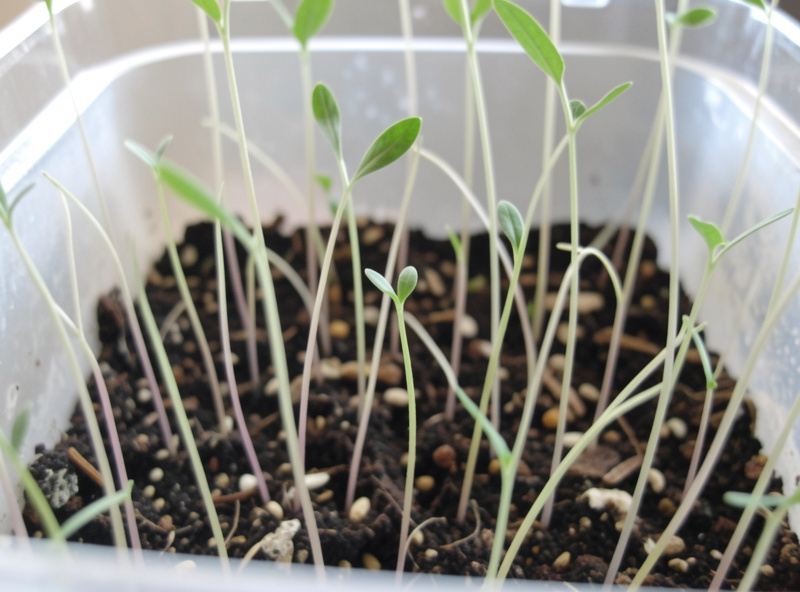
Keep the stout one, not the tall one. The strongest seedling is the one with the shortest, thickest stem, the deepest green color, and the true leaves growing well — which is usually not the tallest seedling in the cell, because the tallest is often the one that stretched for light. A tall, pale seedling is a stretched one, and a short, stocky one is a sturdy one; the instinct to keep the biggest-looking plant is often wrong, because “big” in a crowded cell can mean “leggy.” Look for stocky, green, and actively growing, and that is your keeper.
What if all the seedlings in a cell look weak — pale, leggy, or small? That is a sign the problem is environmental, not the seedlings, and thinning alone will not rescue them. A cell of weak seedlings usually means the light was too dim, the root zone too cold, or the media too wet, and the fix is to address that environment for the whole tray before you thin. If the seedlings are leggy across the board, raise the light; if they are purple and stalled, warm the roots; if they are damp and weak, dry the media and move air. Thin once the seedlings are growing strongly enough that there is a clear keeper to choose — thinning weak seedlings just leaves you with one weak seedling instead of three. Sometimes the right call is to restart the cell entirely in better conditions.
If two seedlings look equally strong, keep the one whose roots you can see are not tangled with the others, or simply pick the more central one so the keeper grows straight. The table below is a quick guide to how I thin the common crops, including which thinnings are worth transplanting rather than composting. The Royal Horticultural Society’s sowing and thinning advice makes the same distinction between crops whose thinnings transplant and those whose roots resent disturbance, and it is worth knowing before you decide what to do with the seedlings you remove.
| Crop | Thin to | When | Can you transplant the thinnings? |
|---|---|---|---|
| Lettuce and leafy greens | One per cell, or 5 cm apart in a tray | First true leaf | Yes, they transplant easily |
| Tomatoes | One per cell | First true leaf | Yes, pot on the strongest thinnings |
| Peppers | One per cell | First true leaf | Yes, but handle the roots gently |
| Brassicas (cabbage, kale) | One per cell | First true leaf | Yes, they transplant well |
| Root crops (carrot, beet) | 5 to 8 cm apart | First true leaf | No, the taproots resent disturbance |
| Herbs (basil and the like) | One strong one per cell | First true leaf | Yes, pot on the thinnings |
Should You Pull or Cut When Thinning?
Cut, every time. The seedlings in a cell share the same small volume of media, and their roots are already tangled together below the surface. When you pull one seedling out, you drag its roots — and the roots of its neighbours tangled with them — up through the soil, tearing the fine root hairs off the keeper and leaving it wounded and stalled. The keeper often survives, but it loses a week of growth recovering from the root damage you caused, and in the worst case you uproot it entirely. Snipping avoids all of this.
Use small, sharp scissors or snips to cut the unwanted seedling’s stem right at the soil line. The snip is clean and the unwanted seedling drops away, while the keeper stands untouched with its roots still threading the soil. The cut seedling’s roots stay in the media and simply decompose, doing no harm. This is the one place I will recommend a specific tool: a pair of fine snips with a sharp point lets you reach into a crowded cell and cut a single stem without nicking the keeper, and the precision snips search is the kind I keep on the shelf. I learned the pull-versus-cut lesson the hard way, pulling a crowded tomato seedling instead of snipping it and disturbing the keeper’s roots so badly it stalled for a week — the same week of growth I was trying to protect by thinning in the first place.
As an Amazon Associate I earn from qualifying purchases.
Can You Transplant the Thinnings Instead?
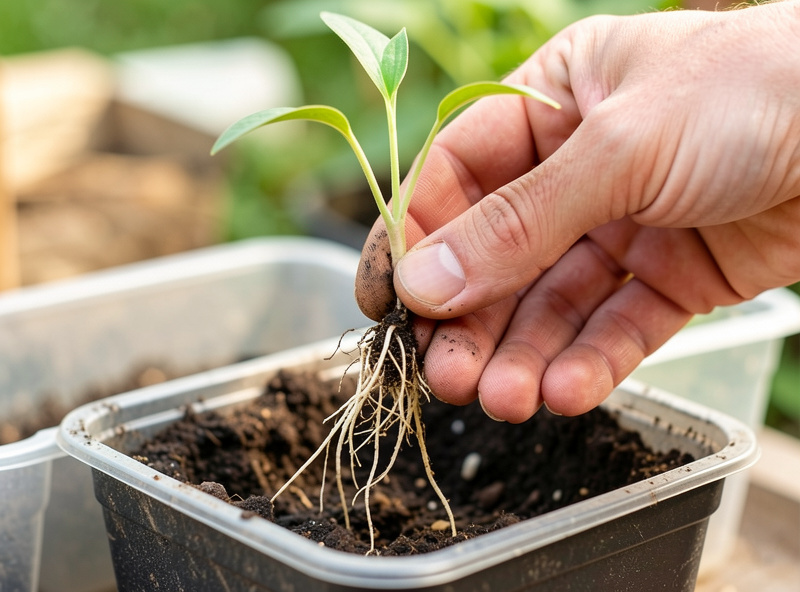
Often yes, and it feels like getting free plants, but only for crops whose roots tolerate being moved. Lettuce, tomatoes, peppers, brassicas, and most herbs will transplant happily if you lift them gently with a small tool, keeping a ball of media around the roots, and settle them into their own cell or pot. Water them in and keep them shaded for a day while they recover, and most will carry on as if nothing happened. This is how one sowing turns into a row of plants — you sow two or three seeds per cell for germination insurance, and the extras become transplants rather than compost.
The exception is root crops. Carrots, beets, radishes, and other tap-rooted crops produce a single dominant root that goes deep and straight, and disturbing it forks or stunts the root you are growing them for. For these, thinning means removing the extra seedlings entirely, not moving them — snip them at the soil line and accept the loss, because a transplanted carrot is usually a forked, stunted carrot. The distinction in the table above is the one to hold onto: transplant the leafy and fruiting crops, sacrifice the thinnings of the root crops. The cell trays I use make the gentle lift easy, because the cells pop out cleanly without tearing roots.
What Happens If You Don’t Thin?
Everything else in this cluster, more or less. A crowded cell grows leggy seedlings, because the plants stretch past each other for light — the leggy stretch I describe separately is the first thing crowding produces. It grows stalled seedlings, because tangled roots run out of room — the stalling from root-binding follows close behind. And it grows damping off and mold, because the damp, still air trapped between crowded stems is exactly what those fungi want — the damping off and white mold guides cover what happens next.
This is why thinning belongs in a seedling-failure hub rather than just a how-to guide: skipping it is the upstream cause of half the failures here. A tray you thinned on time grows short, stocky, well-spaced seedlings with airflow between them, and that tray simply does not develop the leggy, stalled, moldy problems an unthinned tray does. Thinning is not a cosmetic step; it is the cheapest, most reliable form of prevention in the whole seed-starting routine, and it costs you nothing but a pair of snips and a minute per tray.
I saw this play out clearly one season when I let a tray of brassicas go unthinned during a busy week. By the time I got to them, every cell held three or four pale, stretched seedlings leaning away from each other for light, their stems thin as thread and the soil between them damp and still. Half of them damped off within days, and the survivors were so leggy they never recovered into sturdy plants. The tray next to it, thinned on time, grew short and stocky and went on to plant out fine. The only difference between the two trays was a minute of snipping at the right moment. Crowding is not a minor aesthetic problem; it is the trigger that turns a healthy tray into a failed one, and thinning is the single act that prevents it.
What I’d Do Starting Today
If you have a tray of crowded seedlings right now, thin it today, at the first true leaf. Pick the stout, green, stocky seedling in each cell as the keeper, and snip the others at the soil line with sharp scissors — do not pull them. If they are lettuce, tomatoes, peppers, or brassicas, lift the thinnings gently and pot them on as free transplants; if they are root crops, sacrifice the thinnings and keep the spacing. That one pass of thinning will do more for the health of the remaining seedlings than any feed or fancy light adjustment.
For the next sowing, sow two or three seeds per cell for germination insurance and plan to thin to one at the first true leaf — it is easier to thin extras than to re-sow gaps where a seed did not come up. The full kit is on the seed-starting equipment list, the ready-made kit options are covered if you are buying, and the rest of the seedling-failure picture — the purple leaves of cold roots, the yellow leaves of nutrient and water trouble — is laid out from the main seedling-diagnosis hub.
Connected Guides
- Why Are My Seedlings Dying? A Diagnostic Guide
- Leggy Seedlings: Why They Stretch and How to Fix
- Seedlings That Stall and Stop Growing: The Usual Causes
- Choosing Seed-Starting Trays: Drainage, Cell Size, Reuse
- Best Seed-Starting Kits: Buy a Bundle or Build Your Own?
When should I thin my seedlings?
At the first true leaf stage, once the seedlings are sturdy enough to handle but before they start competing. Waiting too long causes the leggy, stalled seedlings thinning is meant to prevent.
Should I cut or pull when thinning?
Cut. Pulling disturbs the roots of the seedling you are keeping and can kill it, so snip the unwanted seedlings at the soil line with small sharp scissors instead.
Can I replant the seedlings I thin out?
Often yes. Lettuce, tomatoes, peppers, and brassicas transplant fine if lifted gently with roots intact. Root crops like carrots and beets do not, because their taproots resent disturbance.
How many seedlings should I leave per cell?
Usually one, the strongest. Sowing two or three seeds per cell for germination insurance is fine, but thin to a single keeper once the first true leaves appear so it has room to grow.
What happens if I don’t thin my seedlings?
They compete for light, water, and root space, become leggy and stalled, and are far more prone to damping off. Crowding causes most of the failures thinning prevents.