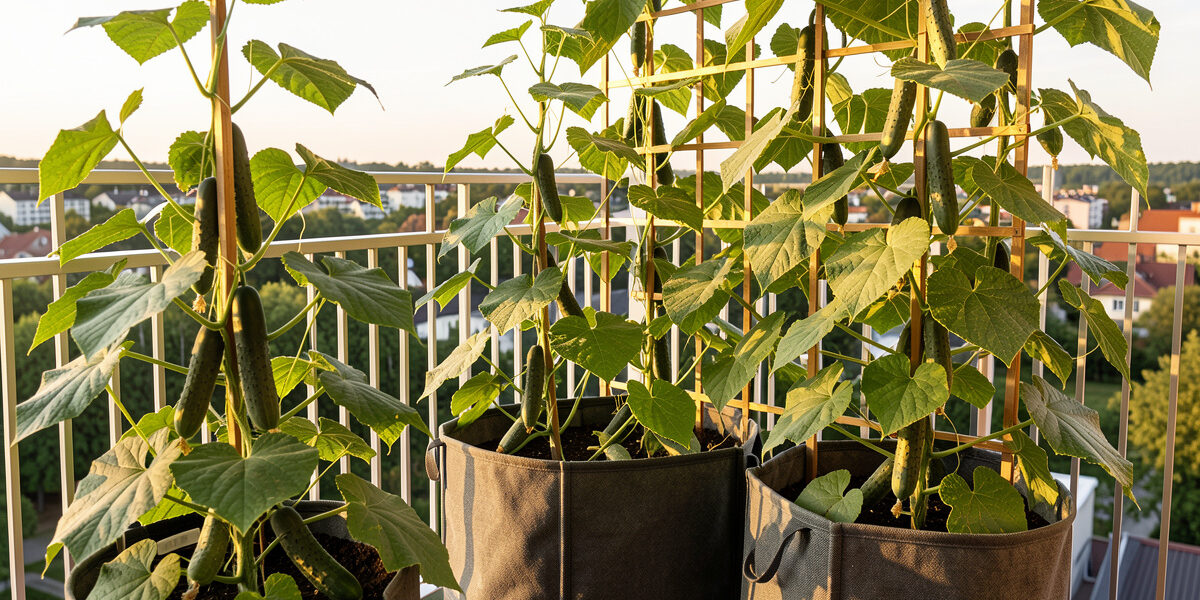
Growing cucumbers in containers on a balcony comes down to three things the gardening books gloss over: a big enough pot, relentless water, and a cool-climate variety that sets fruit without overhead sun. Give a cucumber a 20-litre container, a litre of water on a hot day, and a high-potassium feed once it flowers, and a single plant will out-produce what most people get from a garden bed.
Cucumbers are the crop I get asked about most, and almost every failure I see traces to a pot that’s too small or watering that swings between drought and flood. After years of growing them on a Swedish balcony — where the season is short, the nights are cool, and the light comes in sideways — I’ve settled on a setup that crops reliably from July into September. This is the container-growing side of cucumbers: variety, pot, soil, water, feed, and the balcony-specific problems. For training them up a support, I cover that separately in growing cucumbers vertically.
Which Cucumber Varieties Work on a Cool Balcony?
The best cucumbers for a cool Nordic balcony are the smaller, thin-skinned greenhouse and mini types that set fruit at lower temperatures, not the big ridge cucumbers that need a long hot summer. Choosing the right variety is half the battle before a single seed goes in.
I learned this the slow way, sulking through a cool July wondering why my big outdoor-type cucumbers sat there doing nothing. The fix was switching to compact, cool-tolerant varieties — the slim mini-cucumbers and smaller greenhouse types that keep setting fruit when nights dip, and many of which are all-female so you don’t get bitter fruit from accidental pollination. They also climb well and stay manageable on a balcony. The big ridge and slicing cucumbers from American seed catalogues want heat we simply don’t get reliably this far north, so I leave those to gardeners with a polytunnel. Pick a variety bred for containers or greenhouses and labelled for cooler growing, and you’ve removed the single biggest cause of a non-cropping plant.
How Big a Pot Do Cucumbers Need in Containers?
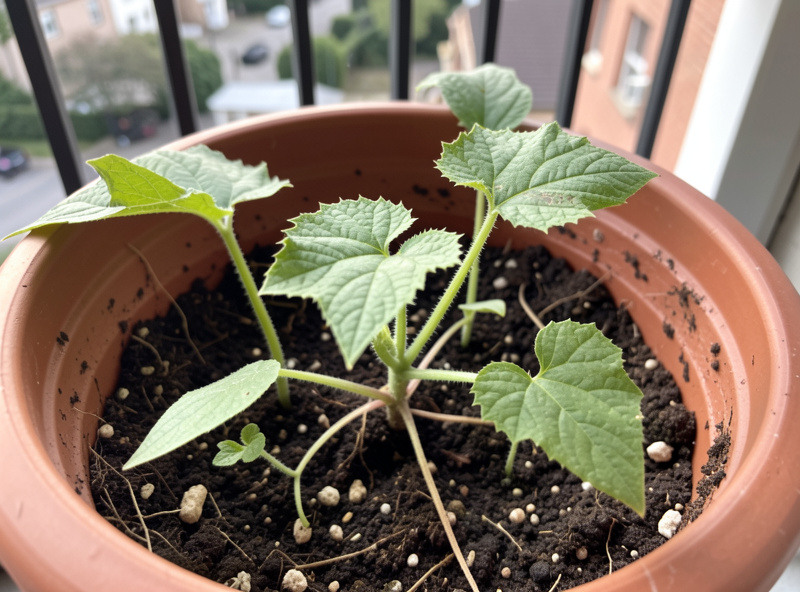
Cucumbers need at least a 20-litre container with 30 cm of soil depth per plant — they are deep-rooted, thirsty, and hungry, and a pot any smaller stalls the plant at half height, yellow and bitter. This is the number-one mistake I see on balconies trying to save space.
A cucumber is carrying metres of vine and a steady run of fruit, and it needs the root volume to back that up. In my setup each plant gets a 20–25-litre fabric grow bag or deep tub; I lean on fabric grow bags for cucumbers because the air-pruned roots and free drainage suit a thirsty plant that still hates sitting in water. One plant per 20-litre pot — crowding two in to save space just gives you two stressed plants. The depth matters more than the width: a wide shallow trough looks like more soil but gives the roots nowhere to go down. And remember the balcony weight limit — a wet 25-litre pot is heavy, so keep cucumbers near the load-bearing wall, not on the cantilevered edge.
What Soil Should You Use for Container Cucumbers?
Use a free-draining container mix enriched with compost or worm castings, never bagged “potting soil” alone, which compacts and drowns the roots a thirsty cucumber depends on. The medium has to hold moisture and still breathe — a contradiction you solve with structure, not just water-retention.
My cucumber mix is a proper container blend — coir or peat-reduced base for moisture, plenty of perlite or pumice for drainage, and a generous handful of worm castings as the slow-feed amendment I keep coming back to. The cheap bagged “potting soil” sold for houseplants is the wrong tool: it slumps into a dense, airless block after a few weeks of heavy watering, and a cucumber’s roots suffocate in it just as the plant hits peak demand. If you only fix one thing, fix the soil structure. My full breakdown is in the right soil for container vegetables, but for cucumbers specifically the priority is drainage plus fertility, in that order.
How Often Should You Water Cucumbers in Pots?
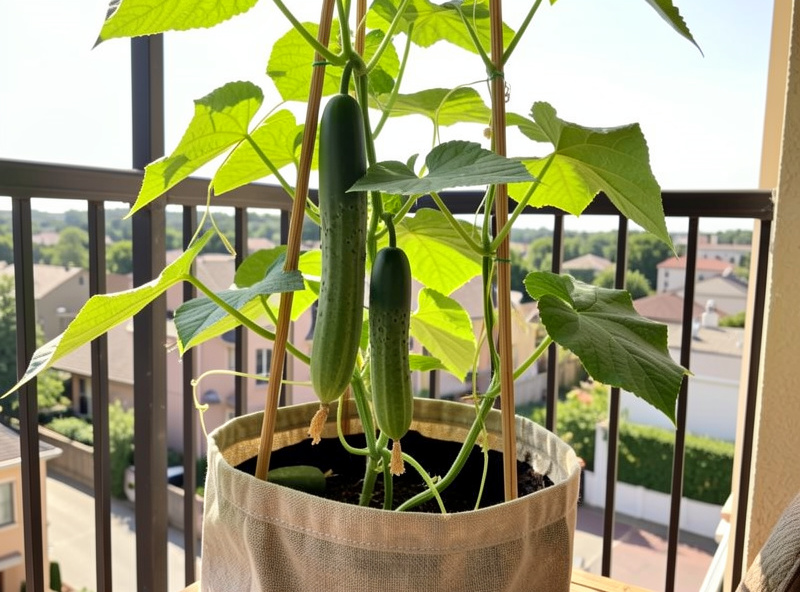
Container cucumbers need deep, consistent water — often a full litre a day per 20-litre pot in a hot Nordic July — because inconsistent watering is what turns cucumbers bitter and splits the fruit. They are the thirstiest crop on my balcony by a wide margin.
The cucumber’s whole flavour and texture ride on steady moisture. Let a pot dry out and rewet hard and you get bitter, misshapen fruit; keep it evenly damp and the same plant gives clean, sweet cucumbers. This is the crop where I lean hardest on self-watering containers — the 3D-printed reservoir inserts I print buffer the daily swing and cut my watering to roughly every second day even in heat, instead of a twice-daily marathon. If you hand-water, do it slowly at the soil until it runs from the drainage holes, never a quick splash that wets the top inch. A cucumber wilting at midday and recovering by evening is fine; one still flagging at dusk is genuinely dry. The container watering guide and the signs of overwatering cover the balance, because a cucumber in a pot with poor drainage drowns just as easily as it dries.
Feeding and Pollination for a Full Crop
Cucumbers are heavy feeders that need a high-potassium liquid feed every 7–10 days once flowering starts, and on a high balcony with few insects you may need to hand-pollinate older varieties to set fruit. These two together account for most “lots of leaves, no cucumbers” complaints.
Once the first flowers open I switch to a high-potassium feed — the same tomato-style feed drives cucumber fruit, where too much nitrogen just gives you a jungle of leaf. I feed every 7–10 days through the cropping window and top-dress with worm castings at planting. Pollination is the modern shortcut: most cool-climate varieties now are all-female and self-fertile, setting fruit with no insects at all, which is exactly why I recommend them for a balcony two floors up where bees are scarce. If you’re growing an older variety with both male and female flowers, hand-pollinate on still days with a soft brush, moving pollen from the plain-stemmed male to the female (the one with a tiny cucumber behind the bloom) — the same transfer the RHS describes for greenhouse cucumbers. It’s the same feeding logic I use when fertilizing tomatoes in containers.
Common Balcony Cucumber Problems
The four problems I see most are bitter fruit from inconsistent water, yellowing from a pot too small, powdery mildew from stagnant air, and no fruit from poor pollination — all of them preventable once you know the cause. None of them are mysterious; each maps to one fixable mistake.
Bitter, misshapen cucumbers almost always mean the watering swung between dry and flooded, so fix the reservoir or the schedule before you blame the plant. A cucumber that stalls yellow at half height is root-bound or starved — too small a pot, too little feed. Powdery mildew, the white dust on the leaves, thrives in the stagnant humid air around a plant flopping on the deck, which is the best argument for growing cucumbers up a support with airflow all around them; the climbing setup in growing cucumbers vertically is half the cure. And no fruit at all, with healthy leaves, points at pollination or a nitrogen-heavy feed — switch to potassium and hand-pollinate if it’s an older variety. Catch any of these early and the plant recovers; ignore them and a cucumber declines fast in a pot.
Frequently Asked Questions
How big a pot do you need to grow cucumbers in containers?
Cucumbers need at least a 20-litre container with 30 cm of soil depth, one plant per pot. They are deep-rooted, thirsty, and hungry, so a smaller pot stalls the plant at half height, yellow and bitter. Depth matters more than width.
How often should you water container cucumbers on a balcony?
Container cucumbers often need a full litre of water a day per 20-litre pot in a hot Nordic July. Water deeply and consistently, because inconsistent watering turns the fruit bitter and splits it. Self-watering containers cut this to roughly every second day.
What are the best cucumber varieties for a cool climate?
Choose smaller, thin-skinned greenhouse and mini cucumber types bred for cooler growing, many of which are all-female and self-fertile. They set fruit at lower temperatures, unlike big ridge cucumbers that need a long hot summer we don’t get this far north.
Why are my container cucumbers bitter?
Bitter cucumbers almost always come from inconsistent watering, where the pot swings between dry and flooded. Keep the soil evenly damp with deep, regular watering or a reservoir, and the same plant will give clean, sweet fruit instead.
Do you need to hand-pollinate cucumbers on a balcony?
Most modern cool-climate varieties are all-female and self-fertile, setting fruit with no insects, which suits a high balcony with few bees. Only older varieties with male and female flowers need hand-pollination with a soft brush on still days.
As an Amazon Associate I earn from qualifying purchases. The links below are the kind of gear I’d use for a balcony cucumber.
For cucumbers the two things worth buying are a generous deep fabric grow bag and a high-potassium liquid feed to drive fruiting once the flowers open.